Violet overhauled her diet and worked with functional medicine doctors for years, but chronic diarrhea persisted. Her gut health test revealed she was missing key beneficial bacteria and had high levels of disruptive microbes. After taking targeted probiotics based on her results, she's feeling better than she has in decades.
Case Study: How Gut Health Testing Helped Violet End 15 Years of Chronic Diarrhea

Summary
Violet has spent much of her life in academics and research, earning advanced degrees and developing a love for data and science.
But by 2021, years of digestive issues, migraines, sleep difficulties, and mental health struggles had taken their toll. Determined to make radical changes to prioritize her well-being, Violet stepped back from work, sought out functional health specialists, and overhauled her diet. Every evening, she found insight and inspiration listening to the Huberman Lab podcast.
In time, Violet went from struggling daily with chronic diarrhea to eliminating medications and regaining her quality of life. We connected with her after she returned from her 50th high school reunion, feeling better than she had in decades. Violet’s story is proof that it’s never too late to reclaim your health.
A range of diagnoses, few answers
Managing chronic symptoms is isolating. For Violet, that feeling was compounded by many diagnoses, including IBS, SIBO, and bipolar disorder.
Living with more than one chronic illness with no relief in sight was crushing. By 2021, Violet's health had deteriorated to the point where she wasn't sure how much longer she could go on.
Diarrhea dominated Violet's life for 15 years, disrupting her work and social life.
"The first decade was pretty much horrible, urgent, explosive BMs when I was at my sickest and could barely get out of bed," she shares.
Her social life revolved around her symptoms and scoping out public bathrooms. Eating out meant calculating everything in advance: how long it would take to finish a meal, how long it would take to get home before she had to run to the toilet. It was exhausting.
During this low point, something shifted. Violet was done accepting her symptoms as inevitable. She vowed to take charge of her health and find the root cause.
Violet’s comeback
In the next few years, Violet started working with functional health doctors at the Cleveland Clinic. She also put her research and analytical skills to good use by soaking up insights from wellness experts (mostly via podcasts), learning everything she could to heal herself.
Violet cut ultra-processed foods and adopted a modified ketovore diet (a mix of keto and carnivore—mostly animal-based foods with a small amount of vegetables). She rounded out nutritional gaps with supplements, including practitioner‑prescribed probiotics to ease her diarrhea.
It worked.
Within six months, Violet lost 35 pounds and saw improvements in her sleep apnea, migraines, numerous gastrointestinal issues, and bipolar symptoms. Under the guidance of her doctors, she was also able to stop taking the majority of her psychiatric medications.
More data, please
Violet’s lifestyle changes relieved many digestive symptoms, but she still experienced loose stools after eating.
In her search for answers, Violet discovered Tiny Health at the 2024 Eudemonia Summit, a wellness conference focused on personalized health. She'd already taken a GI Map test, but felt something was still missing.
Violet's academic training made her a natural investigator; she was ABD (all but dissertation) in her doctoral program, so digging into research and comparing results comes naturally. "I love data," she says. Violet took a Tiny Health Gut Health Test to see what else she could learn, and became a Tiny+ member.
Gut health test results
In 2025, Violet took three gut health tests, two at the beginning of the year and one at the end. Her first test established a baseline for her gut health. Follow-up tests showed the progress Violet made as she followed her personalized Action Plan. Her coaching sessions with microbiome specialists Amy Chapman and Jennifer McDow added another layer of insight, highlighting the bacterial overgrowths that may be influencing her symptoms and the beneficial strains that were missing.
Bifidobacterium were flagged as “needs support” in Violet's initial test. These bacteria play a key role in supporting your immune system and producing beneficial compounds your nervous system relies on. Some strains can make B vitamins and support pathways involved in regulating serotonin and melatonin [1]-[4]. When Bifidobacterium levels drop — or are nonexistent, like Violet's — it's easier for unfriendly bacteria to take over and throw your microbiome off balance.
This finding was especially relevant given Violet's IBS diagnosis. Research shows that Bifidobacterium is often depleted in IBS patients [5].
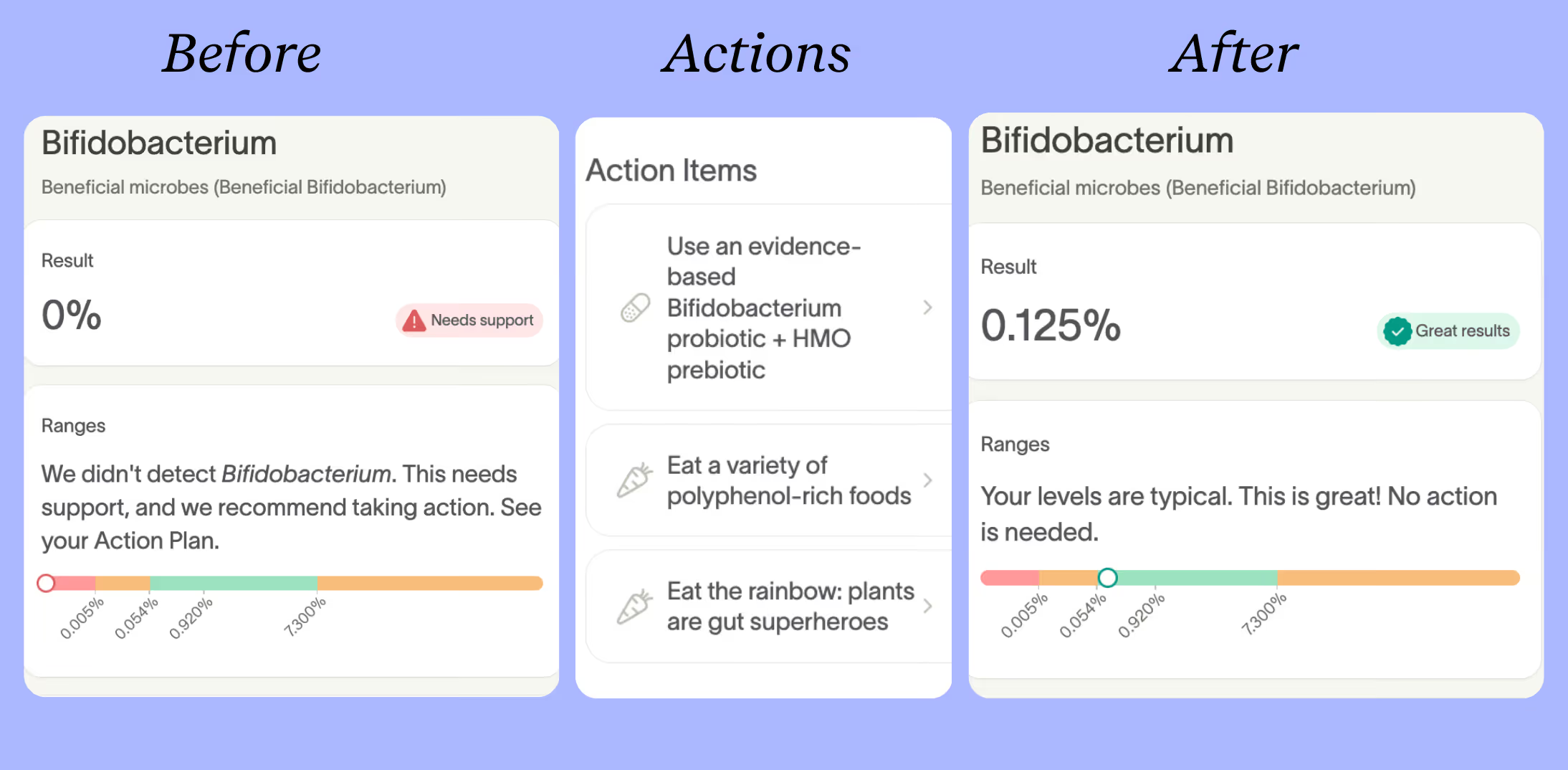
To bring her Bifidobacterium levels into the normal range, Violet‘s Action Plan focused on three things: an evidence-based Bifidobacterium probiotic, polyphenol-rich foods, and colorful plants. Violet looped in her practitioner so they could work through the recommendations together.
Violet's test also flagged low Shannon diversity, a measure of how many different bacterial species live in your gut and in what amounts. Diversity matters because beneficial microbes have various functions, and each requires different nutrients to thrive. A diverse microbiome means better balance, more resilience, and a wider range of health benefits.
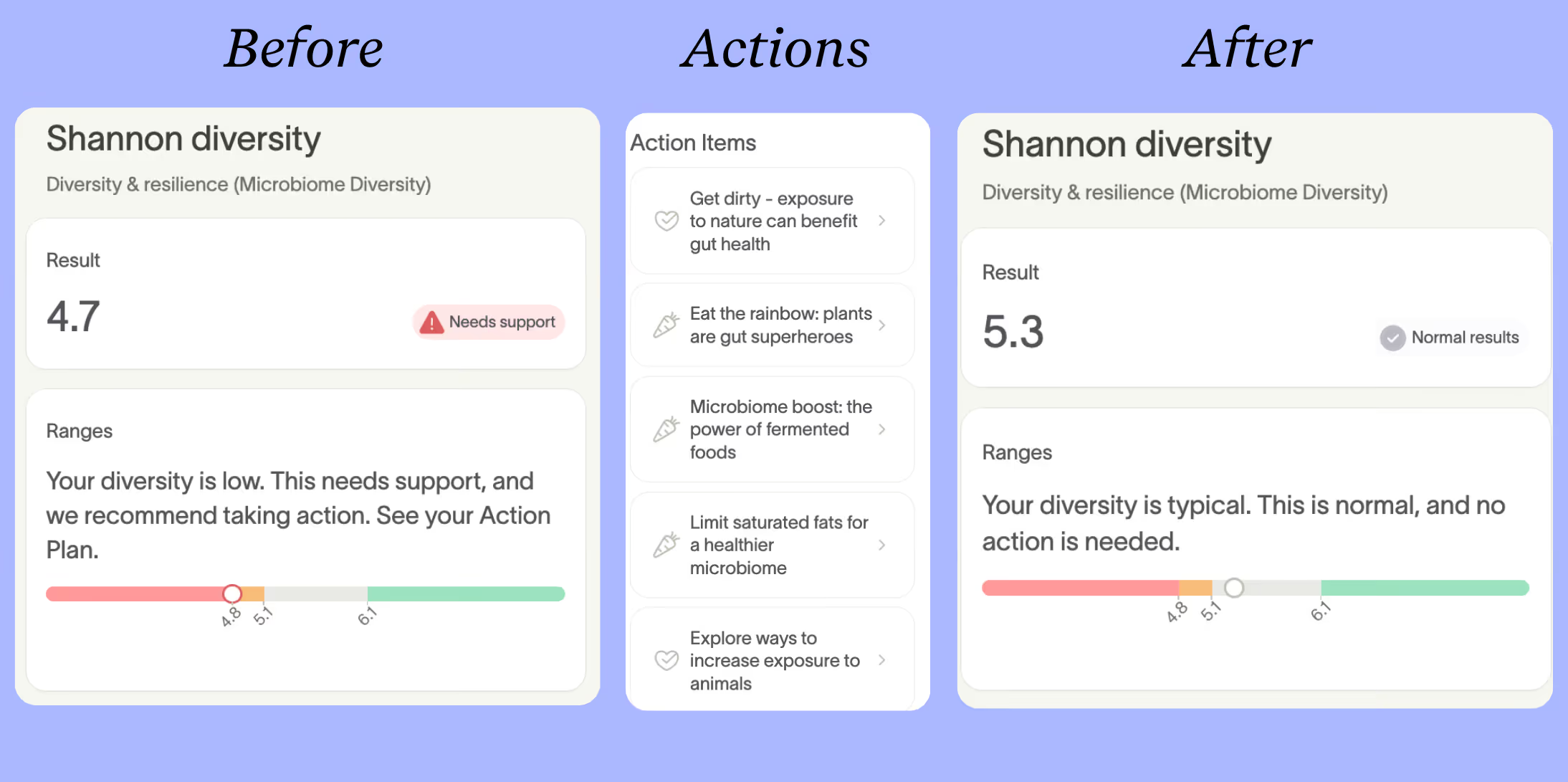
When you have low gut diversity and not enough beneficial bacteria like Bifidobacterium, disruptive microbes tend to dominate your gut. In Violet’s case, a number of opportunistic bacteria showed up, including C. difficile (C. diff).
C. diff is an opportunistic pathogen that can cause serious intestinal infection and diarrhea, and is one of the leading causes of antibiotic‑associated diarrhea [6]. To help turn this around, Violet followed the recommendation of taking a Bacillus-based probiotic.
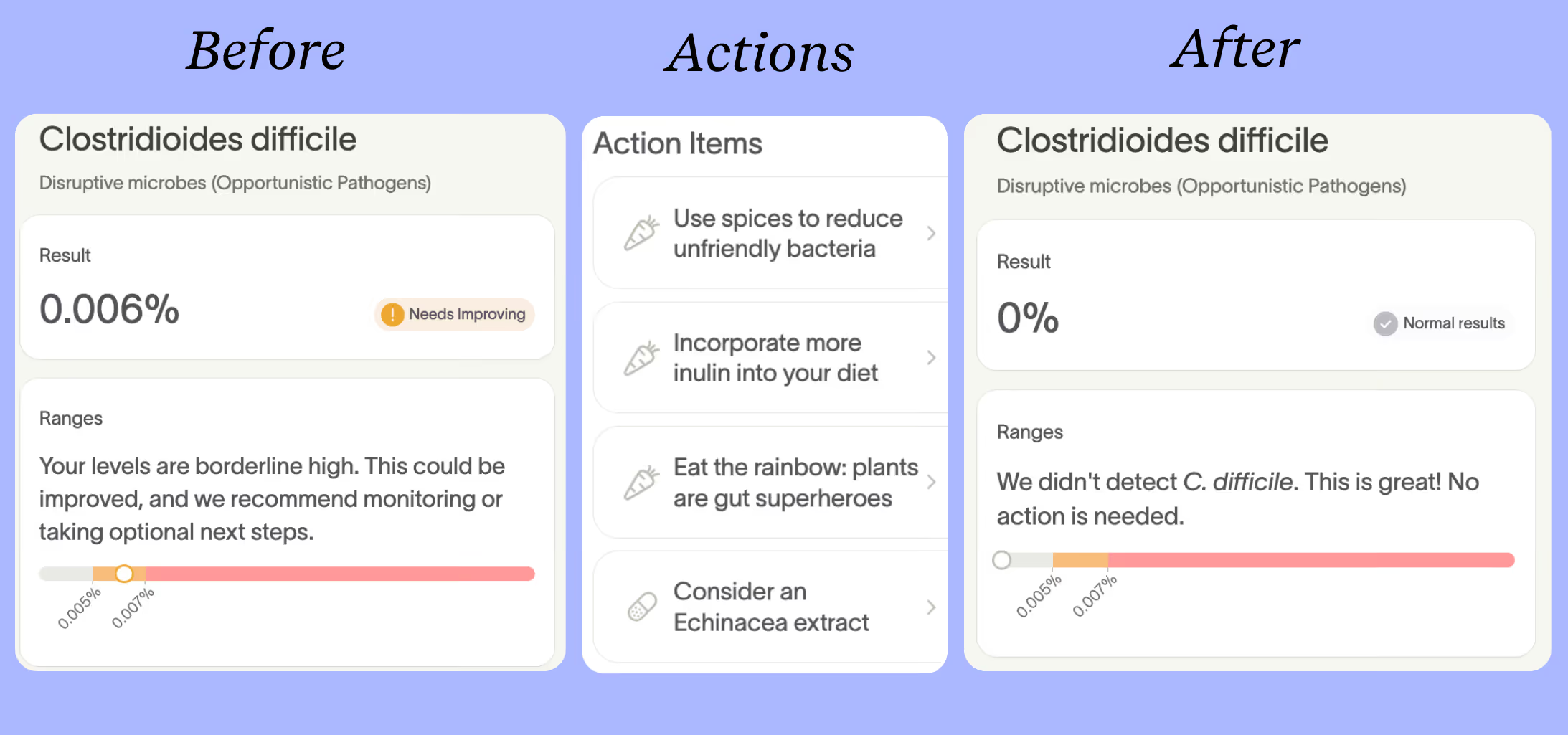
"The best advice I received was to get on Megaspore—all those years of suffering, and the biggest part of what I needed was a soil-based probiotic," Violet said.
Violet had tried various probiotics recommended by her functional medicine doctors over the years without success.
Another area Violet worked on last year was her Antibiotic Resistance Signature, specifically the Abundance index, which measures antibiotic-resistant unfriendly bacteria. For adults, a lower number is better.
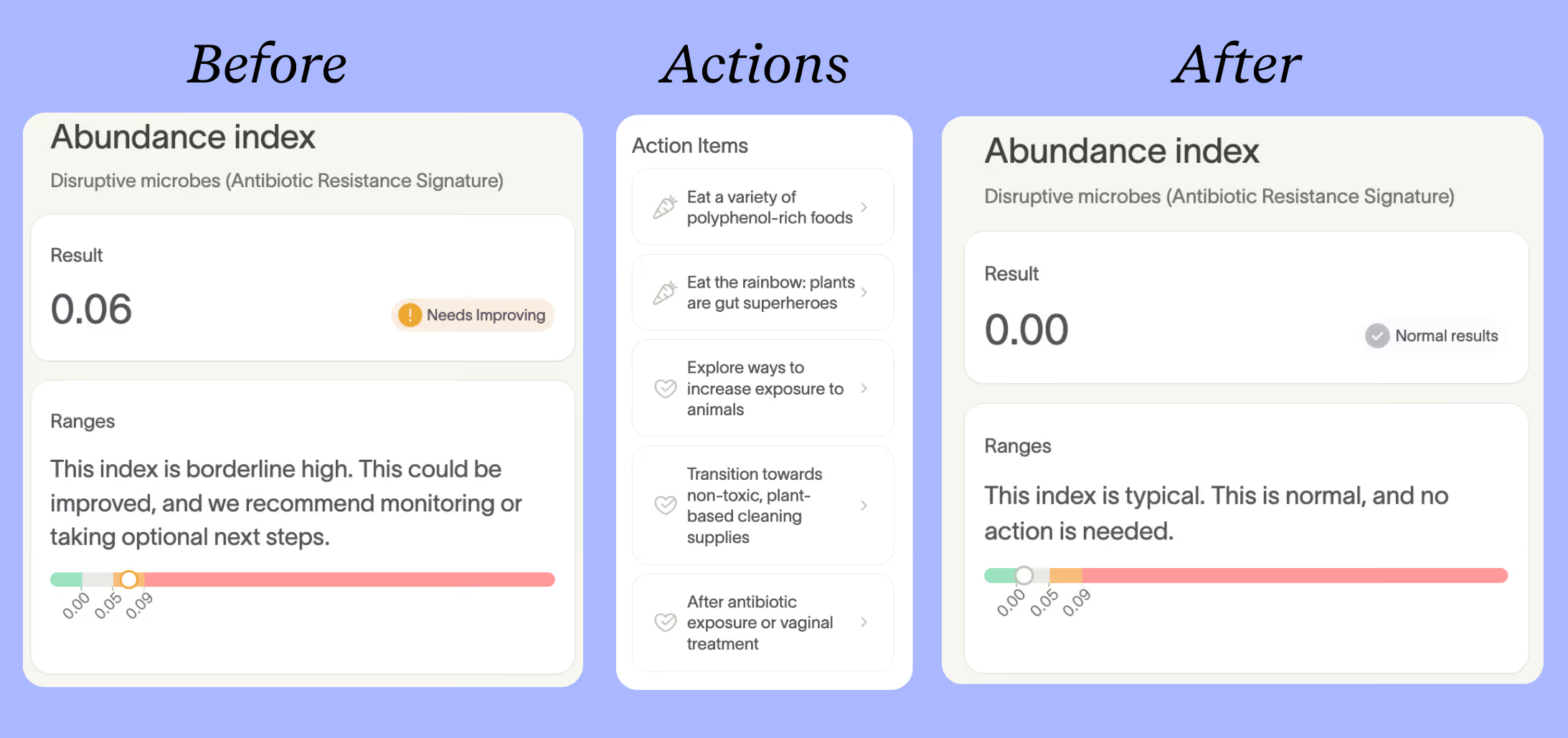
This improvement shows that Violet's dietary and supplement recommendations are working. And those helpful bacteria are keeping disruptive microbes in check.
But to Violet, data isn’t everything. The coaching part of Violet’s Tiny+ membership made a big difference as well. “I was being listened to instead of being told what to do (hate that, lol)!”
A fresh start
Gut health isn't a one-and-done fix. Violet's latest test still shows room for improvement. But after 15 years of daily symptoms, she finally found a combination of tools that made a meaningful difference. And at 68, Violet describes herself as "a new person."
“Within a week or two of taking Megaspore, my diarrhea waned and has improved tremendously. Sometimes it even looks like a perfect example in the middle of the stool chart!”
If Violet ventures too far from her routine, she’ll get the occasional loose stool. But she’s fine-tuning and excited to explore additional ways to support her microbiome.
The emotional impact has been just as profound. Years of confusing test results, scoping out bathrooms, and worrying about managing her symptoms are no longer impacting her quality of life.
Violet’s newfound freedom comes with perks, like attending Eudemonia and sharing her insights with our team, enjoying ketovore cheat days, and, most importantly, feeling "better than I have in two decades!"
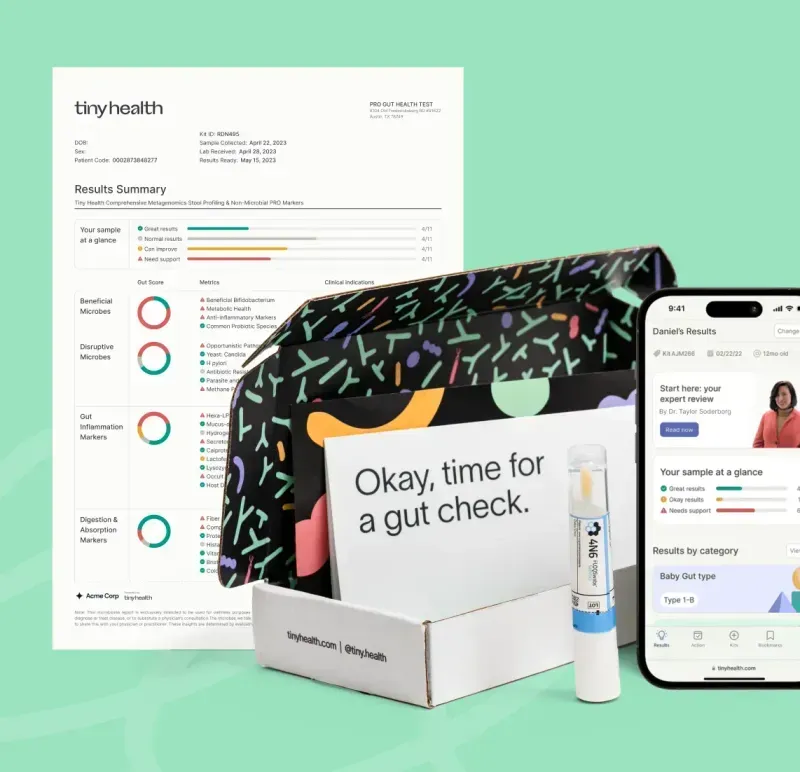
Trust your gut.
Get to know your microbes with an easy, 5-minute at-home test from Tiny Health. Unlock deep gut health insights and personalized recommendations for your diet, supplements, and lifestyle.
Nicki demystifies microbiome science so families can make informed decisions about their health.

Dr. Pamela Nieto has over 10 years of experience in basic research and gut and vaginal microbiome test development.
References
References
[1] M. A. Engevik et al., “Human-Derived Bifidobacterium dentium Modulates the Mammalian Serotonergic System and Gut-Brain Axis,” Cell Mol Gastroenterol Hepatol, vol. 11, no. 1, pp. 221–248, 2021, doi: 10.1016/j.jcmgh.2020.08.002.
[2] S. Magnúsdóttir, D. Ravcheev, V. de Crécy-Lagard, and I. Thiele, “Systematic genome assessment of B-vitamin biosynthesis suggests co-operation among gut microbes,” Front Genet, vol. 6, p. 148, 2015, doi: 10.3389/fgene.2015.00148.
[3] M. Derrien, F. Turroni, M. Ventura, and D. van Sinderen, “Insights into endogenous Bifidobacterium species in the human gut microbiota during adulthood,” Trends Microbiol, vol. 30, no. 10, pp. 940–947, Oct. 2022, doi: 10.1016/j.tim.2022.04.004.
[4] L. Ruiz, S. Delgado, P. Ruas-Madiedo, B. Sánchez, and A. Margolles, “Bifidobacteria and Their Molecular Communication with the Immune System,” Front Microbiol, vol. 8, p. 2345, 2017, doi: 10.3389/fmicb.2017.02345.
[5] S. D. Shaikh et al., “Irritable Bowel Syndrome and the Gut Microbiome: A Comprehensive Review,” Journal of Clinical Medicine, vol. 12, no. 7, Mar. 2023, doi: 10.3390/jcm12072558.
[6] M. C. Abt, P. T. McKenney, and E. G. Pamer, “Clostridium difficile colitis: pathogenesis and host defence,” Nat Rev Microbiol, vol. 14, no. 10, pp. 609–620, Oct. 2016, doi: 10.1038/nrmicro.2016.108.
Related posts



Get $10 OFF to kickstart your microbiome health journey