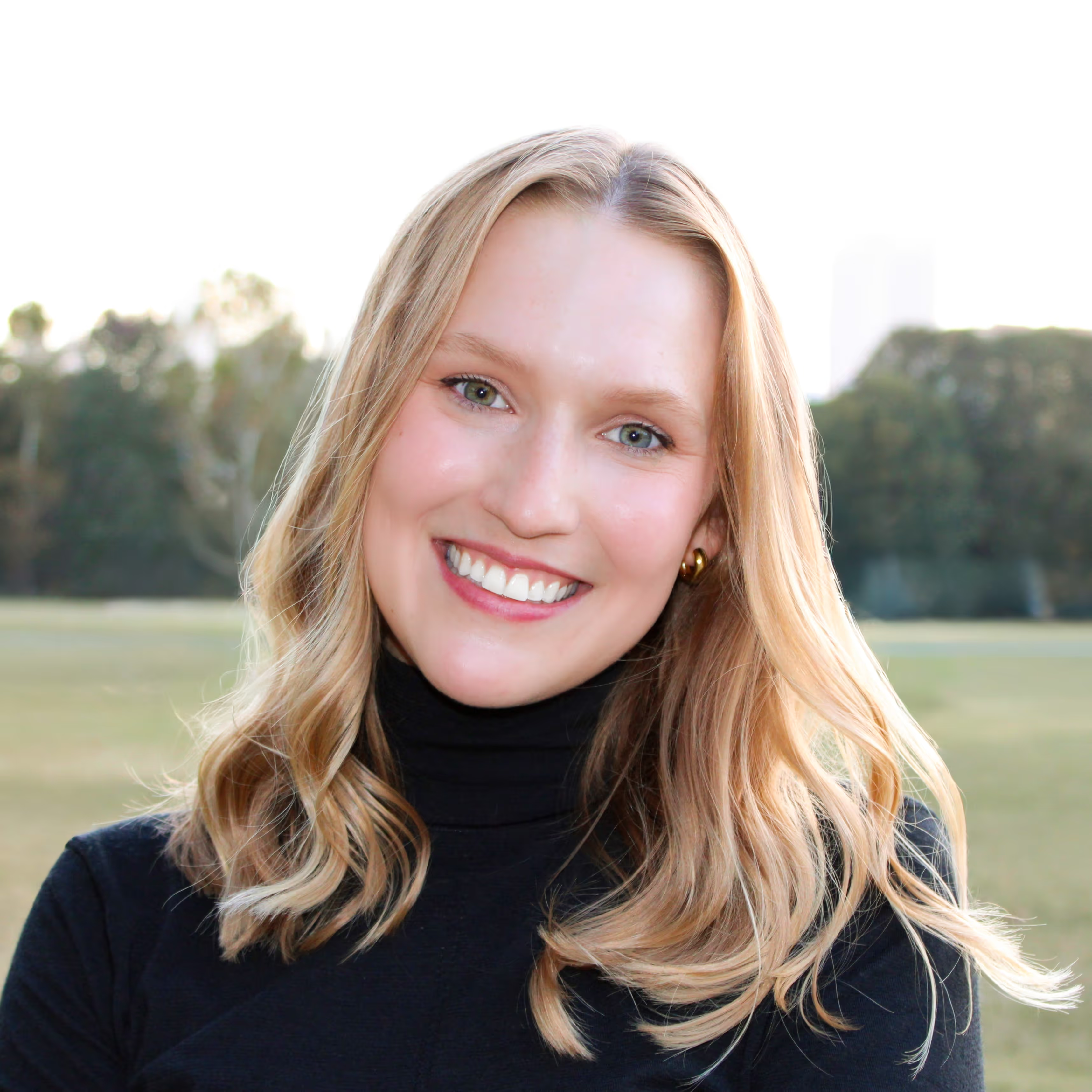
Joe Carr knows a thing or two about health. He and his wife co-founded Serenity Kids, a nutrient-dense baby food company in Austin. The couple transformed their health through a whole-food diet. So when family-planning talks turned into “we're not feeding our kid that” talks, Joe and Serenity took the leap from market research and what-if scenarios to a business plan.
Their daughter Della was born on the same day Serenity Kids launched in 2018.
Nearly eight years and 22,000 stores later, they are the country's fastest-growing and top-selling natural baby food brand. Parents on the same clean-food mission have fallen in love with the company's gut-friendly recipes featuring meats and veggies rather than sugary processed fruit purées.
Our founder, Cheryl Sew Hoy, is one of those parents and a longtime friend of Joe's. Her son, Brooklyn, tried his first solids at 6 months old with a Serenity Kids pouch.
For all his success in helping families optimize nutrition and sharing practical wisdom for new dads on his podcast DadicatedJoe, Joe's own wellness path hasn't been the smoothest. Gut health issues. Chronic migraines. A gallbladder dysfunction. Growing up as an undiagnosed autistic child created emotional fallout and may have triggered some of those physical symptoms, too.
In our recent chat, Joe shared his biohacking routine, trauma work, and how an H. pylori cleanse that tanked his gut became a lesson in self-advocacy.
Living life optimized
The heart of the Carrs’ daily routine is the goings-on of their 7-year-old daughter. Despite their busy schedules, the family prioritizes nine+ hours of sleep to support their energy and immune health. They also carve out time to level up their well-being through a range of high- and low-tech biohacks.
Whether water skiing competitively, heading to the slopes with his snow skis, or working out at their family’s home gym, Joe keeps active. And as you might expect from a wellness founder, he does peptide injections, red light therapy, saunas, cold plunges, and a hyperbaric chamber throughout the week. Sunday morning is his favorite, though. It’s two hours of father/daughter time at an ecstatic dance (freeform movement) class where they connect and have fun before starting another busy week.
.avif)
For the past decade, Joe has used regular neurofeedback to train his brain for "clarity, calm, emotional regulation, focus, rest, and recovery." It reduces the migraines he's had since childhood and lifts his mood. "I'm less reactive, much more chill and calm now," he says. "I have that pause moment of like, oh, I don't need to react to that."
Joe’s undiagnosed autism as a child deeply impacted his emotional life. Working through that trauma in therapy has helped him show up more fully for the people in his life, including the Serenity Kids team.
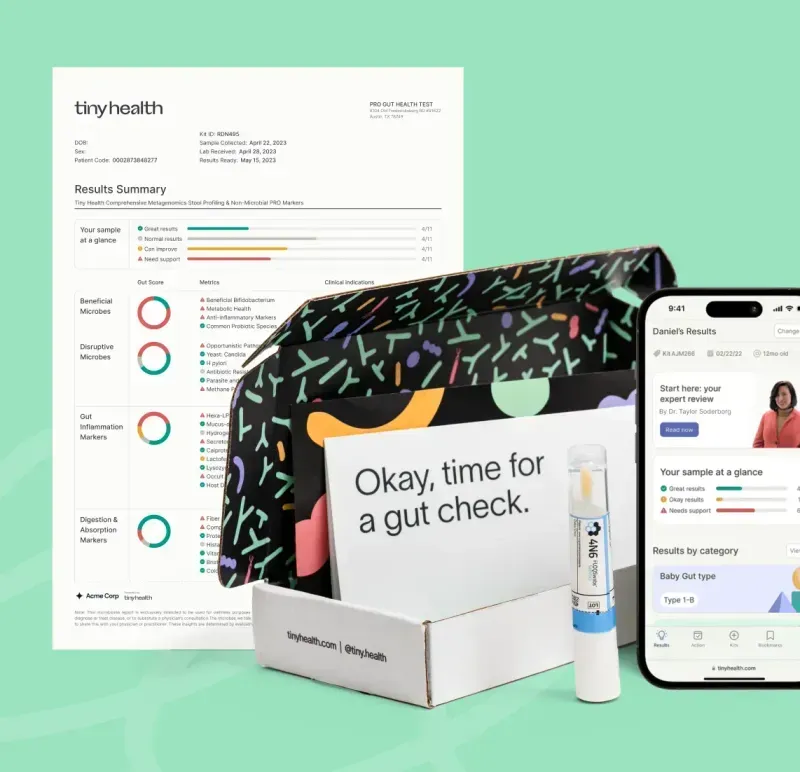
The company’s wellness-first culture is by design. "We’re not going to make ourselves or our staff unhealthy while we're trying to make babies healthy," Joe says. They have access to Tiny Health tests through their employer-funded healthcare program, which covers all labs. Joe even introduced his concierge doctor to Tiny Health. She now uses our platform to test all her patients.
Years of gut health struggles
Joe knows he's more likely to have gut health challenges than his neurotypical peers. A growing body of research links patterns in the gut-microbiota-brain axis to autism, so he's been proactive, taking five GI-Map tests and three Tiny Health tests over the years [1].
Chronic migraines, periodic stomach pain, and gluten sensitivity were Joe's daily reality. Then he tried keto. A high-fat diet made everything worse. The pain became frequent and severe, leading him to a series of gastrointestinal tests. A scan revealed his gallbladder was functioning at just 18%. A specialist recommended surgery to remove it.
Joe decided against surgery. "Taking it out seems worse than just being low-fat." Instead, he worked with his functional medicine doctor and went on a year-long gallbladder cleanse. While the cleanse and low-fat diet helped, Joe believes processing his feelings in therapy was a real breakthrough. "A lot of my migraines were emotionally caused. In fact, I think all of them were," he says.
Joe used a mind–body approach, sometimes referred to as Tension Myositis Syndrome (TMS), to address his migraines. Twelve months later, his gallbladder function rose to 24%. These days, Joe rarely gets migraines.
When a gut reset goes wrong
Even with the diet and lifestyle changes, something in Joe's gut still felt off. He took another GI-Map test. The results showed an overgrowth of H. pylori, a bacterium linked to ulcers and other stomach issues.
To kill the infection, Joe's functional medicine doctor put him on an intensive H. pylori cleanse, including probiotics, prebiotics, and antimicrobials. Because many qPCR stool tests focus primarily on potential pathogens, they can make a single microbe look like the whole story. By not capturing the overall gut balance, Joe was put on a treatment plan that was potentially more aggressive than necessary.
To get a broader view of his gut post-cleanse, Joe took a Tiny Health gut test in June 2025.
Joe's results and 6-month transformation
Joe’s gut health test results were concerning.
"The H. pylori cleanse basically just killed everything. It legit messed up my gut. In hindsight, I should have done a Tiny Health test before going through all that effort."
Joe's Hexa-LPS Index was flagged for inflammation. Opportunistic bacteria, like Enterobacteriaceae, had taken over. His antibiotic resistance marker was high. And Akkermansia, a beneficial bacterium important for metabolic health, was non-existent. Together, these metrics pointed to major imbalances, explaining Joe’s low Microbiome summary score of 65 out of 100.
To address his gut imbalances, Joe consulted a different functional medicine doctor who created a targeted protocol that accounted for his medical history and personalized Action Plan recommendations. He followed it for six months and tested again. The improvements were significant.
Here's what shifted across key markers between June and December.
Hexa-LPS index: gut inflammation marker
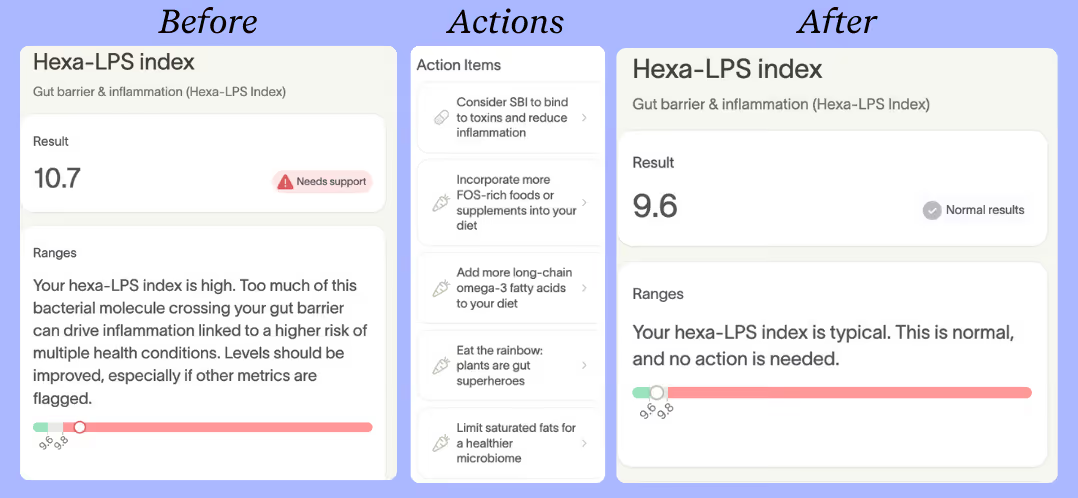
An elevated Hexa-LPS index signals an increased risk of inflammation, especially when the gut barrier is compromised. At 10.7, addressing this marker became a top priority.
Joe was already following a low-fat diet rich in fiber, leafy greens, and lean proteins, so his new routine focused on a mix of supplements. The protocol his doctor created aimed to bind and neutralize bacterial toxins with SBI Protect, increase gut‑protective butyrate via tributyrin, and use regenerative peptides (BPC‑157 and Thymosin Beta‑4) to help his gut lining recover, an experimental but carefully supervised part of his plan.
Six months later, his Hexa-LPS Index dropped to 9.6, in the normal range. A promising sign that he was giving his gut barrier the support it needed to keep bacterial toxins out of his bloodstream.
Enterobacteriaceae: disruptive microbe
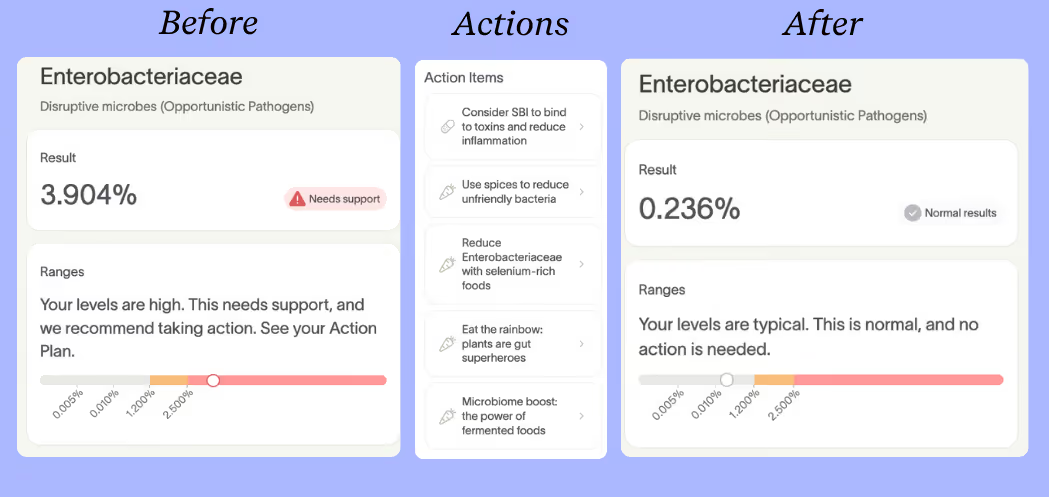
Enterobacteriaceae are a family of bacteria that can become problematic when overgrown. Joe's levels were high at 3.904%, indicating a disrupted gut state.
The same supplements that helped his inflammation also tackled this overgrowth. SBI bound the toxins these bacteria produce. Joe also ramped up fermented foods. "I do Olive My Pickle sauerkraut juice almost every day," he says, mixing it with aloe vera juice, apple cider vinegar, and his powdered supplements in what he calls his gut cocktail.
By December, Enterobacteriaceae dropped to 0.236%. Normal levels.
Abundance index: antibiotic resistance
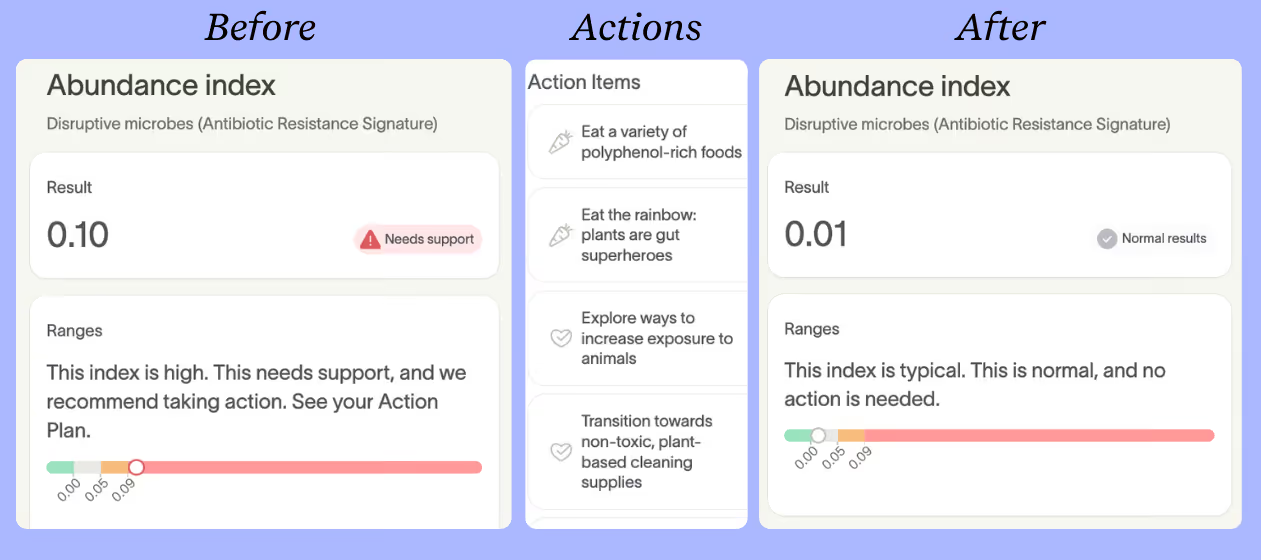
The Abundance Index tracks antibiotic resistance genes in the gut. When bacteria develop resistance to antibiotics, they can pass those resistance genes to other bacteria. Joe's index was elevated at 0.10.
His test showed elevated levels of multiple bacteria known to carry resistance genes, including various E. coli strains and Enterococcus species.
Joe's new protocol brought down these opportunistic bacteria and rebuilt beneficial microbes. His antibiotic resistance marker followed suit. By his retest, it had dropped to 0.01, within a normal range.
Akkermansia: beneficial microbes associated with metabolic health
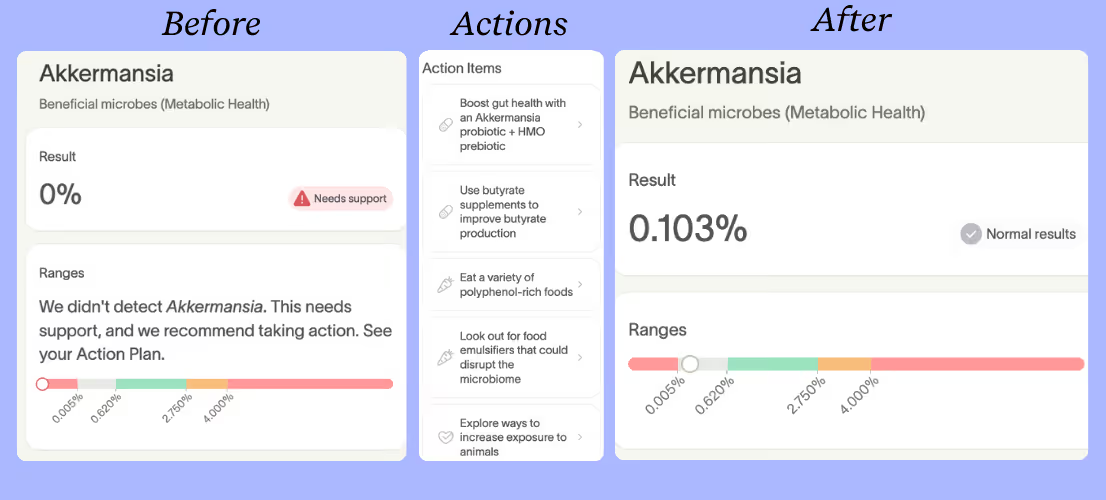
Akkermansia is a metabolism-supporting bacterium that lives in your gut's mucus layer. It helps keep inflammatory molecules out of your bloodstream by reinforcing that protective barrier [2], [3].
Joe started taking Pendulum Akkermansia every day along with a butyrate supplement. Butyrate is a short-chain fatty acid that helps rebuild the mucus layer Akkermansia feeds on. Foods high in polyphenols (e.g., berries, dark chocolate, tea) and prebiotic fibers (e.g., asparagus, chicory root, Jerusalem artichoke) also support Akkermansia.
When Joe retested, Akkermansia moved into a normal range at 0.103%.
Microbiome summary score (MSS): A 15-point jump
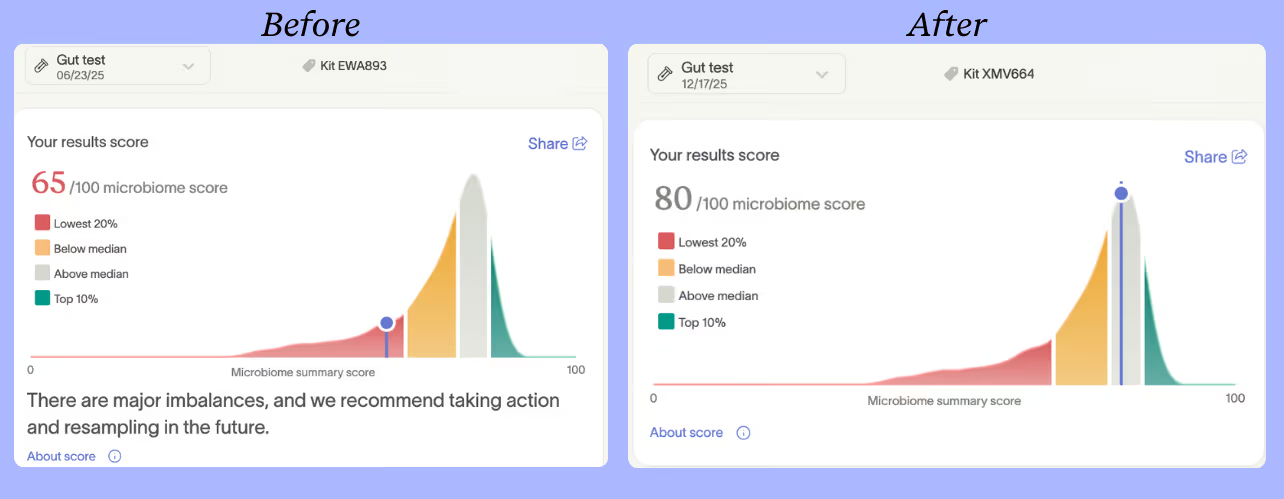
The Microbiome Summary Score evaluates all the relevant metrics for your age range and translates them into a single number, on a scale of 0 to 100. The higher your score, the more balanced your microbiome.
Joe was excited to see how improving key areas of his microbiome impacted his overall gut state, pushing his MSS to 80. The targeted interventions paid off, resulting in fewer symptoms and more confidence in his long‑term gut health.
Joe credits his doctor for mapping out supplements for each phase of his microbiome rebalancing plan. Next up was maintaining his routine.
Staying the course
For a biohacker like Joe, seeing the data was reassuring. But he knew sustaining what he'd worked so hard to achieve was just as important.
To keep his gut health strong, Joe takes Orthobiotic probiotic, Akkermansia, and a galacto-oligosaccharides prebiotic daily. His gut cocktail is in rotation every other day.
Joe has fine-tuned his diet, so it's exactly what his body needs: low-fat protein, omega fats, lots of rice, rainbow produce, and fermented foods. “I try to avoid gluten, but when I have it, I take it with gluten enzymes, which have helped a lot.”
When it comes to the big picture, Joe sees how his physical health, mental clarity, and emotional stability are all connected. He believes working on each is central to his peace of mind. “I've been on my mission to be happier. So I've done a ton of emotional work. But when my gut health is poor, I'm also unhappy. There’s a relationship, and that connection is very real.”
Joe’s philosophy about longevity comes back to the trillions of microbes in his gut. “It’s not just about optimizing performance or avoiding major diseases like cancer. I think everything starts in the gut."
She’s better, because I’m better
Joe's curious and generous nature is a through line in our conversation. And it's especially evident when he talks about how improving his gut health may benefit his family.
He plans on doing a follow-up test for Della, as her latest sample showed imbalances. Joe mentions she's been eating more yogurt lately, getting some probiotics in.
“I wonder if she's better because I'm better."
It's not just wishful thinking. Research shows dads influence the microbial environment at home through shared meals, activities, and even the bacteria they pass through a hug.
On his podcast DadicatedJoe, he and Cheryl explored gut health and how a father impacts his child's lifelong immunity. It's a fun listen and a window into Joe's mission to support new dads in showing up for their families and themselves.
If Joe's story inspires you the way it did us, a Gut Health Test is a great place to start. Getting a baseline is one of the best ways to take charge of your well-being. You'll see a complete picture of which microbes are thriving and which ones need support. Plus, prioritizing healthy habits inspires the ones you love to do the same.
Note: Joe’s regimen was highly personalized and supervised by his healthcare team. We recommend working with your own practitioner to find the best routine for you.