Tiny Health Microbiome Research Program
$5 million to close the gap between microbiome science and clinical practice
Tiny Health is committing $5 million to advance microbiome science and support researchers working to unlock the microbiome's potential to improve human health.


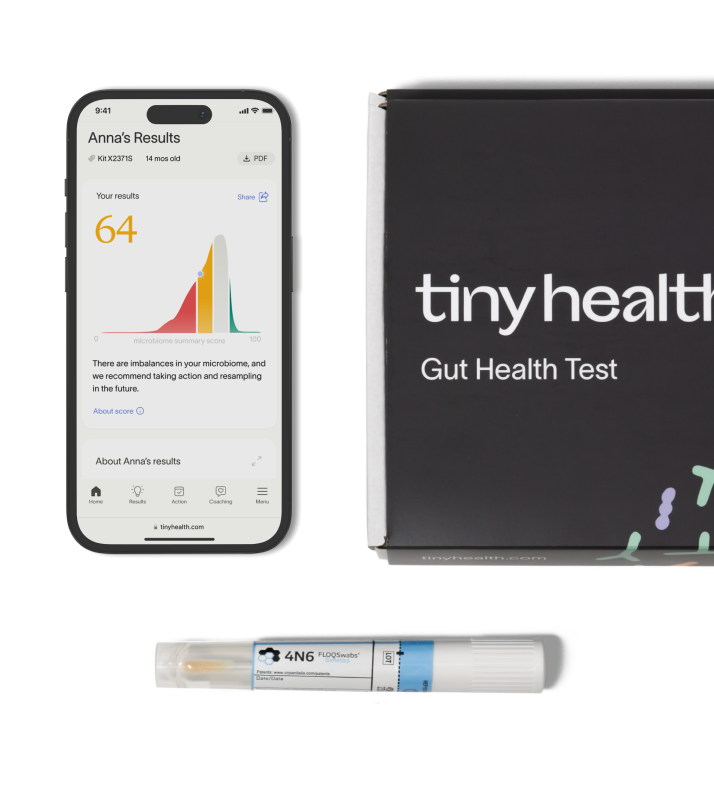
Mounting evidence connects the gut microbiome to immune health, metabolism, and chronic disease.
With 75% of U.S. adults and 45% of U.S. children living with at least one chronic condition, the need is urgent.
The Microbiome Research Program will enable researchers, clinicians, and scienctific partners to leverage Tiny Health's microbiome testing, data, and research capabilities to investigate important intervention strategies in microbiome health.
Sources: CDC, 2025; JAMA, 2025

Built to turn data into real-world evidence.
Bring high-quality microbiome data into your studies, cohorts, and clinical work, and help generate new evidence for the field.
- Clinicians: Add Tiny Health testing, track microbiome changes, and publish your findings.
- Researchers: Add microbiome testing to a patient cohort and explore new health conditions.
- Scientific partners: Add microbiome testing to demonstrate the biological impact of your ingredient.
Am I eligible to participate?
Inclusion criteria
Tiny Health is building rigorous, validated methods to make microbiome testing more consistent, reliable, and clinically meaningful.
Exclusion criteria
Gold Standard Microbiome Testing: Shotgun metagenomic sequencing
Tiny Health detects microbes across 120,000+ genomes down to the strain level, revealing metabolic capacity, immune markers, pathogenic organisms, and more.
Insight into Functional characteristics
Functional characteristics such as diversity, resilience, and metabolic markers can be the most meaningful factors in determining microbiome risk and intervention.
Analysis with our proprietary, in-house bioinformatics pipeline
Tiny Health built and owns its bioinformatics pipeline. Every sample is processed with the same rigorous, validated methodology.
Characterization with the world's largest longitudinal dataset
Tiny Health has built a propriety dataset of nearly 200,000 microbiome profiles spanning the whole lifespan, from the first 1,000 days to age 100+.

Track your baby's microbiome development over time
You can learn the most about your baby’s health and protect against chronic conditions by tracking changes on their gut health over their first 1000 days.
We recommend testing at 7 days old, and every 3 months until your baby is 18 months old.
A Tiny Health subscription gets you:
- Exclusive $30 discount off each test kit
- Your kits delivered when you need them
- Enter your payment details only once
- Pay only when the tests are shipped
- Free shipping
- Skip or cancel anytime
Built to turn data into real-world evidence.
Bring high-quality microbiome data into your studies, cohorts, and clinical work, and help generate new evidence for the field.
Track your baby's microbiome development over time
You can learn the most about your baby’s health and protect against chronic conditions by tracking changes on their gut health over their first 1000 days.
We recommend testing at 7 days old, and every 3 months until your baby is 18 months old.
A Tiny Health subscription gets you:
- Exclusive $30 discount off each test kit
- Your kits delivered when you need them
- Enter your payment details only once
- Pay only when the tests are shipped
- Free shipping
- Skip or cancel anytime
Built to turn data into real-world evidence.
Bring high-quality microbiome data into your studies, cohorts, and clinical work, and help generate new evidence for the field.
1x Mess-free Tiny Health Gut Microbiome stool test to further understand how gut health relates to oral microbiome
- Track essential bacteria that support oral health, metabolic health and fight inflammation
- Gut Health Report with personalized recommendations (delivered in 2-3 weeks)
Tiny Health helps you to optimize your health from within
Tiny Health offers microbiome testing for every stage of life, from womb through adulthood. Tiny Health gives individuals personalized insights and evidence-based recommendations to improve lifelong health from the inside out.
Tiny Health’s mission is to improve health outcomes of future generations through evidence-based insights.
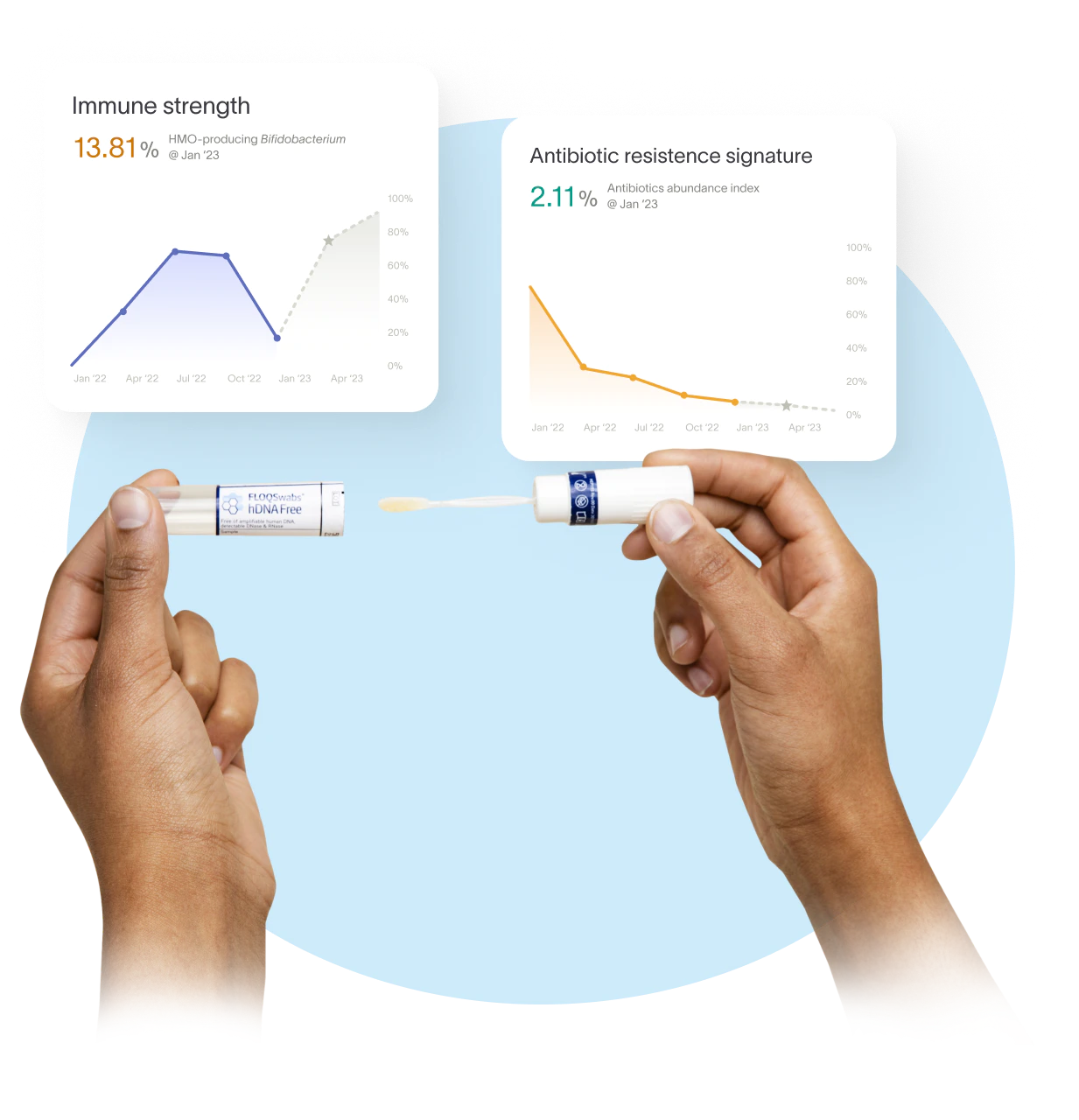

Improve the health outcomes of generations to come
"Tiny Health believes the next breakthroughs in microbiome science will come from bringing more researchers and institutions into the field. This investment will help generate new evidence and foster collaborations across the scientific community, building on Tiny Health's growing body of peer-reviewed research and its commitment to advancing rigorous, accessible microbiome science."
-Kimberley Sukhum, PhD
Chief Science Officer, Tiny Health
From your research question to published evidence.

Apply
Tell us about your research and the intervention strategy in microbiome health you want to investigate.

Review
Our science team reivews proposals for rigor and potential to generate new evidence.

Test, Analyze & Share Findings
Leverage Tiny Health's microbiome testing, data, and research capabilities in your study. Generate new evidence and join a growing body of peer-reviewed microbiome research.
How do we look at the microbiome?

High resolution analysis
We use shotgun metagenomics, a technology used in microbiome research. Make informed decisions with a comprehensive list of microbes found in your sample.

Functional insights
Through functional profiling, we tell you what microbes are present, how much of them are there, and what they’re actually doing.

Targeted suggestions
Get actionable advice tailored to your age and unique test results. Our at-home tests empower you with strain-level detail and precision science.

Your privacy comes first
We are dedicated to safeguarding your personal information at every turn and we will never sell your personal information. Your data is encrypted with high security standards to ensure complete confidentiality.

CLIA & CAP certified lab
Your samples are processed at a U.S. clinical-grade lab to ensure the accuracy, reliability, and timeliness of test results.
Meet our supporters:
Medical Advisors

Integrative Pediatrician and Pediatric Functional Medicine Expert
Founder, Healthy Kids Happy Kids

Executive director, G. Oppenheimer Center for Neurobiology of Stress and Resilience, UCLA; Author of The Mind-Gut Connection

Ruben Mars is an Assistant Professor of Medicine at Mayo Clinic in Rochester, Minnesota.

Associate Professor of Epidemiology, Johns Hopkins University

Board-Certified Pediatrician, Creator of Raising Amazing Podcast

Medical Advisor; Practicing OB/GYN Hospitalist Physician, Creator and Host of The All About Pregnancy & Birth Podcast

Associate Clinical Professor, UCSF; Pediatrician and former Chief Innovation Officer, Kaiser Permanente

Professor Emeritus of Microbiology & Immunology, Cornell University
Interested? Join this study
If you are interested, please complete the survey. Qualified individuals will be contacted by the study coordinator to provide consent and enroll in the study.
$5 million to close the gap between microbiome science and clinical practice
Frequently Asked Questions
What does research collaboration look like?
Support can begin wherever your project is today. Depending on the study, Tiny Health can help refine the study design, navigate IRB and research logistics, coordinate sample collection, analyze and interpret microbiome data, and support publication. Selected projects will receive a scope tailored to what they need to move the research forward.
Who can apply?
You don’t need to be a microbiome expert or part of a major research institution to apply. If you have a meaningful question about the microbiome and human health, we want to hear from you. Applications are welcome from individual clinicians and investigators, academic teams, health systems, startups, product developers, and other scientific organizations.
What kinds of research areas are you looking for?
We’re interested in research that can generate meaningful evidence about the microbiome and human health, including areas such as immune health, metabolic health, food allergy, IBD, healthy aging, and response to interventions.
Can I apply with an existing study or patient cohort?
Yes. You don’t need to start a new study. Microbiome testing can be added to an existing cohort when there is a clear population, sampling strategy, and comparison that can help answer a defined scientific or clinical question.
What makes a strong application?
We’re looking for focused research questions, well-defined study populations, and feasible designs where microbiome data can answer a meaningful clinical or scientific question. Projects with a clear path to publication are especially encouraged.