Both Tiny Health and Viome offer at-home gut microbiome testing, but they answer different questions. Tiny Health uses shotgun metagenomic sequencing to identify which microbes are present, down to the strain level, and analyze microbial functions and capacity. DNA is a stable, double-helix molecule, so these results are reliable and reproducible over time. Viome uses RNA sequencing to measure microbial gene expression, a single-strand signal that shifts hour to hour and reflects what's happening at the moment of collection, not a stable picture of your gut. Both companies give personalized nutrition recommendations.
Tiny Health provides comprehensive microbial coverage, screening for 120,000+ organisms across bacteria, fungi, viruses, archaea, and parasites. Viome's RNA-based approach covers a narrower slice, including bacteria and phage RNA viruses (viruses that infect bacteria). It’s built to capture active gene expression rather than a full inventory of what's present.
Tiny Health supports all ages and life stages, while Viome is designed for adults. Pricing starts at $249 for Tiny Health ($169/test with Tiny+ membership) and at $279 for Viome. Tiny Health customers receive guidance from microbiome specialists through 1:1 sessions (Tiny+) and Personalized Results Review sessions (single tests). Every Tiny Health test comes with built-in support from TinyAI, trained on the world’s largest longitudinal microbiome dataset. Viome delivers AI-driven insights through its app.
Best for Tiny Health: individuals or families who want detailed microbial functions and taxonomic insights, personalized and unbiased supplement, food, and lifestyle recommendations, and guidance from a microbiome specialist.
Best for Viome: adults focused on metabolic activity, specially formulated in-house supplement subscriptions, and food exclusions. Viome's approach centers on telling you what to eat and what to avoid. (Tiny Health instead encourages dietary diversity—especially fiber—and doesn't recommend excluding major food groups.)
A healthy gut plays an important role in your overall health, but choosing the right gut test isn’t always as straightforward.
This guide helps fill the gaps between what you do and don’t know about Tiny Health’s and Viome’s at-home gut tests. Nuance matters, so we’re covering a lot. We explore who the test is for, the technology it uses, what each test measures, the level of support, costs, and what customers say about both options.
This way, you can decide which one better fits your goals, your budget, and the kind of information you actually want from a microbiome test.
Important: Tiny Health tests and reports are provided for wellness and educational purposes only and are not intended to diagnose, treat, cure, or prevent any disease. Microbiome testing does not replace evaluation or care from a qualified healthcare professional, particularly for persistent, severe, new, or worsening symptoms.
How we compared Viome and Tiny Health
Methodology
A fair comparison draws on more than one source. Here’s what we looked at:
Peer-reviewed studies on metatranscriptomics and shotgun metagenomics technology
Evaluation criteria: sequencing technology and scientific validity, microbial coverage, specificity of personalized recommendations, pricing transparency, practitioner access, lab certifications, and customer support.
Last updated: August 2026. Pricing and product details are subject to change.
A note on this comparison: This article compares Tiny Health and Viome based on publicly available information at the time of publication. Product features, pricing, and offerings may change over time. We recommend verifying details directly on Viome's website before purchasing.
Tiny Health at a glance
Tiny Health was founded in 2020 by a mom looking for answers for her baby's eczema and food allergies. What started as the first baby gut test on the market has grown into a microbiome testing platform advancing lifelong health, from the first 1,000 days to the last, for people of all ages and the practitioners who support them.
Our Gut and Vaginal Health Tests are powered by shotgun metagenomics, a sequencing method recommended by international scientific consensus for clinical microbiome testing [1]. That means strain-level, age-specific insights drawn from one of the world's largest longitudinal microbiome datasets, translated into a personalized step-by-step action plan.
Tiny Health doesn't sell its own supplements, and that's on purpose. Some microbiome companies profit when you keep buying products, which can shape what they recommend. Here, guidance is based on your actual microbiome data, and sometimes the most honest answer is that you don't need to take anything new at all.
Single-test customers get a Personalized Results Review to walk through their report. Tiny+ members also get a 1:1 consultation with a microbiome specialist for deeper guidance and ongoing support.
Tiny Health Fast Facts
Founded
2020
Headquarters
Austin, Texas
Test type
Deep shotgun metagenomics (DNA sequencing)
Sample type
Stool
Best for
Anyone seeking high-resolution microbiome insights and specialist support to uncover root causes of digestive or chronic health issues, with age-specific guidance from infants through adulthood.
Starting price
$249 one-time test or $169 (through Tiny+ Membership)
Lab certification
CLIA- and CAP-certified
Viome at a glance
Viome, founded in 2016, is a well-recognized name in consumer gut health testing. The company built its platform around metatranscriptomic sequencing, technology originally developed at Los Alamos National Laboratory, and uses AI to translate microbial gene expression data into personalized food and supplement recommendations. Viome's typical customer is a health-conscious adult looking to optimize nutrition and understand what their gut microbiome is actively doing. It's worth noting that the supplement recommendations Viome generates are their own proprietary supplement products, sold directly as a subscription through the platform.
Viome Fast Facts
Founded
2016
Headquarters
Bellevue, Washington
Test type
Metatranscriptomic (RNA sequencing)
Sample type
Stool
Best for
Adults interested in transient microbial activity and personalized nutrition
Starting price
$279 (Gut Intelligence Test with bundle)
Lab certification
CLIA-certified
Tiny Health vs Viome: a side-by-side comparison
Here's how the two tests stack up feature by feature, from sequencing method to microbial coverage to what happens after your results arrive.
Feature
Tiny Health
Viome
Sequencing method
Deep shotgun metagenomics (DNA)
Metatranscriptomics (RNA)
Microbial coverage
120,000+ bacteria, fungi, viruses, archaea, parasites down to a 0.005% relative abundance
Bacteria, phage RNA viruses, archaea, fungi; focuses on active microbes
Species-level identification
Yes, with strain-level precision
Limited; focuses on gene expression rather than taxonomy
Ages served
Adults, plus age-specific support for infants, children, and pregnancy
Adults only
Sample collection
Stool
Stool
Functional analysis
5,000+ functions across thousands of pathways; DNA-based (genes)
Food lists, personalized supplements based on your microbiome's metabolic activity and predicted interactions between diet, microbes, and your body
Starting price
$169 (adult gut test, membership) or $249 single test
$279 (Gut Intelligence test)
One-time vs. subscription
One-time test or Tiny+ Membership
One-time test; supplement subscription optional
Turnaround time
2-3 weeks (typically)
2–3 weeks single test or 5 weeks with personalized supplements
HSA/FSA eligibility
Yes
Yes (check with provider)
Customer support
Personalized Results Review session with a microbiome specialist, access to additional microbiome specialist support via one-on-one consults, and built-in support through TinyAI
AI Health Agent
Lab certifications
CLIA- and CAP-certified
CLIA-certified
Detailed comparison: Tiny Health vs. Viome
The biggest difference between these two gut tests is the technology, which shapes what gets detected, how confident you can be in the results, and how actionable the recommendations are.
Technology and testing methodology
The sequencing method (or technology) a company uses determines what it can and can't see in your microbiome. Tiny Health and Viome take fundamentally different approaches, each with strengths and trade-offs.
Tiny Health uses shotgun metagenomic sequencing, a DNA-based technology used widely in gut microbiome research.
Here's what that means for you. Most gut health tests look at one specific gene to get a rough sense of which bacteria are present. Shotgun metagenomics reads all the DNA in your sample, including bacteria, fungi, viruses, archaea, and parasites.
High-resolution detail lets us identify microbes at the strain level (think of it like the difference between knowing the country someone lives in versus knowing their exact address). Our depth of sequencing captures microbes present in amounts as low as 0.005% of your total microbial community, so nothing gets missed.
DNA is a stable molecule. Unlike RNA, which reflects gene expression, which can change quickly in response to what's happening in the body, the DNA of your microbiome doesn't shift from hour to hour. The microbial community itself changes over a much longer period. That stability makes DNA-based sequencing well suited for reliable, reproducible microbiome testing and for tracking meaningful changes over time.
We can also tell you the functional potential of your microbes, meaning what they're capable of doing based on the genes they carry. You'll learn things like whether your microbiome has the capacity to produce short-chain fatty acids that regulate inflammation and make the vitamins your body needs. You can also get detailed microbiome data, such as whether the probiotic you take is colonizing your gut.
That functionality, combined with our proprietary analysis system, turns raw sequencing data into personalized insights like microbiome age and resilience scores. It’s also what allows us to give you targeted recommendations based on your unique results.
One tradeoff: because shotgun metagenomics sequences DNA rather than RNA, it captures which microbes are present and what they're capable of doing, not what they're actively doing at the exact moment of collection. Functional interpretation is based on well-established microbial science rather than real-time gene expression.
"Tiny Health stores your raw sequencing data, so your results can be reanalyzed as the science evolves, even between tests," says Chief Science Officer Dr. Kimberley Sukhum. "So if you're testing twice a year, you may find updated insights on your existing sample in your portal before your next collection. DNA provides a stable snapshot that keeps working for you over time."
Viome uses metatranscriptomics, or RNA sequencing, to measure microbial gene expression. Instead of looking at the DNA that microbes carry, it looks at which genes are being expressed in the sample at the time it was collected. Viome says this approach helps its AI model generate food and supplement recommendations based on what those microbes are actively doing.
Gene expression can change quickly. RNA reflects what microbes are doing in response to their current environment, so the results can shift from one collection to another based on what is happening at that moment. RNA is also more fragile than DNA and degrades more quickly, which makes sample preservation during transit especially important.
This approach can provide a snapshot of microbial activity, but it is different from measuring the stable microbial community and its functional capacity. In simple terms, Tiny Health asks, "Which microbes are here, and what are they capable of doing?" Viome asks, "Which microbial genes are being expressed right now?"
Tiny Health
Viome
Method
Shotgun metagenomics sequencing (DNA)
Metatranscriptomics (RNA)
What it detects
All microbes present, including bacteria, fungi, viruses, archaea, parasites
Strong fit, strain-level, functional data for longitudinal tracking
Good for activity insights
Recovering after antibiotics
Strong fit, antibiotic recovery insights included
Some guidance
Looking for longevity metrics
Longevity metrics include Gut Resilience Score, Microbiome Age, urolithin-producing species
No formal scores
A parent testing an infant or baby
Strong fit, the only clinically-validated baby gut test available
Not available
A parent testing a toddler or child
Strong fit, age-specific insights and recommendations
Not available
Pregnant or postpartum
Yes, pregnancy and postpartum insights available
Not typically recommended without a physician consultation
Interested in family testing
Strong fit, Tiny+ family Membership
Not available
Looking for practitioner-backed interpretation
Strong fit via our PRO Gut Health Test, or Gut Health Test ordered by qualified practitioners through Powerbytiny.com
Limited
Looking for a one-time snapshot
Yes
Yes
Looking for ongoing microbiome tracking
Yes, Tiny+ member discounts for retesting and tracking changes over time
Yes (retest discounts)
Sample collection and customer experience
Both Tiny Health and Viome ship at-home collection kits with prepaid return mailers. Neither requires a clinical visit, and both provide step-by-step instructions.
Tiny Health stool collection
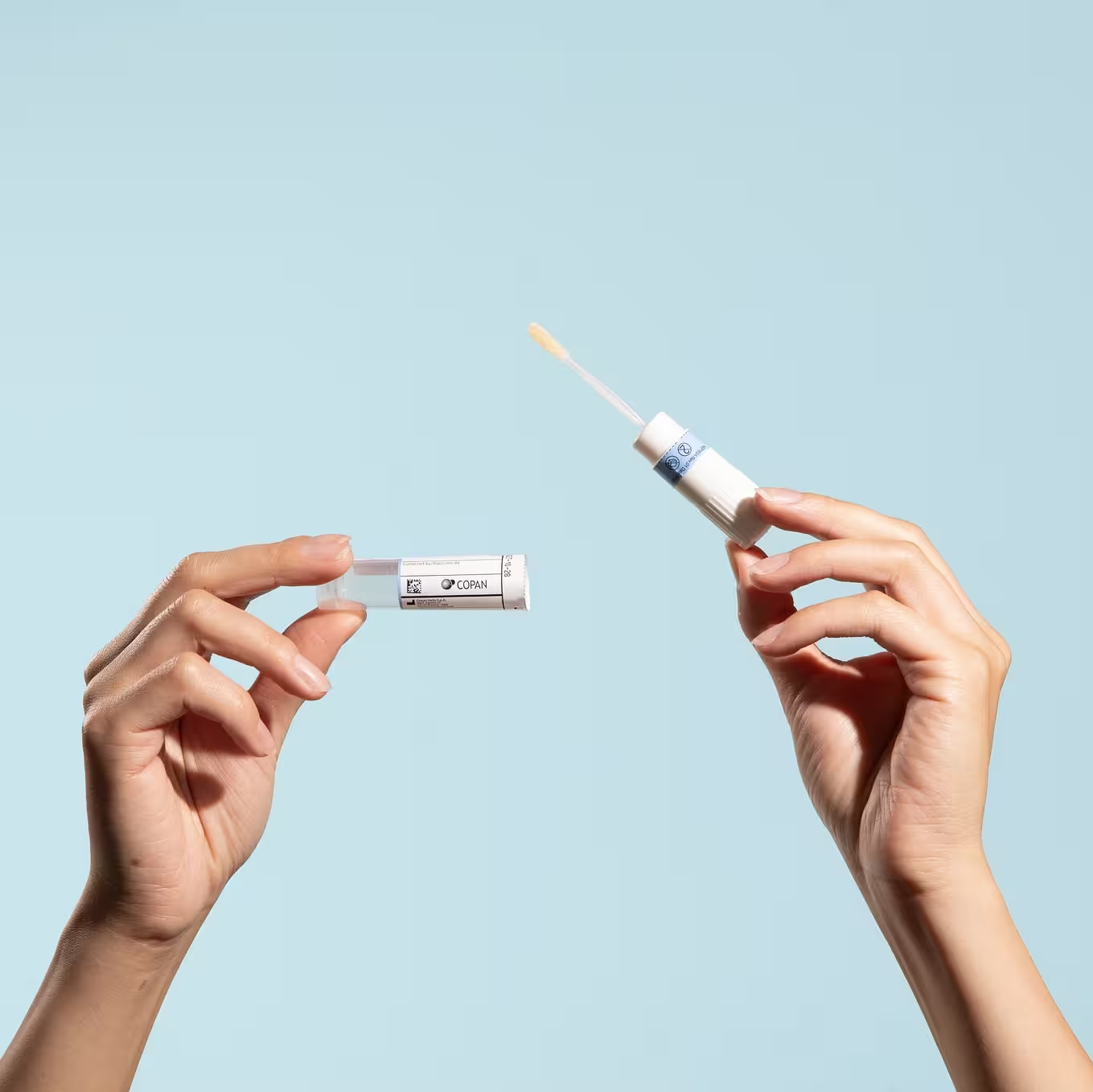
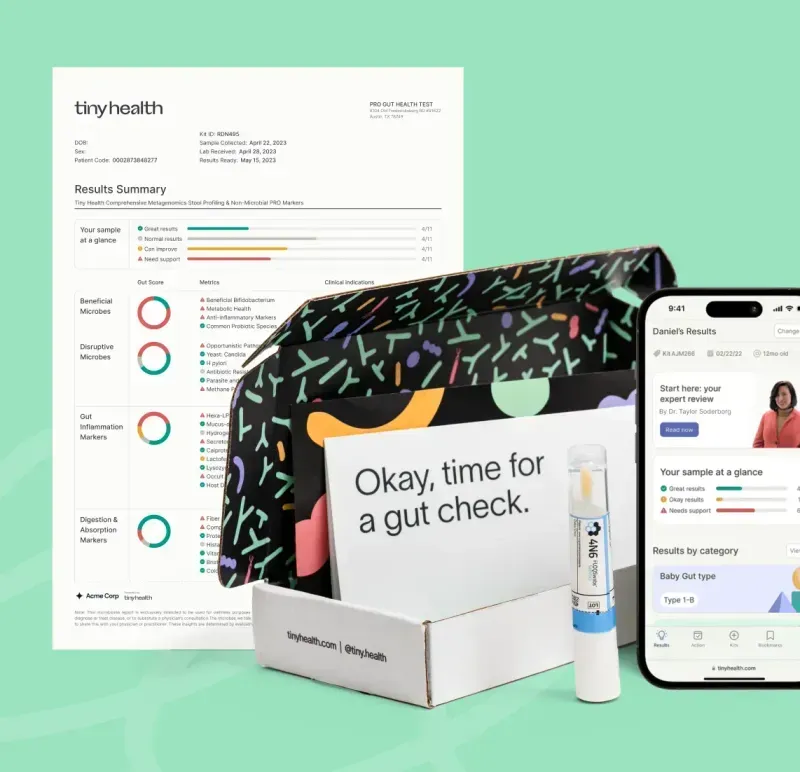
The collection process for your Adult Gut Health kit takes roughly 5 minutes using a swab from soiled tissue paper—no gloves, scooping, or mess. You seal the tube in a specimen bag and drop it in a USPS mailbox with the prepaid mailer. Results typically arrive via your online dashboard in 2–3 weeks. Your test includes a full report, proprietary metrics like Microbiome Age and other life stage insights, a targeted Action Plan, and a Personalized Results Review session with a microbiome specialist.
Note: Tiny Health uses a swab that rapidly pulls moisture from the sample and halts bacterial activity. This stabilizes the sample and preserves its microbial profile during transit, even if exposed to temperature fluctuations or shipping delays.
Viome stool collection
Viome uses a stool collection method that involves placing a paper sheet over the toilet bowl to collect the sample. Customers have described the process as straightforward, with seamless kit registration and a smooth digital interface. Test results arrive in 2–3 weeks through Viome's app. If you opted for their supplement subscription, results will likely take 5 weeks or more.
Note: Viome's mail-in stool collection is designed to preserve RNA, the genetic material on which their analysis depends, during transit at room temperature.
Personalized recommendations: how actionable are the insights?
This is where the two companies diverge the most.
Tiny Health's recommendations
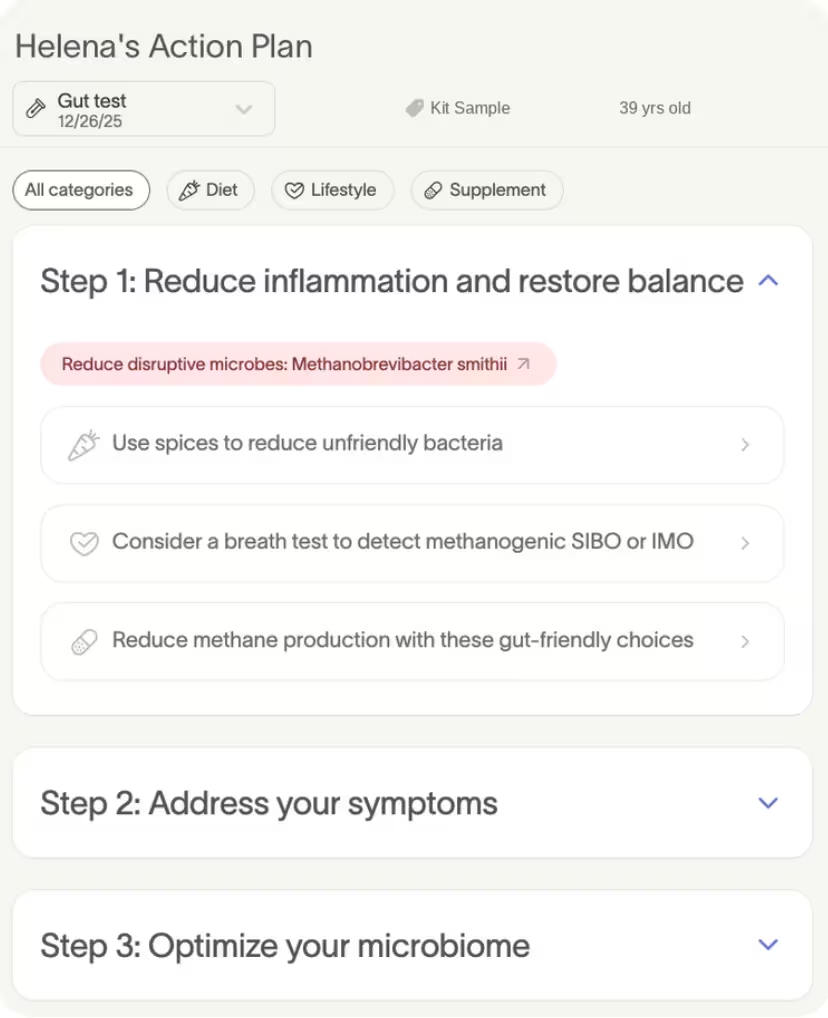
Tiny Health’s Action Plan turns your microbiome test results into clear, personalized next steps. Organized by the areas that need the most care, it prioritizes the most impactful things you can do to bring your gut health into balance. The evidence-based recommendations include targeted diet, supplements, and lifestyle changes tailored to your unique gut microbiome.
In your Results portal, you also have access to TinyAI. It provides personalized guidance that helps you better understand and apply your results. You can ask questions about your report, dig deeper into specific findings, and get help putting your recommendations into practice. You can also reach out to our microbiome specialist team any time you want support from a real person.
A step-by-step plan built around your unique microbiome
One reviewer said, "The Action Plan in my son's report was clear and easy to understand, and there is so much valuable information on the report that I feel like I am learning something new every time I re-read it."
Strain-level precision allowed one reviewer on Tiny Health’s review page to say that her test detected a specific Bifidobacterium strain other tests had missed. RNA-based sequencing, by contrast, reflects microbial activity at a given moment but identifies fewer microbial species.
A previous complaint Tiny Health customers have shared is that their reports are too in-depth. In early 2026, the Action Plan was redesigned to reflect this critical feedback. Today, when your results arrive, you’ll find a simplified step-by-step guide. This roadmap outlines the most impactful things you can do to bring your microbiome into balance, starting with your number 1 priority.
Viome's recommendations
Viome generates a personalized food list organized into superfoods, Enjoy, Minimize, and Avoid categories based on your RNA analysis. But the science behind these food recommendations has limitations. Some of the research comes from studies of bacterial viruses or plants rather than from ones of the human gut. That means a response observed in these studies may not reflect how your body or gut microbiome will respond when you actually eat that food.
The company's app explains why specific foods are recommended or flagged based on your results. For people who subscribe to Viome's proprietary supplements, those products are formulated based on the same results data.
Some customers appreciate the clarity and specificity. One reviewer wrote: “The nutritional information (if accurate) should move my overall health to the next level. App is pretty easy to use, liking what I see so far.”
Another said, “So frustrating. Too limited food information, so few items listed makes it very difficult to plan meals... need a larger database of foods.”
Why doesn’t Tiny Health make its own supplements like Viome does?
Because we believe your supplement recommendations should be based entirely on your results, not on what a company is trying to sell you. Every supplement in the Tiny Health Action Plan is selected solely for its ability to support something specific in your results or the symptoms you’ve shared in your surveys, and is carefully vetted by our team. You never have to second-guess a product recommendation in yourAction Plan because every recommendation is science-backed, unbiased, and tailored to your unique microbiome.
We also call out common food allergens or sensitivities in our supplements, like soy, dairy, and gluten. If there’s any debate around an ingredient, we highlight it so you can make an informed decision.
Pricing, turnaround time, and customer support
Costs below were verified in August 2026. Always confirm current pricing at each company's website.
Cost dimension
Tiny Health
Viome
Base price
$249 for a single test
$279 (Gut Intelligence + bundle starting price)
One-time purchase or subscription
Test one-time or via membership
Test is one-time; supplements subscription-based
Retest discount
Yes, Tiny + Membership retesting discount
Yes
HSA/FSA eligibility
Yes
Yes (check with provider)
What's included
Test kit, full metrics report, Action Plan, and Personalized Results Review session with a microbiome specialist
Test kit, app access, food recommendations, health scores
Sample collection kit included
Yes
Yes
Shipping included
Yes (prepaid return)
Yes (prepaid return)
Turnaround time
2-3 weeks (typically)
2–3 weeks
Results dashboard
Yes, web-based interactive report
Yes, app-based
Personalized action plan
Yes, diet, lifestyle, supplement guidance
Yes, food and supplement guidance (note: supplement recommendations are Viome-branded products)
Practitioner support
Yes, when a customer's practitioner orders via our Poweredbytiny.com portal
No dedicated model
Customer support channels
On-call support via email and text, and TinyAI
AI Health Agent
Pricing last checked
August, 2026
August, 2026
One note on Viome's cost: adding personalized supplements via Viome’s proprietary subscriptions can significantly increase monthly costs.
Verified reviews: what people are saying about Tiny Health and Viome
Tiny Health: what customers appreciate
Tiny Health's reviews emphasize the depth and specificity of insights, especially for women navigating menopause and perimenopause, parents dealing with their children's eczema and food sensitivities, and anyone interested in antibiotic recovery. On Thingtesting, one parent wrote: "I'd rate this company 10/10! The insights Tiny Health provided into my son's gut microbiome health were invaluable." Another Tiny Health customer shared on our reviews page: "No other testing company was able to detect this beneficial strain, which completely turned around my grandson's gut from extremely inflammatory to anti-inflammatory."
One Amazon Vine reviewer gave it 4 out of 5 stars, praising the clinical-grade accuracy and clean process, but noted the longer turnaround time.
Tiny+ members frequently mention how their session with a microbiome specialist made a big difference. “Very helpful. She provided detailed information on the results and discussed next steps and action plans. She also explained what the terminology meant, how these things can show up in daily life, etc. Great experience.”
Tiny Health: common criticisms
As mentioned above, shotgun metagenomic sequencing can take a little more time than RNA testing due to the test's in-depth nature and can occasionally take longer than three weeks. While one Amazon customer had good things to say about the depth of information, she mentioned difficulty collecting a sample.
For people who want faster results, that tradeoff may factor into their decision when choosing a microbiome test. Some people prefer Viome over Tiny Health because they are not interested in the level of detail that shotgun metagenomic sequencing provides.
Viome: what customers appreciate
Many Viome customers describe meaningful changes after following their food recommendations. "Using Viome has changed my gut for the better. I've suffered for years, and this has changed my life," wrote someone on Viome's testimonials page. Others highlight the value of understanding which foods were quietly working against them: "I was shocked to learn that some of my most frequent foods were on my avoid or minimize list."
You're looking to find the root cause of microbiome-related symptoms
You have a chronic condition and want to share high-resolution data with your practitioner
You want microbiome insights that may be impacting perimenopause or menopause
You love data and want to track your gut health over time
You want recommendations that aren't influenced by a company trying to upsell its own products
You want the option of one-on-one support with a microbiome specialist
You want a testing platform that will work for your whole family (regardless of age)
You want help reducing your baby's odds of eczema through early microbiome testing, supported by our own published research [3]
You want strain-level identification and functional insights backed by clinical research
Choose Viome if:
You're an adult primarily interested in a snapshot of your gut's metabolic activity, including digestion, nutrient absorption, and other activity-based gut scores
You prefer app-based results that organize food guidance into easy-to-scan categories
You want a platform that combines gut testing with personalized in-house supplement recommendations you can subscribe to monthly
You want insights that help you fine-tune your diet based on how your gut microbiome is actively processing food right now
A 2-week turnaround time matters to you
Consider both if:
You want to compare your microbiome activity (Viome) with your full microbial community profile (Tiny Health)
You're a biohacker interested in seeing how the two methodologies tell a different story about your gut
How Tiny Health is different
Tiny Health started with the first clinically validated baby gut test and has evolved to make microbiome science accessible to people of all ages. Longevity, menopause condition association, GLP-1 production, and other biomarkers track gut health across all life stages, including pregnancy.
Tiny Health has published a randomized controlled trial in infants showing that its personalized gut health support program was associated with 83% lower odds of eczema [3]. Shotgun metagenomic sequencing offers strong scientific support, while publicly available evidence for RNA-based consumer tests is more limited.
From parents of newborns to adults dealing with hormonal and digestive issues to those recovering from antibiotic use, our reports deliver advanced, science-backed insights and a personalized Action Plan. Plus, if you’re tracking your microbiome progress over time, a Tiny+ Membership is a more affordable option.
Get to know your microbes with an easy, 5-minute at-home test from Tiny Health. Unlock deep gut health insights and personalized recommendations for your diet, supplements, and lifestyle.