You eat plenty during the day but feel hungry soon after and tired all the time. Maybe you’ve white-knuckled through low-fat and low-fiber diets. Or hoped the 5-day cabbage soup cleanse would reset your metabolism and help you lose 10 lbs fast.
If this sounds familiar, you're not alone.
The typical American diet is high in refined carbs, added fats, and ultra-processed foods. But it’s low in fiber that feeds your gut microbes [1], [2]. So you may be getting enough calories, but your microbiome is malnourished.
Gut microbes break down dietary fiber into compounds that affect appetite, blood sugar, and how your body uses energy. In this article, we'll explain how low-fiber diets weaken these processes, causing your body to store more fat than it uses.
You'll learn how fiber powers your metabolism, which foods to prioritize, and daily habits that break the overfed-but-undernourished cycle.
How your gut influences metabolism
When your diet is balanced, and your gut gets the fiber it needs, microbes generate chemical signals that help regulate your appetite, insulin sensitivity, fat storage, and energy [3].
Here’s how it works. Your body can't digest most fibers, so they reach your colon intact. There, your gut microbes ferment them into short-chain fatty acids (SCFAs), like butyrate, propionate, and acetate. These compounds serve as fuel and signaling molecules [2], [4]-[6].
SCFAs influence the release of appetite-regulating hormones like GLP-1 and PYY, which signal to your brain that you're full, helping prevent overeating. They also improve insulin response and control whether calories are used or stored [5]-[7].
With enough fiber, your body balances appetite and energy needs efficiently.
What happens to your body when it's low on fiber
Your gut bacteria rely on fiber from diverse plant foods as their main fuel to make beneficial SCFAs [5]. When you eat less fiber and/or your diet lacks variety, your microbes make fewer SCFAs. With less fiber to feed on, they turn to proteins and bile acids (which help digest fats) instead, creating byproducts that can be harder on your gut.
Over time, these byproducts can compromise your gut barrier and disrupt your metabolism [1]-[2], [7]. Stress on your gut lining increases inflammation and metabolic issues.
How a weak gut barrier makes weight loss harder
Your gut barrier helps protect against the kind of inflammation that can interfere with weight management. It acts as a selective filter, allowing nutrients to enter your bloodstream while blocking harmful substances.
Less fiber on your plate means your microbiome produces fewer protective compounds, potentially weakening the gut lining. When beneficial SCFAs like butyrate (produced when your gut ferments fiber from foods like beans and whole grains) run low, the connections between barrier cells get weaker. This gives unfriendly bacterial fragments—like hexa-LPS—a particularly inflammatory toxin, a chance to slip into your bloodstream, triggering low-grade inflammation throughout your body [8]-[9].
Chronic inflammation throws off your insulin response. That makes your body less efficient at burning calories for energy, prompting it to store them as fat instead. This shift can lead to gradual weight gain or keep you stuck at a plateau, simply from not getting enough fiber [8], [10].
To complicate things, you might feel fine—no bloating, digestive troubles, or signs of gut imbalance. Meanwhile, your metabolism may slowly rewire to hold onto weight.
The Akkermansia-weight management connection
To understand how microbes affect your gut lining and metabolism, let's focus on Akkermansia muciniphila. This microbe is often hyped in wellness spaces as a metabolism booster or calorie burner. The reality is a bit more nuanced.
Akkermansia influences metabolism by strengthening your gut barrier, not by speeding up how many calories you burn. It lives in the mucus layer of your gut, feeding on it to help regenerate this protective lining. This “pruning” process helps block inflammatory bacterial fragments from entering your bloodstream, which regulates insulin function and reduces fat storage [11]-[12].
But it can't work alone. Akkermansia helps maintain a healthy gut barrier by teaming up with microbes that produce SCFAs from fiber-rich foods like asparagus, Jerusalem artichokes, and other plant foods. These SCFAs rebuild the mucus layer, Akkermansia’s main food source. If you don't eat enough dietary fiber, you weaken this system and increase inflammatory pressure, which may contribute to weight gain [11]-[12].
Studies show that people with healthier weights generally have higher Akkermansia levels, while those with obesity or insulin resistance often have lower levels. Clinical trials using Akkermansia supplements may slightly reduce body fat, but most improvements appear in how the body handles insulin and controls inflammation [11], [13].
While having more Akkermansia can help, lasting weight management depends on your whole gut ecosystem working together, not just one microbe.
How much fiber do you need each day?
Most Americans get about 15 grams of fiber per day. Your gut needs at least 25 grams if you're a woman and 38 grams if you're a man to function well. For optimal gut health, aim for 30-40 grams daily.
But hitting a number isn't the whole story. The variety of fiber matters just as much. Your gut thrives on diversity, so eating many different plant foods gives you a wider range of fibers for beneficial bacteria to ferment.
10 foods high in fiber
Some of the highest-fiber foods to help you hit your daily target:
Chia seeds - about 34g fiber per 100g (10g per ounce)
Flax seeds - about 27g fiber per 100g
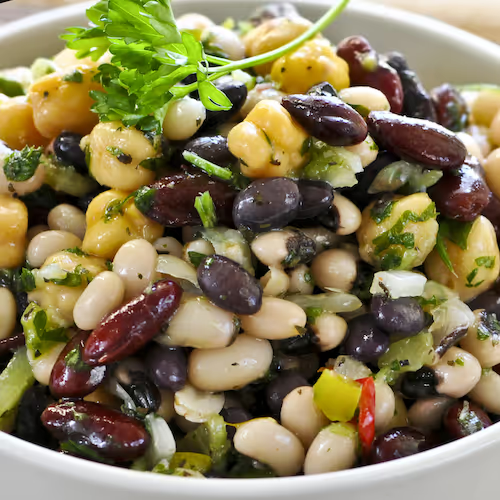
Navy beans (cooked) - about 19g per cup
Split peas (cooked) - about 16g per cup
Lentils (cooked) - about 15-16g per cup
Black beans (cooked) - about 15g per cup
Lima beans (cooked) - about 13g per cup
Artichokes - about 10g per medium artichoke
Green peas (cooked) - about 9g per cup
Raspberries - about 8g per cup
Daily habits that support your gut and metabolism
Fiber is the foundation, but there are other simple ways to amplify how well your microbiome supports your metabolism:
Cut back on ultra-processed foods. They tend to promote inflammation that interferes with your metabolism.
Keep your routines consistent. Your microbes and hormones love stability. Go to bed and wake up at similar times, move daily, and eat meals on a regular schedule.
Be thoughtful about antibiotics, especially with your little ones. Studies link antibiotic use in infancy to a higher risk of obesity later in life [14].
Adopt healthy habits early in life. Focus on building your child’s gut health through diverse plant-based nutrition. Microbiomes adapt easily, especially in the first 1,000 days.
You don’t need to overhaul your life overnight. Small changes can make a big difference for your gut and metabolic health. Just stay consistent.
Want to see where you stand?
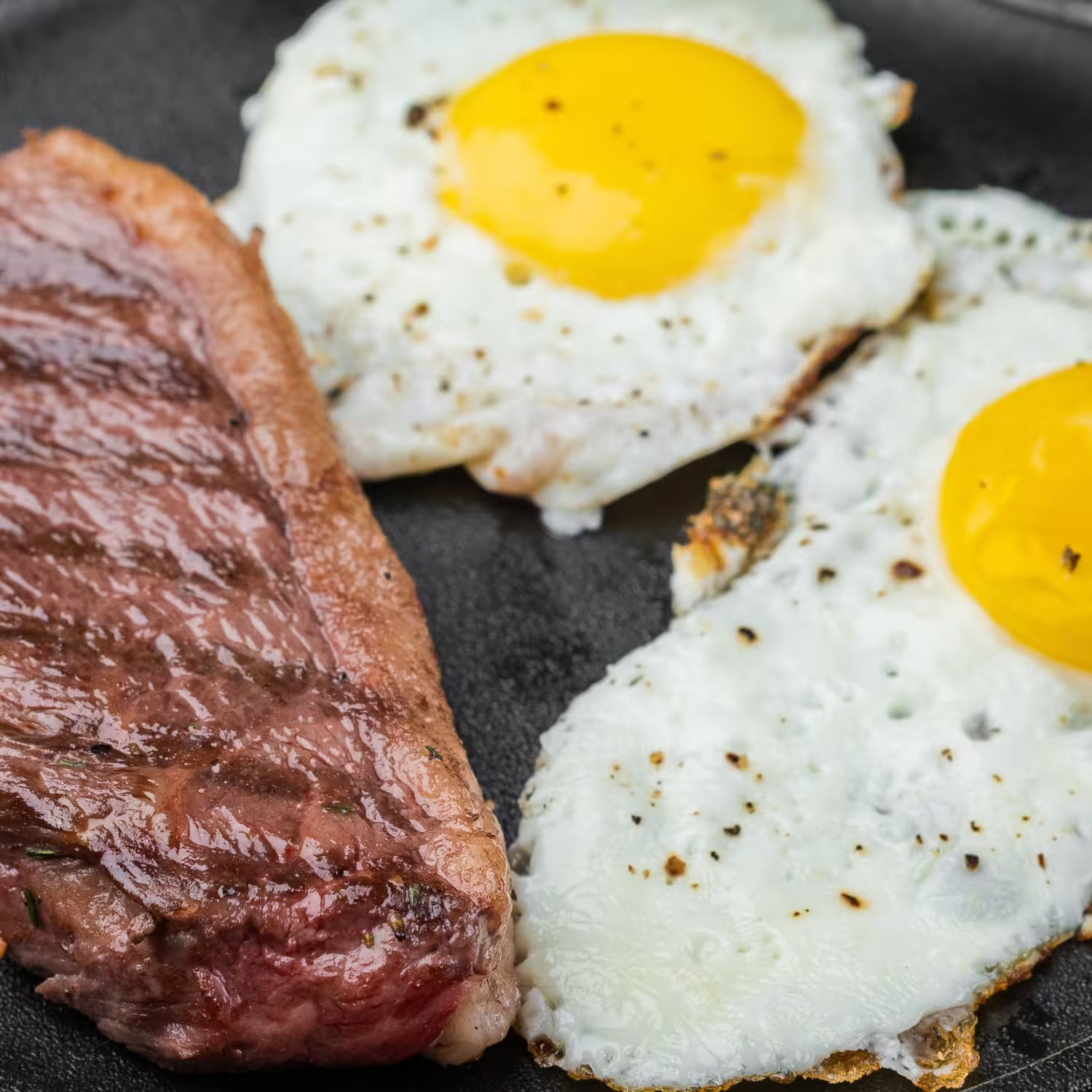
Whether you're wondering if your fiber intake is actually fueling your metabolism, trying to balance your keto diet and fiber intake, or leaning into your all-meat, all-the-time carnivore era, a Gut Health Test shows you what's really happening in your microbiome.
You'll discover which beneficial bacteria are present and how well they're functioning to produce important metabolites. Find out your GLP-1-related metrics based on key markers like Akkermansia, butyrate, Faecalibacterium, acetate, and propionate. Plus, you'll get personalized recommendations to improve your gut health and metabolism.