The Mediterranean diet is a plant-forward eating pattern rooted in traditional foods from Mediterranean regions. Learn how this diet rich in wholesome, nutrient-dense foods can help nurture a balanced, diverse gut microbiome.
The Mediterranean Diet for Gut Health: What to Eat and Why It Works
Summary
From sun-ripened tomato slices dripping with olive oil to warm, crusty whole-wheat bread just out of the oven, the Mediterranean diet is more than a passing trend or hashtag on social media. Rooted in the traditional foods of countries bordering the Mediterranean Sea, including Greece, Italy, Spain, and the Middle East, this way of eating embraces delicious simplicity that's been enjoyed for generations.
At its core, the Mediterranean diet emphasizes whole foods, plenty of plants, and lots of olive oil, all within a balanced, flexible approach to eating that doesn’t feel like you’re following a strict set of rules. Known for its many wellness benefits, including heart health and longevity, it’s more recently getting major buzz for its impact on gut health.
In this article, we’ll explore how a Mediterranean way of eating supports your gut microbiome and share practical ways to work it into your daily routine for your entire family to enjoy.
What is the Mediterranean diet?
Instead of thinking of the Mediterranean diet as a strict list of “dos” and “don’ts,” view it as a healthy way of eating that naturally fits into your lifestyle. It’s inspired by the traditional food habits of Mediterranean communities, where meals were based on local crops, seasonal ingredients, home-cooked foods, and shared meals. In practice, this could be as simple as gathering around a table with family and friends and enjoying simple dishes you make from fresh garden ingredients.
At a glance, the Mediterranean diet focuses on:
- Fresh fruits and vegetables
- Whole grains
- Legumes
- Nuts and seeds
- Fish and seafood
- Olive oil as the main source of fat
It limits or includes in moderation:
- Processed foods
- Saturated fats
- Added sugars
- Poultry and dairy
- Red and processed meats
- Wine with meals
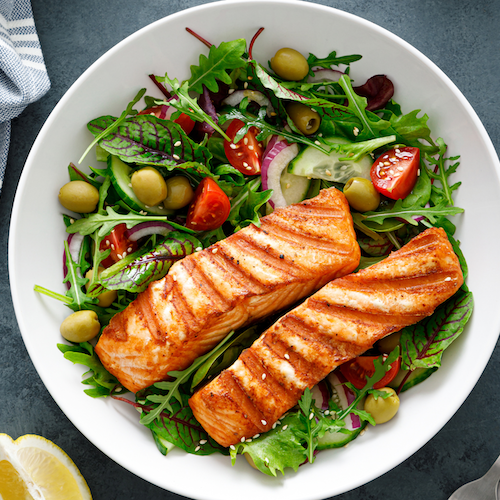
Even simple choices like serving roasted vegetables, preparing a hearty salad, or baking a tasty piece of fish for dinner bring you closer to a Mediterranean-style of eating.
How is it different from the standard American diet?
Today’s Mediterranean diet isn’t the same as it was decades ago—farming, lifestyles, and economies have changed drastically since then. But it’s still very different from the standard American diet. Over time, American eating habits have shifted away from homemade, whole foods toward convenience and ultra-processed foods (UPFs). UPFs are made with refined ingredients, added sugars, and saturated fats, providing little nutritional value [1].
Take mornings, for example. A Mediterranean breakfast might include soft-boiled eggs, whole-wheat toast, chopped cucumbers, and tomatoes drizzled with olive oil and lemon. In contrast, the typical American breakfast of boxed pancakes, fried sausages, and bacon is much more processed, higher in added fats and sugars, and less likely to fuel your day.
What makes it so good for you
Millions of people are drawn to the Mediterranean diet because they want to feel better and be healthier. And there’s plenty of research to back it up, including the Mediterranean diet and heart health and its potential to lower the risk of chronic diseases [2], [3], [4]. “A Mediterranean-type lifestyle is beneficial in preventing diseases of the heart, the brain, and metabolic disease,” says Dr. Emeran Mayer, a Tiny Health medical advisor. “Even if you already have these diseases, the Mediterranean diet exerts a beneficial effect on the course of the disease and the complications.”
Here are specific ways this lifestyle diet may benefit your health:
- Reduce cardiovascular risk: Eating lots of plant foods, olive oil, and moderate amounts of fish, is linked to lower rates of heart disease and stroke [2].
- Promote heart health: Extra-virgin olive oil, packed with healthy monounsaturated fats and powerful polyphenols, may help lower heart disease risk thanks to its anti-inflammatory and antioxidant effects [2].
- Support blood sugar control: Fiber from legumes and whole grains helps regulate blood sugar levels and helps you feel full [5].
- Lower blood pressure: Antioxidants and polyphenols from fruits and vegetables may help reduce blood pressure and inflammation in blood vessels [6].
And the benefits don’t stop there. The Mediterranean diet also supports your gut.
How eating Mediterranean-style supports your gut health
Your gut is home to trillions of tiny microorganisms that affect your digestion, skin health, immune function, mental health, and more. And your microbes are impacted every day by what you eat. The Mediterranean diet is naturally rich in fiber and plant-based foods, so it provides plenty of nutrients your gut bacteria need to thrive. When you fill your plate with Mediterranean foods, you’re actively helping to balance your gut and keep it resilient.
Here’s how the Mediterranean diet supports a healthy gut:
Strengthens your gut barrier
Foods like whole grains, fruits, vegetables, and legumes are rich in fiber, and many of these serve as prebiotics, feeding the beneficial bacteria living in your gut. When gut bacteria ferment prebiotic fiber, they produce short-chain fatty acids (SCFAs) such as butyrate, acetate, and propionate [3]. SCFAs provide energy for the cells that line your colon and help keep your intestinal lining strong.
A strong gut barrier is your first line of defense in the digestive tract. It helps stop unfriendly bacteria and toxins from leaking into your bloodstream, supports smooth digestion, aids in nutrient absorption, and plays a role in keeping bowel movements regular.
Has anti-inflammatory effects
Many Mediterranean foods, like olive oil, nuts, seeds, fruits, and vegetables, are rich in polyphenols, powerful plant compounds that help reduce inflammation [7]. This diet also emphasizes foods, like fatty fish and nuts, that are high in omega-3 fats, which may lower inflammation in the gut and throughout the body [8].
Increases gut diversity
Research shows that people who follow the Mediterranean diet tend to have a more diverse gut microbiome [3]. Greater diversity generally means a healthier, more resilient gut that’s better equipped to protect against unfriendly gut bacteria.
Simple ways to add Mediterranean foods to your plate
Even if you aren’t used to eating this way, you don’t have to overhaul your entire diet overnight. Chances are, if you have olive oil, fresh vegetables, and whole grains hanging out in your kitchen, you're probably already eating more Mediterranean-style than you think. The trick is small, consistent changes that add up over time and are easier to stick with. Below are some practical tips and meal ideas to help you get started.
Tips for getting started:
- Add fruits and vegetables to your meals, snacks, and even breakfast. This could be topping oatmeal with berries or adding chopped spinach to eggs.
- Choose whole grains more often, such as brown rice, rolled oats, quinoa, and bread. If you’re used to white rice or bread, start gradually and mix half white rice with half brown rice, or use one slice of white bread and one slice of whole-grain bread for sandwiches.
- Use olive oil as your main cooking fat, instead of other oils. Olive oil is a key part of the Mediterranean diet and adds healthy fats and flavor to meals.
- Add beans or lentils to soups, casseroles, meat sauces, or baked dishes. They are affordable, filling, and a great source of fiber and plant-based protein.
- Include nuts and seeds in your meals by adding them to smoothie bowls, oatmeal, yogurt, or salads for an extra crunch.
- Aim to eat fish a few times a week, especially fatty fish like salmon or sardines. Find a few simple recipes that your family enjoys and keep them in regular rotation.
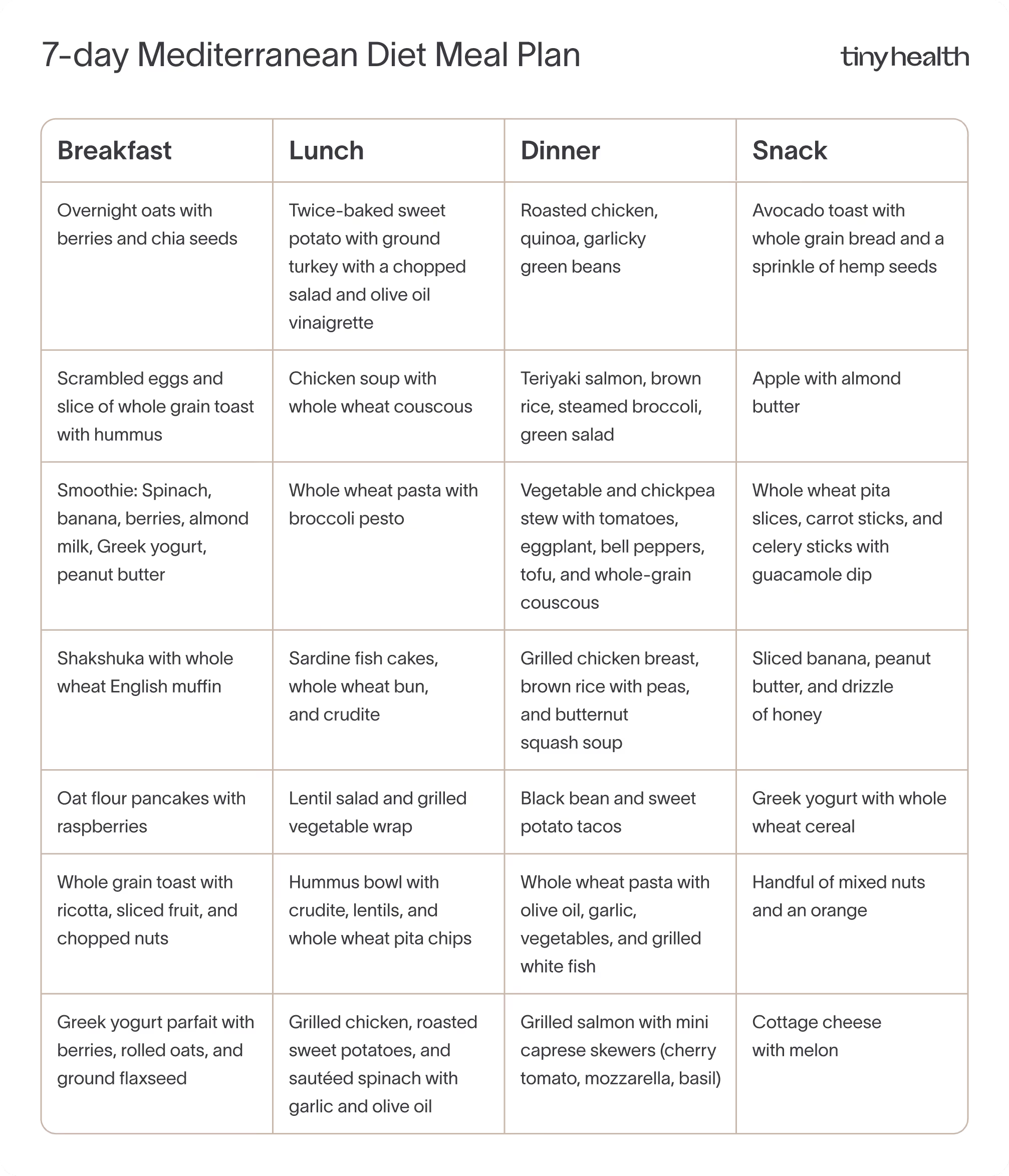
Need menu inspiration? Check out the full 7-day Mediterranean diet meal plan for even more ideas.
Your path to a healthier gut
Eating for your gut doesn’t have to be complicated. Many of these foods are likely already in your fridge or pantry. The key is finding easy ways to add them to your meals. If you want a better understanding of what’s happening in your gut and how to support it, a Tiny+ Family Membership gives you personalized insights, a session with a microbiome specialist, and a practical action plan to help you achieve your wellness goals.
FAQ
Is the Mediterranean diet good for weight loss?
Yes. The Mediterranean diet isn’t considered a strict weight-loss plan, but research shows it can support weight management alongside portion control and regular movement [9]. It focuses on eating whole foods and limits foods high in saturated fats and added sugars, both of which add extra calories. For women in midlife, following a Mediterranean diet for menopause weight loss can be especially helpful, as it emphasizes nutrient-dense foods that support metabolism and overall health.
What’s a good Mediterranean diet cookbook for beginners?
A great place to start is online, where you can explore recipes you enjoy without committing to a full cookbook. Once you find the types of recipes that work for your family, a good next step is Dr. Emeran Mayer’s cookbook, Interconnected Plates. It combines science with cooking, offering Mediterranean-style recipes that are easy to make and tasty.
What are easy ways to add more plants to my meals?
We recommend starting with these tips:
- Pick 4 to 6 fruits and vegetables to serve each week: Include them in your meals and snacks and rotate your selections weekly. This way, you get variety over the month without feeling like you have to buy the entire produce section at the grocery store.
- Upgrade your salads: If you usually eat iceberg lettuce, add other greens like spinach, arugula, or romaine.
- Roast a big batch of vegetables: Toss them with olive oil and your favorite seasonings before roasting. Having cooked veggies handy makes it easy to add to any meal throughout the week.
Are probiotic foods part of the Mediterranean diet?
Yes. Probiotic-rich foods are commonly included in the Mediterranean diet. Greek-style yogurt is one of the most familiar examples, and fermented dairy like kefir and some aged cheeses are also traditional in many Mediterranean regions [10].

Trust your gut.
Get to know your microbes with an easy, 5-minute at-home test from Tiny Health. Unlock deep gut health insights and personalized recommendations for your diet, supplements, and lifestyle.

Dahlia Rimmon is a pediatric dietitian and freelance writer, specializing in infant and toddler nutrition.

Dr. Hannah Sturgeon, a Neuroscience Ph.D. from Georgia State University, specializes in microbiome research with expertise in early gut-brain-immune development.
References
References
[1] D. Martini, J. Godos, M. Bonaccio, P. Vitaglione, and G. Grosso, “Ultra-Processed Foods and Nutritional Dietary Profile: A Meta-Analysis of Nationally Representative Samples,” Nutrients, vol. 13, no. 10, Sep. 2021, doi: 10.3390/nu13103390.
[2] M. A. Martínez-González, A. Gea, and M. Ruiz-Canela, “The Mediterranean Diet and Cardiovascular Health,” Circulation Research, vol. 124, no. 5, pp. 779–798, Mar. 2019, doi: 10.1161/CIRCRESAHA.118.313348.
[3] G. Merra et al., “Influence of Mediterranean Diet on Human Gut Microbiota,” Nutrients, vol. 13, no. 1, p. 7, Dec. 2020, doi: 10.3390/nu13010007.
[4] L. Schwingshackl, J. Morze, and G. Hoffmann, “Mediterranean diet and health status: Active ingredients and pharmacological mechanisms,” Br J Pharmacol, vol. 177, no. 6, pp. 1241–1257, Mar. 2020, doi: 10.1111/bph.14778.
[5] American Diabetes Association Professional Practice Committee, “10. Cardiovascular Disease and Risk Management: Standards of Care in Diabetes—2025,” Diabetes Care, vol. 48, no. Supplement_1, pp. S207–S238, Dec. 2024, doi: 10.2337/dc25-S010.
[6] C. Filippou et al., “Effect of the Mediterranean diet on blood pressure in adults with and without hypertension: a systematic review and meta-analysis of randomized controlled trials,” Eur Heart J, vol. 42, no. Supplement_1, p. ehab724.2355, Oct. 2021, doi: 10.1093/eurheartj/ehab724.2355.
[7] H. Cory, S. Passarelli, J. Szeto, M. Tamez, and J. Mattei, “The Role of Polyphenols in Human Health and Food Systems: A Mini-Review,” Front Nutr, vol. 5, p. 87, Sep. 2018, doi: 10.3389/fnut.2018.00087.
[8] T. M. Barber, S. Kabisch, A. F. H. Pfeiffer, and M. O. Weickert, “The Effects of the Mediterranean Diet on Health and Gut Microbiota,” Nutrients, vol. 15, no. 9, p. 2150, Apr. 2023, doi: 10.3390/nu15092150.
[9] D. Romaguera et al., “Mediterranean dietary patterns and prospective weight change in participants of the EPIC-PANACEA project123,” The American Journal of Clinical Nutrition, vol. 92, no. 4, pp. 912–921, Oct. 2010, doi: 10.3945/ajcn.2010.29482.
[10] Z. Naureen et al., “Foods of the Mediterranean diet: lacto-fermented food, the food pyramid and food combinations,” J Prev Med Hyg, vol. 63, no. 2 Suppl 3, pp. E28–E35, Oct. 2022, doi: 10.15167/2421-4248/jpmh2022.63.2S3.2744.
Related posts


Get $10 OFF to kickstart your microbiome health journey