When a Stephen Colbert segment features your microbiome summary score, you know vaginal microbiome testing has hit the mainstream. A rare moment for a startup, especially one that began in 2022 with a simple belief: you shouldn't have to work so hard for answers about your health.
Late-night monologues. Instagram posts. We're showing up for educational and sometimes controversial vaginal health conversations to meet women where they are.
While this cultural moment spotlighted an under-researched part of women's health, we're addressing the most-asked questions on social media right now to keep the conversation going.
Our founder and CEO, Cheryl Sew Hoy, and our Chief Science Officer, Kimberley Sukhum, are breaking it all down with evidence-backed answers in the following Q&A.
What do you want women to know about vaginal health that no one talks about?
One thing I wish more women knew is how important it is to test your vaginal microbiome after giving birth, especially if you want to conceive again soon.
After having a baby, your estrogen drops. When estrogen drops, so does your Lactobacillus. Low levels of Lactobacillus can make conception more difficult and may raise your microbiome risk of preterm birth.
More women are having babies later in life. Back-to-back pregnancies are more common. That combination can be challenging. But you can test before trying again. And if it hasn’t bounced back, there are steps you can take to get it there, and loop in your practitioner. - Cheryl
What has testing your own vaginal microbiome taught you?
.avif)
My Vaginal Microbiome Summary Score (VMSS) was 100 before my son Brooklyn was born in the spring of 2025. Nine months postpartum, my score dropped to 24.
After each of my births, my vaginal microbial community became disrupted. Menstruation and weaning are what brought me back to a healthier CST 1, my normal state.
I weaned my first son, Taylor, at 2.5 years old. This chart shows how long it took for my vaginal microbiome to return to normal after he was born. My Jan 2022 sample was taken when I was 21 months postpartum with him. You can see my microbiome still hadn't fully recovered until I finished weaning him in Sept 2022. You can also see where I landed last fall, months after giving birth.

I'm still breastfeeding Brooklyn, so it may take just as long this time. But it's really amazing how our bodies work. - Cheryl
What should women in perimenopause and menopause know about their vaginal microbiome?
The same estrogen drop that happens after you have a baby also happens in perimenopause and menopause. Lactobacillus levels fall, and the vaginal environment shifts. That can show up as dryness, itching, discharge, odor, and discomfort. At-home testing can be a helpful first step for many women. There are evidence-backed ways to reduce those symptoms and support your vaginal microbiome through that transition. And we share those recommendations in your personalized Action Plan, which you can share with your practitioner. - Cheryl
What does a 100 Microbiome summary score really mean?
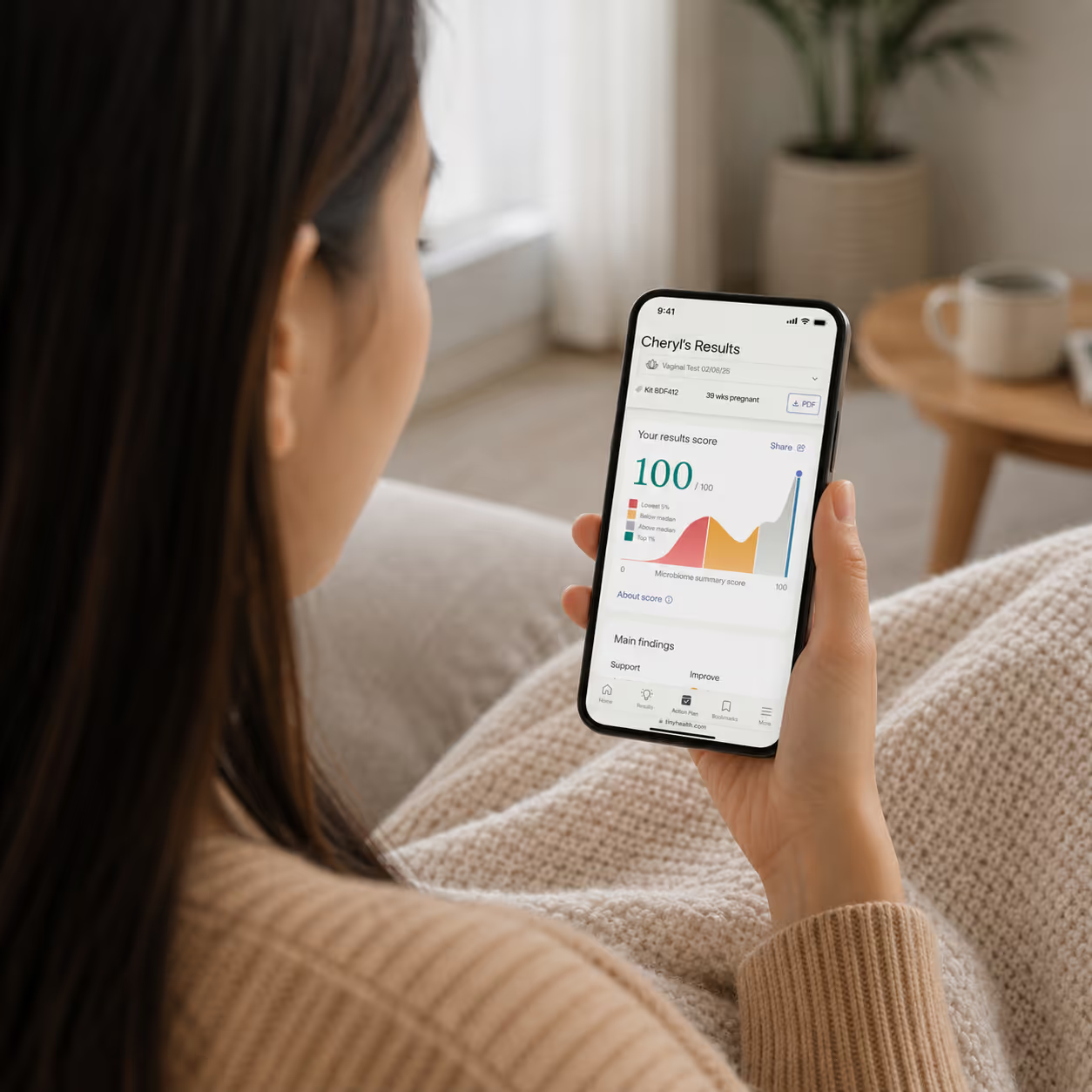
Your microbiome score evaluates all the relevant metrics for your report into a single number, giving you a clear picture of how your microbiome stacks up. The score ranges from 0 to 100. A score closer to 100 suggests your microbiome is in excellent shape compared to the reference population. Conversely, a score closer to 0 indicates more areas for improvement. This means we saw no flags in your report. So, a strong protective community and overall no concerning disruptive taxa. It’s great to see.
Our vaginal microbiome score is a proprietary summary metric that combines factors like community state type, disruptive microbes, and your overall community balance. It’s then benchmarked against age-matched reference populations using public and proprietary data. Simply put, it shows how balanced your overall community is compared to women in your age group. - Kimberley
.avif)
What can Tiny Health's VMSS tell me over time?
The score is a starting point. But when we focus too much on a single number, we lose important context. A score of 100 means your vaginal microbiome is in an optimal state, dominated by the most protective species in your vagina, Lactobacillus crispatus.
But your vaginal microbiome is dynamic. It shifts with hormones, stress, antibiotics, age, and, as my own results show, pregnancy. A 76-point drop nine months postpartum is a lot. But it's also a natural part of how hormones work in our bodies.
Estrogen also drops during perimenopause and at menopause. Each of those life stages can pull your score in a completely different direction, even if nothing else has changed.
What matters more than chasing a number is understanding your microbiome over time. That's why we encourage retesting. A single snapshot tells you where you are. A trajectory (like the chart I share above) tells you how your body responds to life over time. — Cheryl
I’ve seen a few different vaginal microbiome tests online. How is Tiny Health different?
Most vaginal microbiome tests use shallow sequencing methods. Tiny Health uses shotgun metagenomic sequencing at up to 10 to 15 times the depth of many competitors. That difference matters more than it might sound.
Greater sequencing depth lets us detect low-abundance microbes that other tests miss. It also means more accurate community state type classification and better functional profiling of what those microbes are actually doing in your vaginal environment. That means fewer blind spots and more precise, personalized recommendations.
— Kimberley
What will your vaginal health test tell me?
.avif)
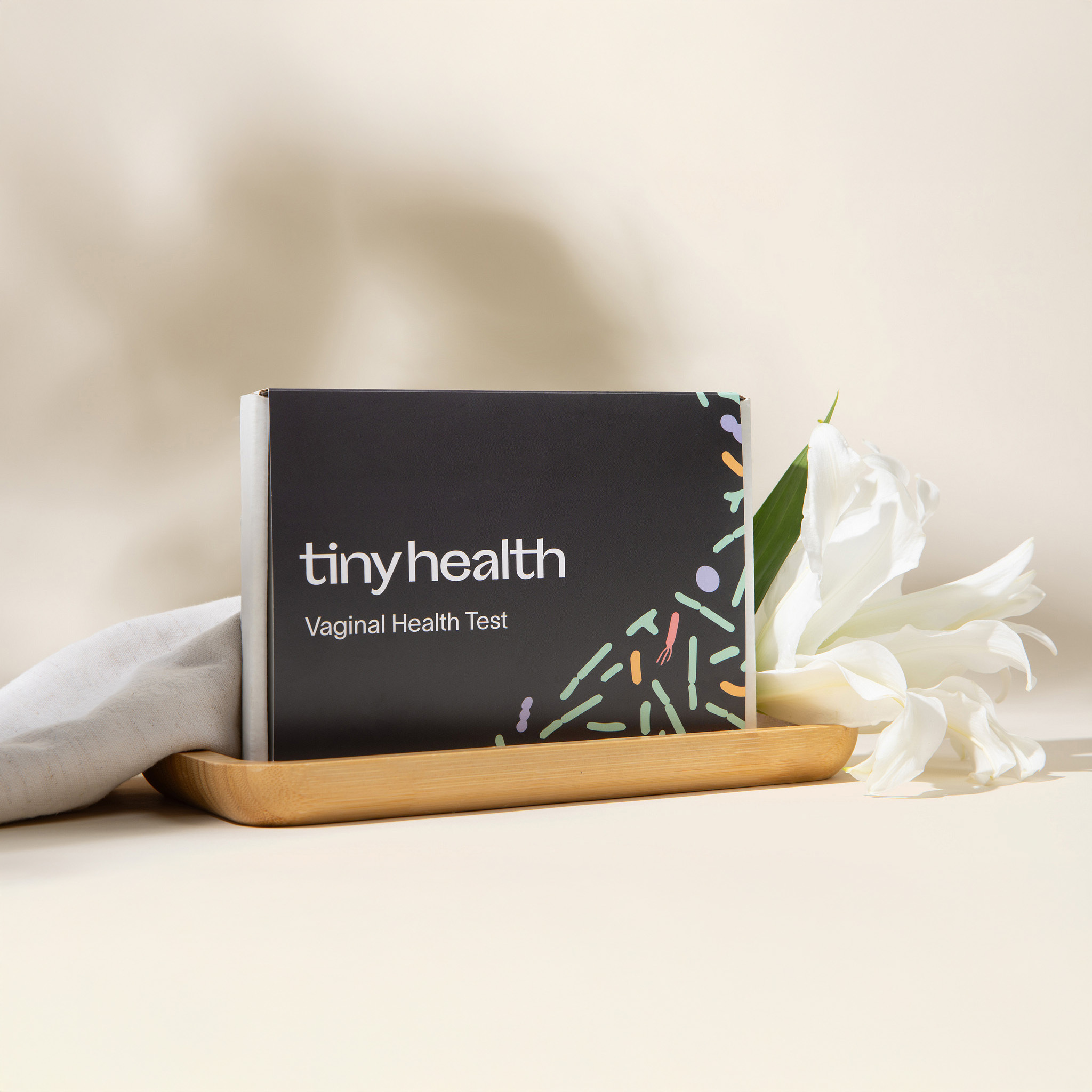
Our Vaginal Health Test is designed for women who want to better understand and support their microbiome, whether they're experiencing vaginal symptoms, trying to conceive, navigating perimenopause, or simply taking a proactive approach to their health.
Your report reveals whether you have a Lactobacillus-dominant vaginal microbiome, your vaginal community state type (CST), and any microbes associated with BV, yeast infections, UTIs, inflammation, and fertility concerns. It also includes a menopause metric for women aged 35 and older. As estrogen levels drops during that time, Lactobacillus levels often fall with it.
Every report includes personalized, evidence-backed recommendations to help guide your next steps. - Cheryl