Test yur gut.
Test yur gut.
Test yur gut.

Developed by researchers from






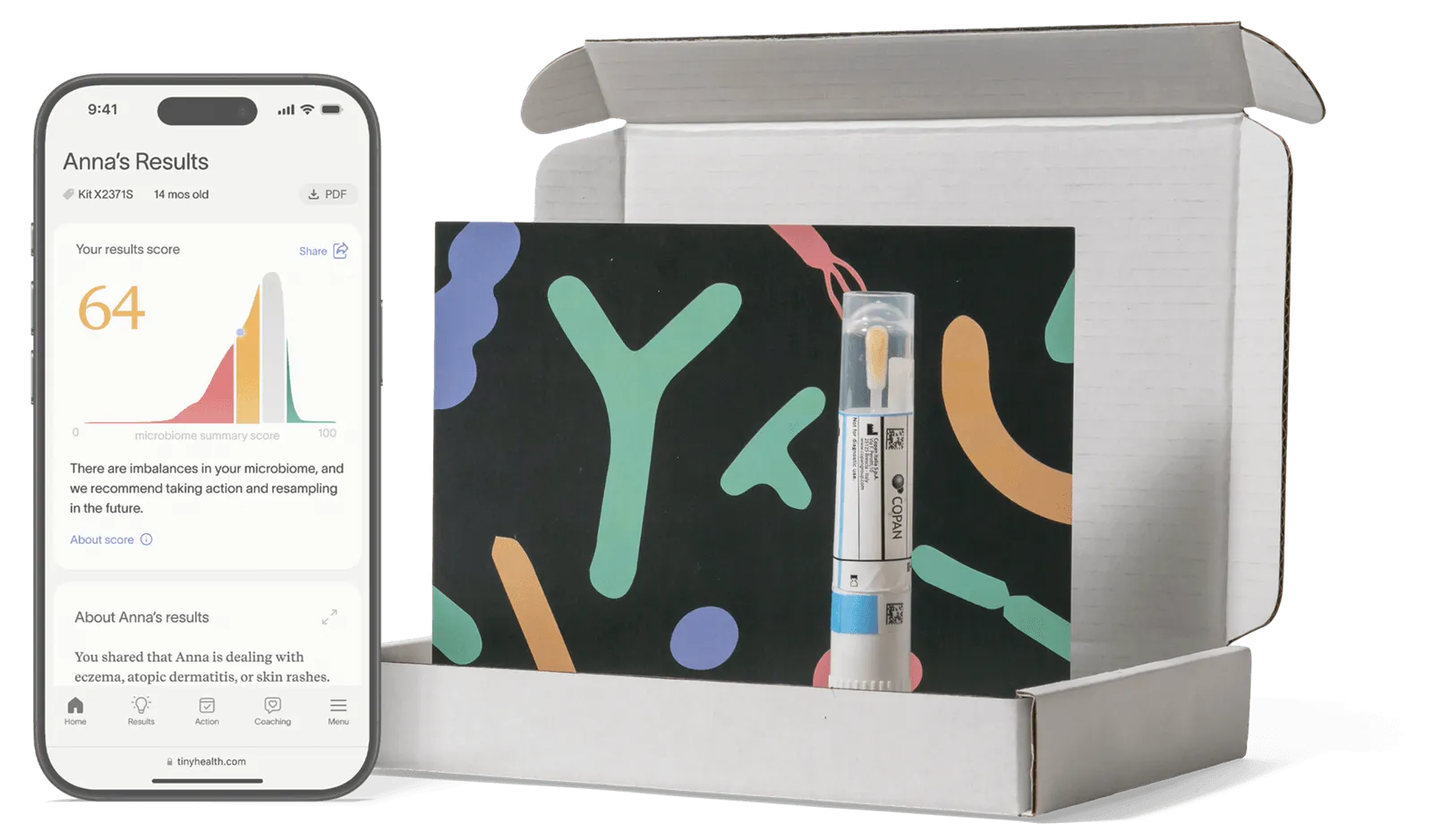




Why test your microbiome?

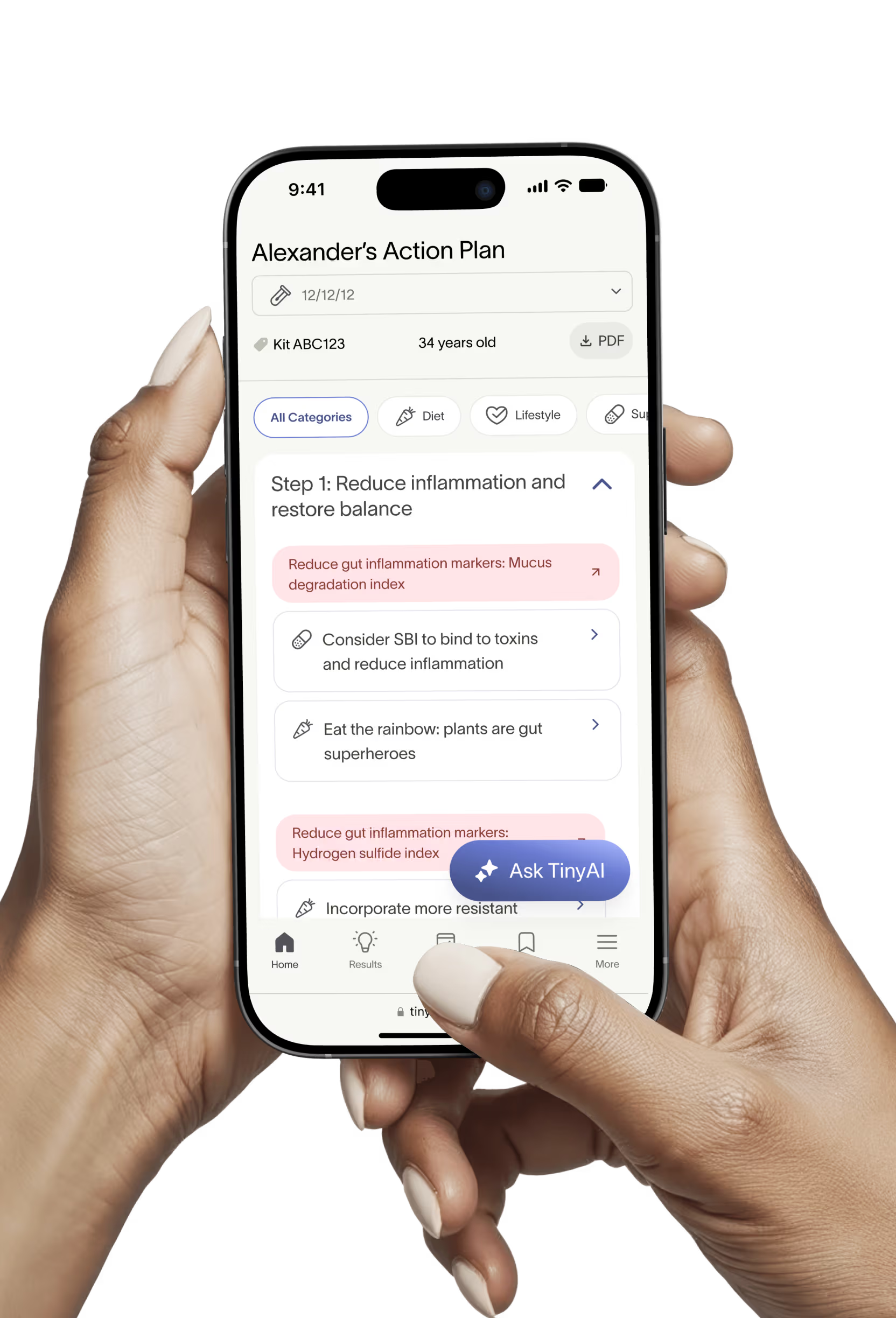











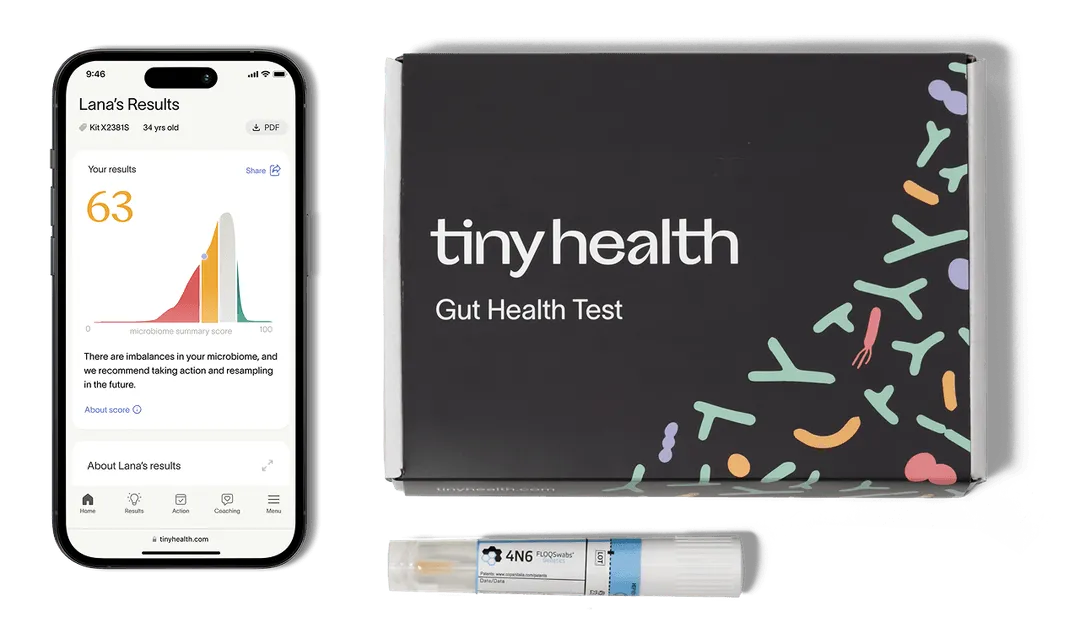
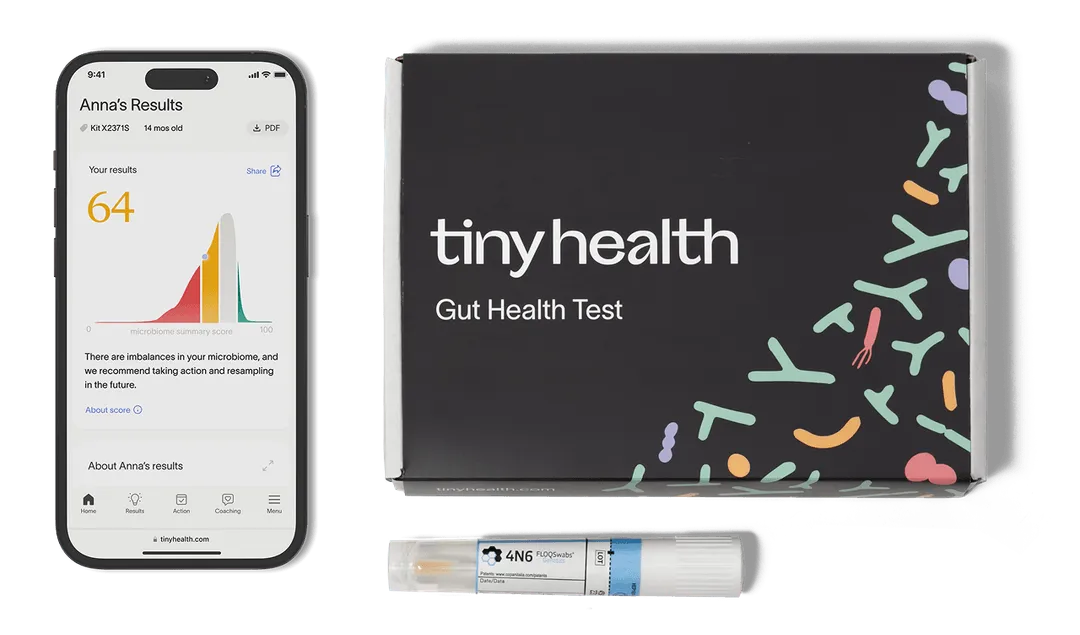
Sample at home in less than 5 minutes


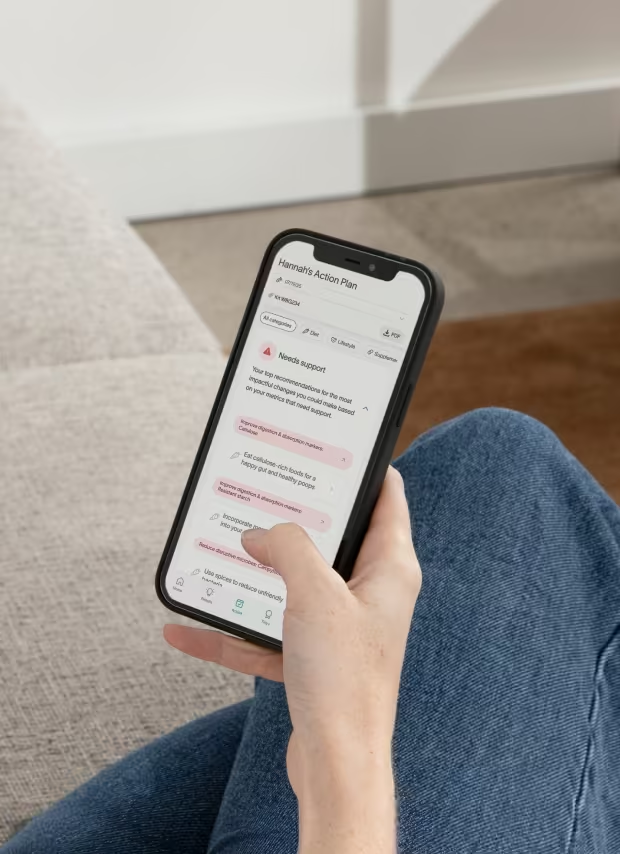

Join 200,000+ happy people already using Tiny Health

“Tiny Health is THE microbiome test that all families should do.
No matter where you are on your health journey, it’s never too late to get your microbiome in order!”
Dr. Elisa Song
Stanford, NYU, UCSF. Integrative pediatrician and pediatric functional medicine expert


Trust your gut. Test your microbiome.
- HSA/FSA Eligible
- CLIA Certified US lab
- Free shipping in the US

Where microbiome science meets real life
Research, tips, and guides for every stage of life



Frequently asked questions
Why are the first 1,000 days so crucial for lifelong health?
In a baby's first 1,000 days of life, a type of gut health "programming" takes place, especially in the immune system. This programming sets up a child's health for life.
We find links between this programming and chronic health issues like metabolic and immune disorders. We can even pass down our programming to the next generation!
No pressure or anything.
During those first 1,000 days, parents have the most power to influence their baby’s gut health. Simple diet and lifestyle changes during pregnancy and a baby’s first year can make a huge difference!
The best way to track a child's gut health development is with a series of tests. We encourage parents to start as soon as possible, from age 0 to 3 and beyond.
These factors can all impact a baby's gut health:
- Vaginal birth or C-section
- Breastfeeding or formula feeding, and
- The use of antibiotics
As a baby grows, their gut matures and gets more diverse. As a result, their immune system gets a little more skilled at identifying friend versus foe.
We see the first major leap in gut diversity when baby begins eating solid food. As a toddler, the gut shifts towards a more diverse and adult-like microbiome. This stabilizes gradually, at between 3 and 5 years old.
If you're beyond the first 1,000 days, don't fret. A gut health test at any age can help detect imbalances and steer us in the right direction. It is still possible to make changes and improve lifelong health! Shop our gut health tests to get started.
Is it too late to test? Are microbiome tests beneficial at any age?
In short, it’s never too late to test! Gut health matters at every age. And the sooner you have a baseline sample, the better.
During the first year, a baby’s microbiome sees dramatic shifts. This path sets the trajectory for their health, all the way through adulthood. For this reason, we encourage parents to sample as soon as possible, from age 0 to 3 years old and beyond.
A child's gut is still maturing until the age of 3 to 5 years old. Up to this point, you have the best opportunity to check in on your little one’s gut health and make changes, if needed.
Even if your child’s gut has reached maturity, you can still take steps to influence their health! For older children and adults, gut health testing can reveal a lot. For example:
- Hidden inflammation that can lead to leaky gut
- Bacteria that make anti-inflammatory short-chain fatty acids
- Microbiome diversity, and
- Biomarkers for immune health and fiber digestion.
No matter your age, it's a good idea to test your gut. Identifying even low levels of chronic inflammation can help you take steps to prevent disease later in life. And microbiome research in older adults shows that longevity has links to gut health.
All Tiny Health gut tests come with a detailed report and steps to take to optimize your microbiome. Our experts recommend diet, supplement, and lifestyle changes based on your age and unique results. Select your test to get started.
My doctor has never heard of this type of microbiome testing. Why should I take a test?
Conventional medical providers usually are not trained in microbiome testing and probiotics, since these things aren't currently standard of care in those settings. In addition, many conventionally trained physicians also have limited nutritional training, and diet is one of the most powerful ways you can optimize microbiome health. While conventional medicine can have lots of insight into sick care, it isn't always the best at wellness and prevention. Plus it can take 10-15 years for the medical field to put new academic research into practice!
But that doesn’t mean that it’s something to wait on. Enter Tiny Health.
Our team of leading pediatric scientists and physicians are on the cutting edge of microbiome health. We are prevention and wellness focused. We've developed tests to give families access to this innovative science right now.
What does a Tiny Health test look for? What is included?
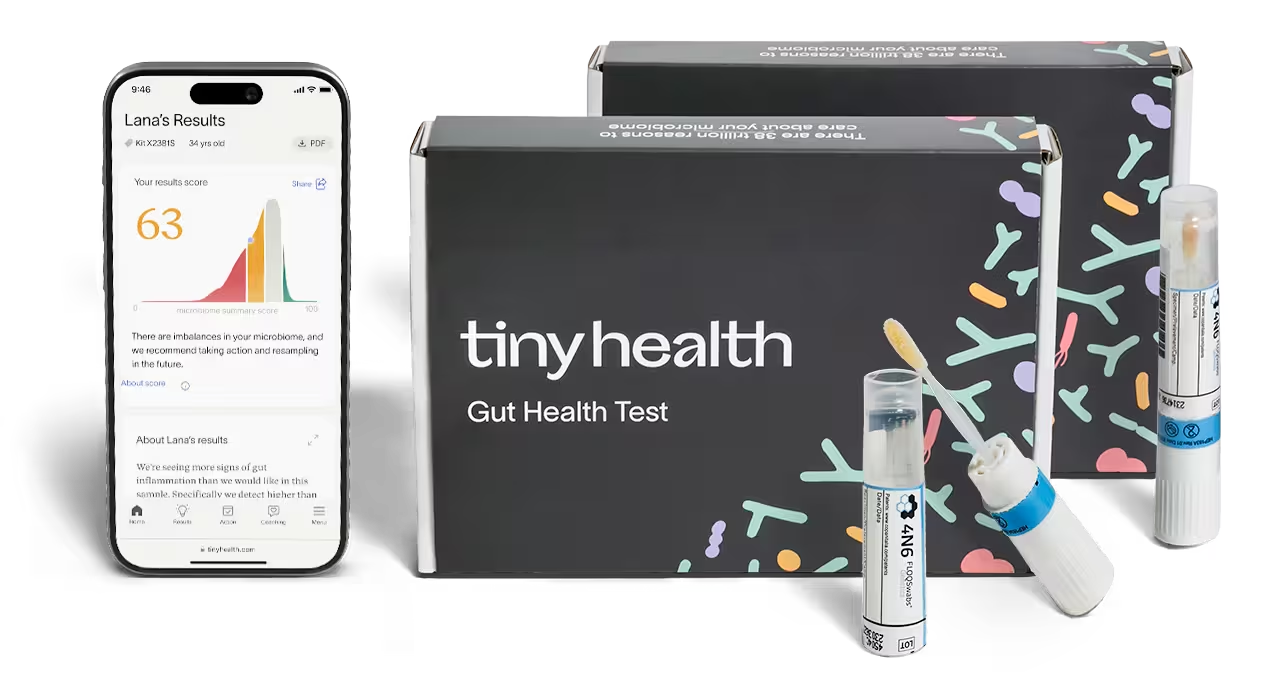
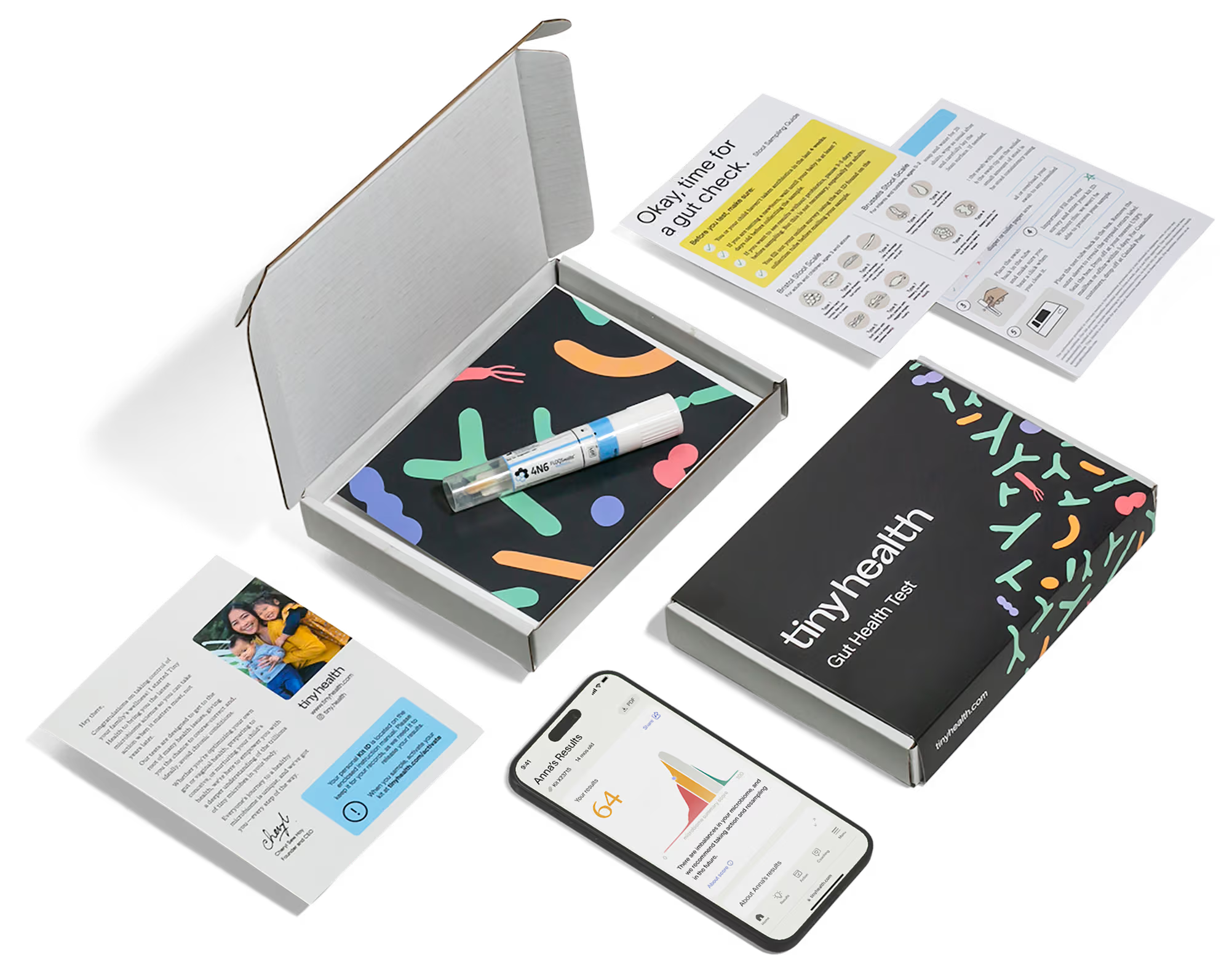
Tiny Health screens for over 120,000 microbes. This includes bacteria, fungi, parasites, viruses, and archaea found in the microbiome. Each microbiome test kit includes a mess-free stool or vaginal swab with instructions. You return your kit in the pre-paid mailer, which goes to our CLIA-certified and CAP-accredited laboratory partner for microbiome sequencing. In 3-4 weeks, you receive a precision report of your results. This includes personal, evidence-based suggestions to improve your gut or vaginal health.
Summary + Expert Highlight
Your summary gives you a bird’s eye view of your gut or vaginal health report. This includes a customized plan prepared by one of our microbiome experts.
The expert highlight guides you through the results. We help you understand what the data means and which actions to take first.
Key Insights
Learn about current imbalances that are important for your specific age. This means a 4-month old gets different metrics from a 12-month old. And a 2-year old gets different metrics than a 40-year old.
Microbiome Breakdown
You receive a comprehensive list of all microbes found in your sample. We categorize them as beneficial, unfriendly, variable, or unknown and provide detailed descriptions of each microbe. You can see how much of each microbe is present, down to a 0.005% abundance level. (No other gut test does this!)
Conditions
This section of the report identifies if you have microbiome signatures for certain conditions. These markers could predict an increased risk of developing that condition.
Action Plan
We provide personal, evidence-based suggestions based on your test results and survey responses. Our suggestions may include actual products and brands that we recommend. You'll also receive useful diet, supplement, and lifestyle tips.
Curious? Explore a Sample Report
Can a gut test help with eczema, allergies, or asthma?
Eczema, allergies, and asthma are inflammatory conditions. Tiny Health microbiome tests help you identify inflammation at its source, your gut. With deep insights into your gut microbes, you can take action and help prevent or reduce inflammation in your body.
Here are two ways caring for your microbiome can help with inflammatory conditions:
1. In our first few years of life, our gut microbes help train our immune system how to behave. Without proper training, our immune system can contribute to long term issues with inflammation (e.g., eczema, allergies, asthma). The goal is to address imbalances early. That way, the immune system has proper education. This may even help prevent inflammatory conditions from developing.
2. At any age, the microbiome can become unbalanced. This may trigger inflammatory symptoms in our bodies. This can weaken the gut lining, cause leakiness or inflammation, and trigger the immune system. It is important to address these imbalances. Better gut health is possible at any age.
Tending to your gut health is beneficial for overall health and wellness. But your gut may not be the only factor contributing to inflammatory conditions. Many families have successfully reduced or eliminated symptoms by testing and taking action. When you use Tiny Health tests, you can rest assured that a team of gut health specialists are here to support your health journey.
Can a microbiome test tell me about lactose, dairy intolerance, or specific food allergies?
No, a gut microbiome test kit cannot detect lactose intolerance or specific food sensitivities.
At Tiny Health, we can help you understand your gut health and how it may contribute to symptoms of these food sensitivities.
Lactose intolerance refers to trouble digesting the milk sugar, lactose. It is different from cow milk protein allergy, which involves an immune response. Cow milk protein allergy is somewhat common in babies. But lactose intolerance is very rare in children under the age of 5 years old.
There are two types of lactose intolerance:
1. Primary lactose intolerance: This is rare in babies and all about genetics. In this case, the body cannot make enough of the enzyme lactase. This is the enzyme that helps break down and digest the lactose milk sugars.Primary lactose intolerance is not caused by gut microbes. But symptoms may improve with helpful bacteria like Streptococcus thermophilus.
2. Secondary lactose intolerance: This is all about damage to the gut lining. Lactose digestion takes place in the small intestine. Damage to the lining of the small intestine can lead to secondary lactose intolerance. Usually this happens in adults, after a long period of gut inflammation.
Gut microbes can cause lactose intolerance if they are causing gut inflammation. Repairing the gut and clearing inflammation can help support lactose digestion.
If you or your child is having issues with a food sensitivity, talk to a healthcare provider. It is important to understand the root cause. Specific food allergies and sensitivities are often determined by a blood test.
However, for children who are reactive to a wide variety of foods, the common cause may be related to an imbalance in the microbiome, and less the individual foods. Inflammation in the gut may damage the gut lining, and gut leakiness may permit dietary triggers to get into the rest of the body, triggering reactions. For some children, healing the gut can reduce their reactivity to foods.
Why is gut health important? Is testing really worth it?
Emerging microbiome research has shown the importance of gut health to our overall health. The science links 80% of our immune system to the gut. So, taking steps to improve gut health supports lifelong wellness.
There are many tools and strategies to help improve your gut health. These include eating the best foods and taking supplements for gut health, or working with a gut health coach. Yet there is no one-size-fits-all approach to gut health. For example, taking a probiotic for the gut may be beneficial for some individuals. In others, it could do more harm than good. Imagine there’s already high levels of a beneficial microbe in your gut. Taking a probiotic could boost those levels to a point where they are too high, resulting in low diversity in the gut microbiome.
Taking a gut microbiome test is the best way to determine if there are any imbalances in your gut that need course correction. Testing helps educate you on the best actions for your unique microbiome. And you can retest to track if dietary changes and gut health supplements or probiotics are having the intended effect.