
Alex was born in October 2023, and for the first few months, he was thriving. Then an eczema rash sent his parents, both healthcare professionals, down a path they hadn’t experienced with their first child.
They cycled through eczema creams, adjusted Alex’s bath routine, and chased every online tip they could find. Nothing helped. It was a challenging time for the family, made worse by the lack of sleep.
When Alex started on solids around six months old, there were no immediate red flags. But an allergic reaction to peanut butter turned an uneventful day into hours of panic as they wondered, “Are we rushing him to the emergency room?”
Simple milestones, like trying new foods, can take parents to unexpected places, even if one of them is a medical doctor. Alex's father, Dr. Taylor Sittler, serves as Tiny Health's Board Director. In this role, he regularly discusses the importance of the first 1,000 days of development.
Dr. Sittler shared his son's story with us, including gut test results, which turned his professional knowledge of the microbiome into something deeply personal.
A reaction to peanuts
When trying new foods requires a watchful eye, a single bite can turn a milestone into a crisis in minutes.
In April 2024, following standard allergy-introduction guidelines, Dr. Sittler and his wife, Colleen, gave their 6-month-old his first taste of peanut butter. Alex seemed fine, so they cautiously celebrated this milestone.
Four days later, during the recommended second exposure, things unfolded very differently.
"Less than 1 hour after eating a tiny amount of peanut butter, Alex broke out in an alarming rash," Dr. Sittler recalls. "We were bracing to dash to the ER. Fortunately, his breathing was stable, and it seemed to remain a rash."
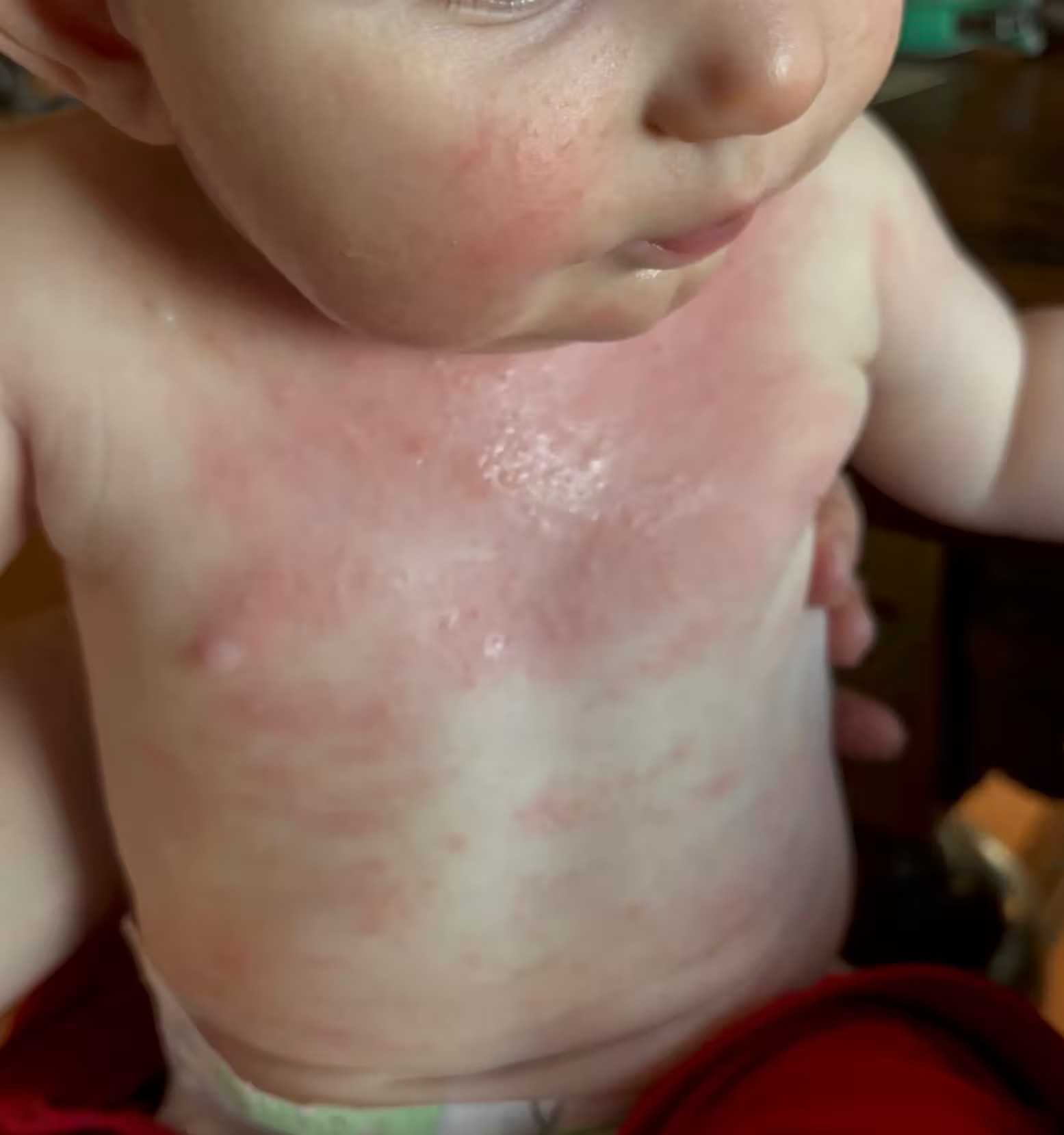
Thankfully, Alex’s rash resolved within 45 minutes, but it was distressing for them to think that their son might have a peanut allergy. "We have family and friends who’ve struggled with nut allergies,” Dr. Sittler said.
Alex's path from eczema to this reaction reflects a pattern researchers call the atopic march, in which eczema in infancy often signals a higher risk for food allergies, asthma, and other allergic conditions down the line. Emerging research suggests the gut microbiome may play a role in that progression and intervention may help calm the immune response.
Looking for answers in the gut
Just weeks before the peanut incident, Dr. Sittler and Colleen had ordered a Tiny Health Baby Gut Health Test, hoping to understand the factors contributing to Alex's persistent eczema. When the results arrived, the data showed that Alex's gut had an overgrowth of Ruminococcus gnavus.
While R. gnavus is a normal member of the infant gut microbiome, unusually high levels of certain strains have been associated with eczema and food allergies [1]-[3].
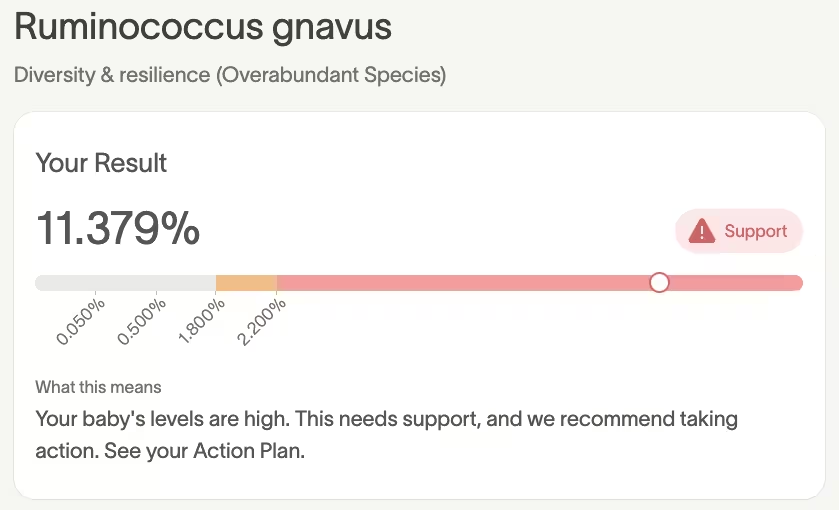
High levels of R. gnavus, like Alex’s, have been associated with atopic march conditions, including eczema and food allergies [2], [3]. However, R. gnavus is also a normal member of the infant gut, and research suggests its effects may depend on the specific strain and context [1].
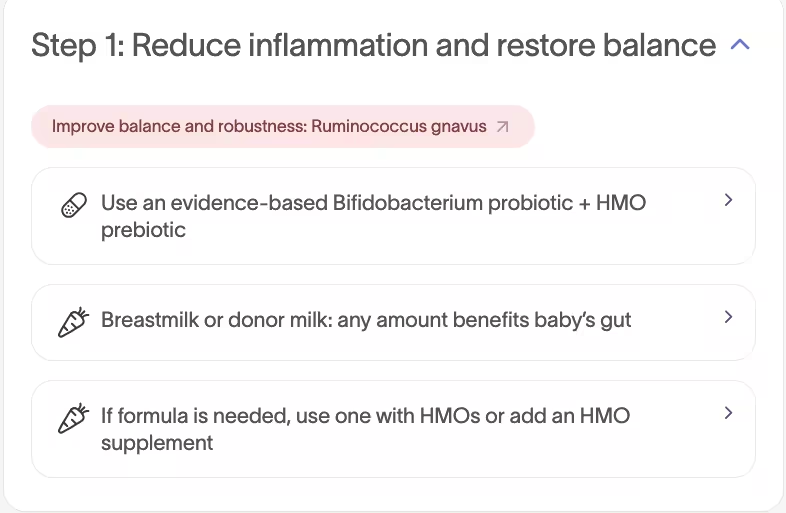
To address elevated levels of R. gnavus and support a healthier microbiome, the couple followed the Action Plan, which included an evidence-based Bifidobacterium probiotic plus an HMO prebiotic.
They also made changes to Alex's diet, switching up the types of yogurt and fermented foods with strains that support the growth of beneficial bacteria and crowd out the R. gnavus.
The next step in Alex’s Action Plan was tackling his eczema symptoms.
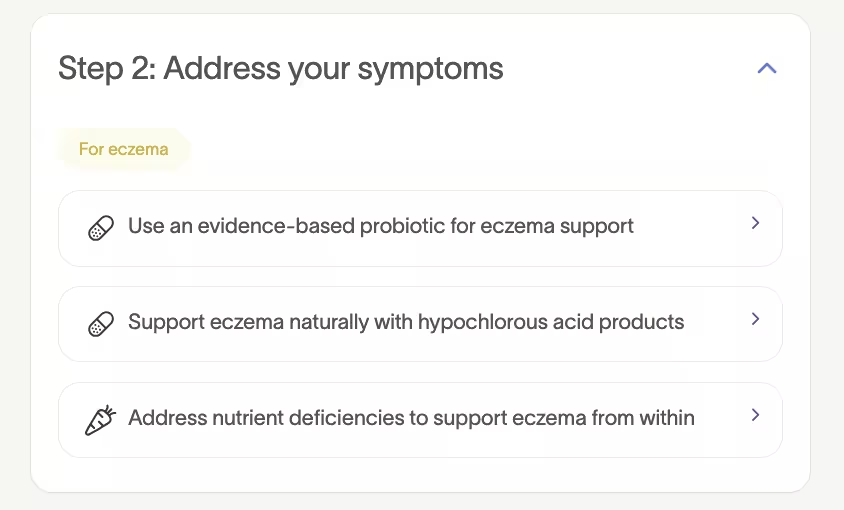
“We also started applying GladSkin eczema cream and HOCl spray to his skin. This regimen, coupled with corticosteroids as needed, led to noticeable improvement in his eczema within a few weeks,” Dr. Sittler said.
The allergy diagnosis
On May 15, 2024, an allergist confirmed Dr. and Mrs. Sittler’s worst fears: Alex was officially diagnosed with a peanut and egg allergy.
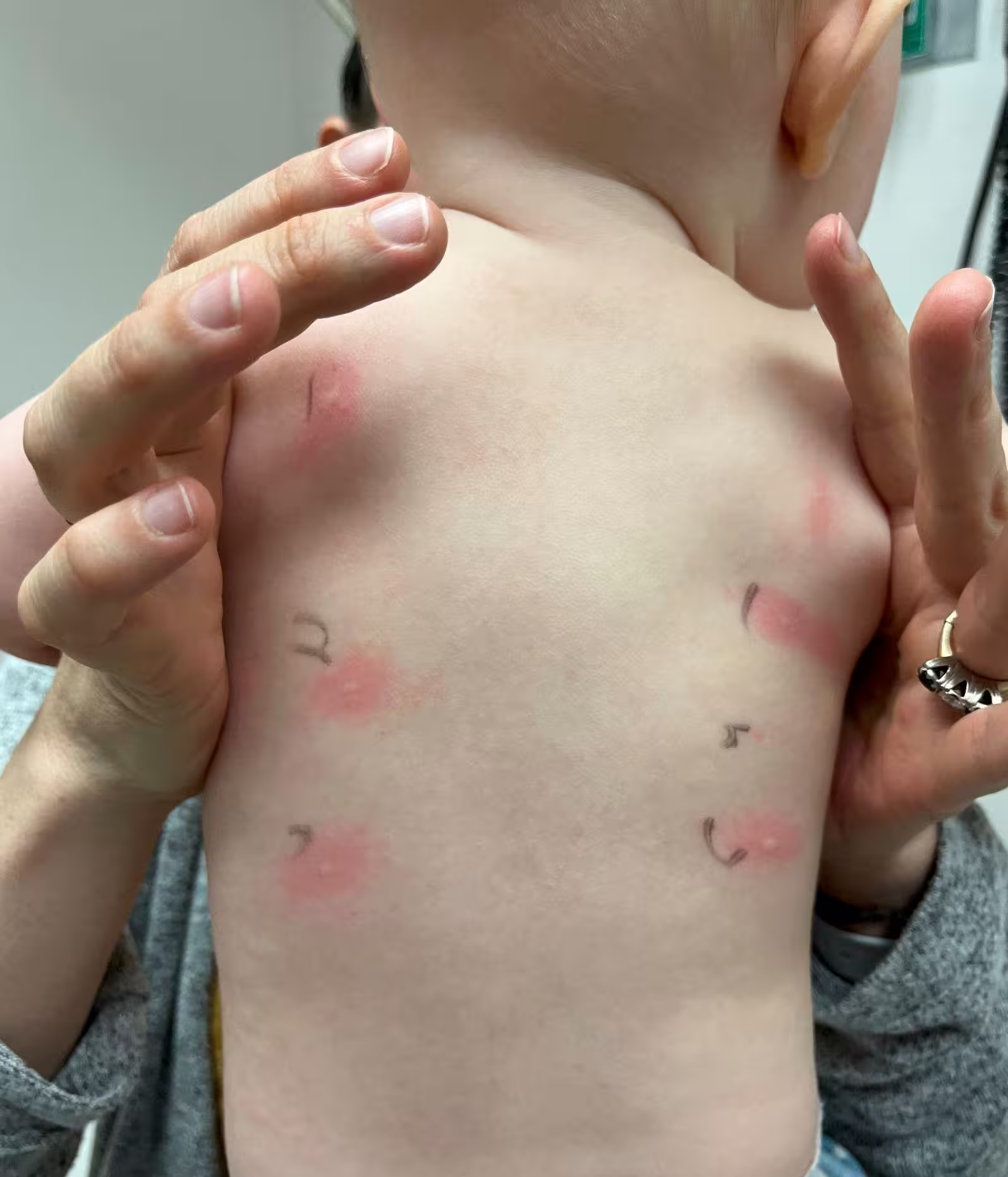
The doctor shared discouraging statistics about outgrowing a peanut allergy: among the children he sees who do outgrow it, it's often around age 5.
“Since we both work in healthcare, we had a lot of questions, including ones about promising nut exposure studies. Unfortunately, the allergist didn't see value in pursuing those therapies, especially for a child so young.”
The Sittlers left the appointment with an EpiPen and strict instructions: no peanuts or eggs for the next 1 to 2 years. Colleen was still nursing, so the allergist recommended that she continue eating nuts to provide exposure through breastmilk, if Alex could tolerate them.
"We felt deflated," Dr. Sittler admits. "Even in the best-case scenario, we would be worried about nut exposure for years and perhaps over his lifetime."
Signs of progress
Throughout the summer of 2024, Alex's eczema continued to improve dramatically. Encouraged by the visible changes, Dr. Sittler ordered a follow-up gut test in August.
“The results were encouraging. Ruminococcus gnavus was in the normal range, and the overall balance of his gut flora had improved. The new test also indicated a slight overabundance of B. fragilis and Lactobacillus, so we reduced his intake of yogurt and probiotics,” Dr. Sittler said.
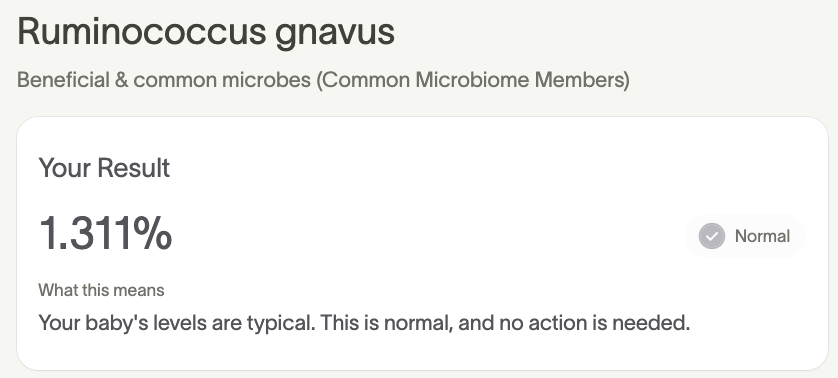

Seeing the data reassured the Sittlers. The changes they made were small and easy, but they made a big difference.
Testing foods again
By October, Alex's eczema had completely resolved. His skin was clear, he was sleeping soundly, and his overall inflammatory response seemed dramatically improved.

With cautious optimism, Dr. Sittler and Colleen decided to test peanut powder again.
"We started by putting a tiny amount of it on his skin to see if there was any reaction," Dr. Sittler explains. "When that went well, we tried feeding him just a touch of the powder."
After two successful attempts over several days with no reaction or rash, they progressed to peanut butter.
"We were overjoyed and in disbelief to see no reaction!" Dr. Sittler recalled.
Following this success, they tried eggs. Again, no adverse reactions.
A year of ups and downs, and fearing the worst was exhausting. The Sittlers felt indescribable relief.
Note: We don't recommend reintroducing allergenic foods without guidance from a healthcare provider.
The test of time: Still symptom-free at two
.avif)
Almost two years later, Alex continues to eat peanut butter and eggs without issues, and his eczema has not returned.
Dr. Sittler noted, “We’re grateful that this part of Alex’s past is over. Perhaps we only accelerated a process that might have naturally happened for him years later.”
While there's no way of knowing whether Alex would have eventually outgrown his allergies, his improvement after following the interventions was remarkable.
There's nothing like a health scare, followed by a resolution, to give parents a reason to feel fortunate.
As both a physician and a parent, Dr. Sittler wants other families to know there are answers beyond the traditional wait-and-see approach.
One of their favorite memories from that time? Getting rid of the EpiPen and updating Alex’s daycare providers.
“We feel so thankful to Tiny Health for their clear, scientifically informed guidance. Improving his gut health and reducing his inflammatory response was exactly what Alex needed.”