Bethany Smilovitch is a mom of two and entrepreneur who spent 24 years living with stomach pain and severe constipation. She saw specialists, underwent multiple tests, and tried years of medications, probiotics, and prebiotics. Nothing helped.
Then, in January 2025, her husband, Mike, was diagnosed with terminal cancer. The couple challenged expectations, explored treatment options, and changed how they thought about health. That experience would eventually inspire the family to start the Smilo Foundation.
It also led them to take a closer look at their gut health. For Bethany, a Tiny Health gut test revealed what was happening in her microbiome and came with a personalized plan to support it. Five months later, the symptoms she’d had for most of her life were finally gone.
Living with constant stomach pain
Bethany’s stomach problems started when she was 14. From then on, she dealt with constant pain and the fear that she might need a bathroom when one wasn’t nearby. She even missed out on boat rides and long trips because she worried about how her gut would affect her.
She went to several specialists and underwent a series of tests, including a barium enema, colonoscopy, and endoscopy. She also tried different types of prebiotics, probiotics, and drugstore remedies like Pepto.
“I never prioritized my health,” she said, “and always thought because I was a normal weight, what I ate did not matter.”
How a cancer diagnosis changed everything
Mike's diagnosis led the family to rethink health and the role food could play in their lives.
"It opened up my eyes and our family's eyes very wide about the importance of the foods that you put into your body and how they can affect you today and in the future," Bethany said.
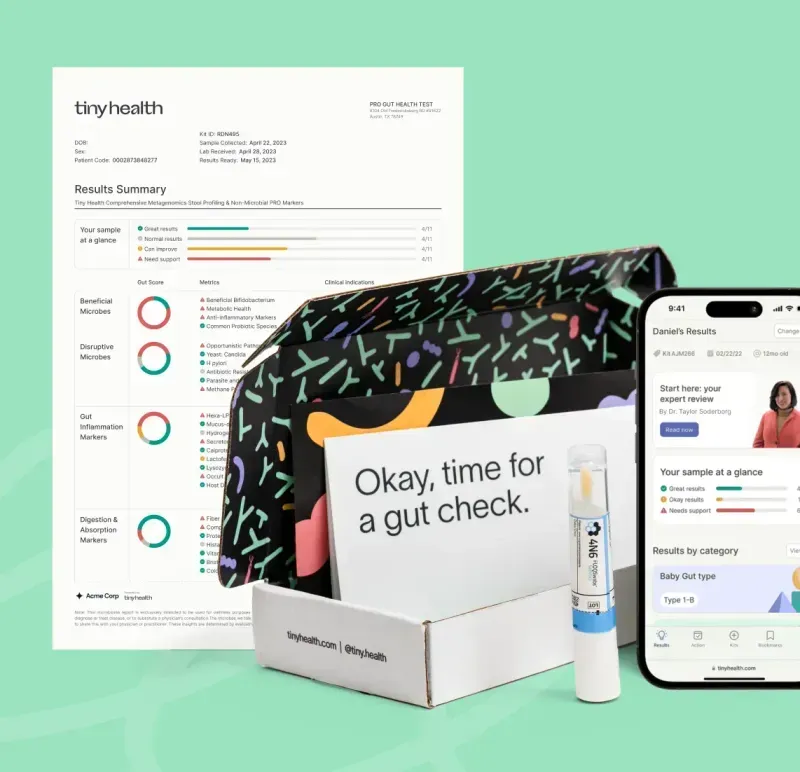
In March of 2025, Mike took a Tiny Health Gut Health Test first and spoke with one of our microbiome specialists about how he could improve his microbiome health and restore balance. Bethany took her first test a month later.
The couple also turned their experience into action by starting the Smilo Foundation, a nonprofit that helps people with cancer and their families make sense of complex diagnoses, genomic testing, and new treatment options. It also highlights emerging therapies and recommends everyday clean products.
What Bethany’s results revealed
Bethany took her first Gut Health Test in April and retested in September. Her results came with a step-by-step Action Plan, and her Tiny Health microbiome specialist, Kathleen Comerford, CNS, LDN, walked her through it. Her initial test showed some good news, including no parasites, fungi, H. pylori, or antibiotic-resistant microbes. It also flagged several areas that needed support, starting with constipation.
Addressing constipation
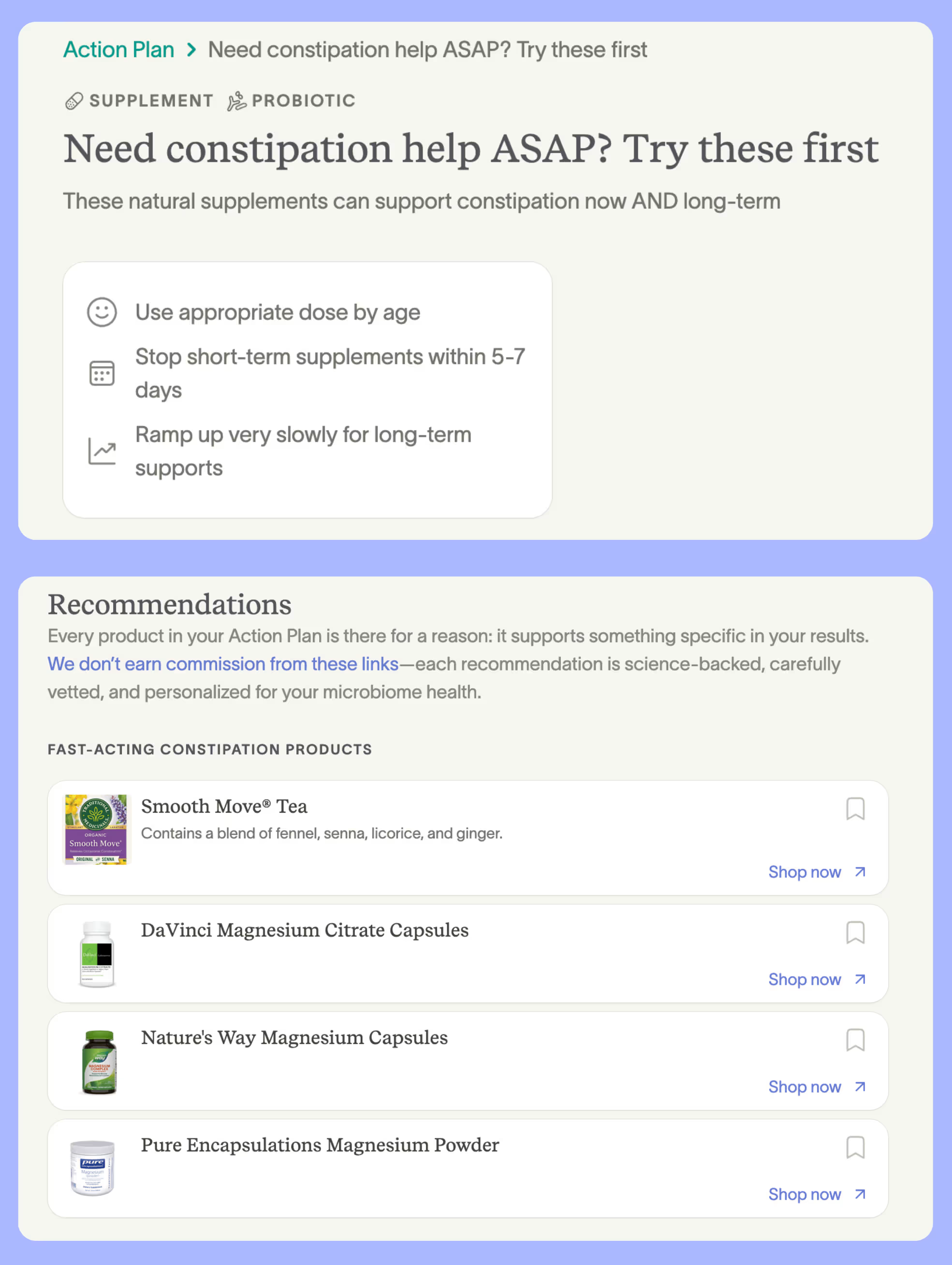
Step one of Bethany's Action Plan was to address her main concern: constipation. For over two decades, she'd averaged about one trip to the bathroom a week.
Bethany followed our team’s recommendations for natural supplements formulated to provide immediate relief for urgent constipation and encourage smoother, more regular bowel movements. For the long term, her report suggested probiotics like Optibac Bifido & Fibre Probiotics, Nature’s Way Fortify 50 Billion Daily Probiotic, and BioGaia Gastrus Probiotic Chewables.
Gut lining and inflammation
The next step in Bethany’s Action Plan was to address gut inflammation. Her Mucus Degradation Index was 12.4 in April, which was flagged as high. This number shows the potential of gut bacteria to break down the protective mucus of the gut barrier. It tends to go up when you don't eat much fiber. A high index means your gut bacteria could break down too much of that mucus, which can weaken the gut barrier and lead to inflammation.
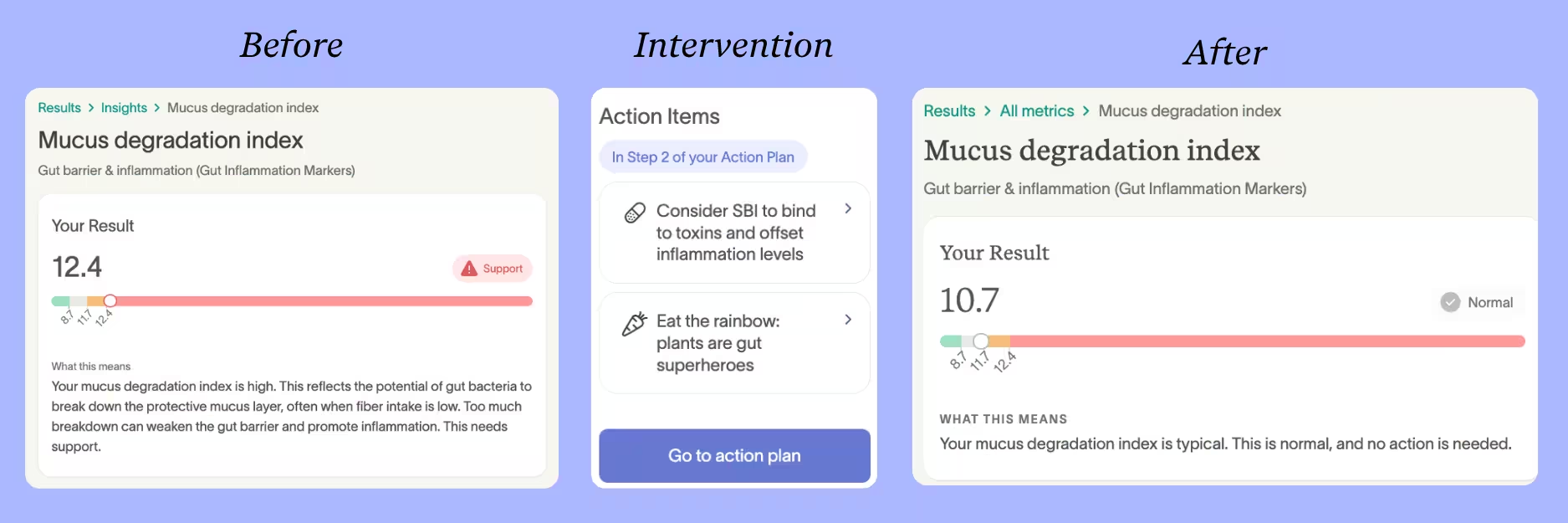
Her plan included a supplement called SBI, short for serum-derived bovine immunoglobulin, to bind toxins and help calm inflammation. Kathleen recommended taking it for 12 weeks or longer. The plan also called for a wider variety of plant foods, and her specialist pointed her to fiber-rich foods like oats, onions, and apple peels.
Unfriendly microbes
In Tiny Health’s report, C. difficile and E. coli appear under Disruptive Microbes. In April, Bethany's C. difficile was 0.013% and flagged as high. Her E. coli was 0.562%, which is borderline elevated.
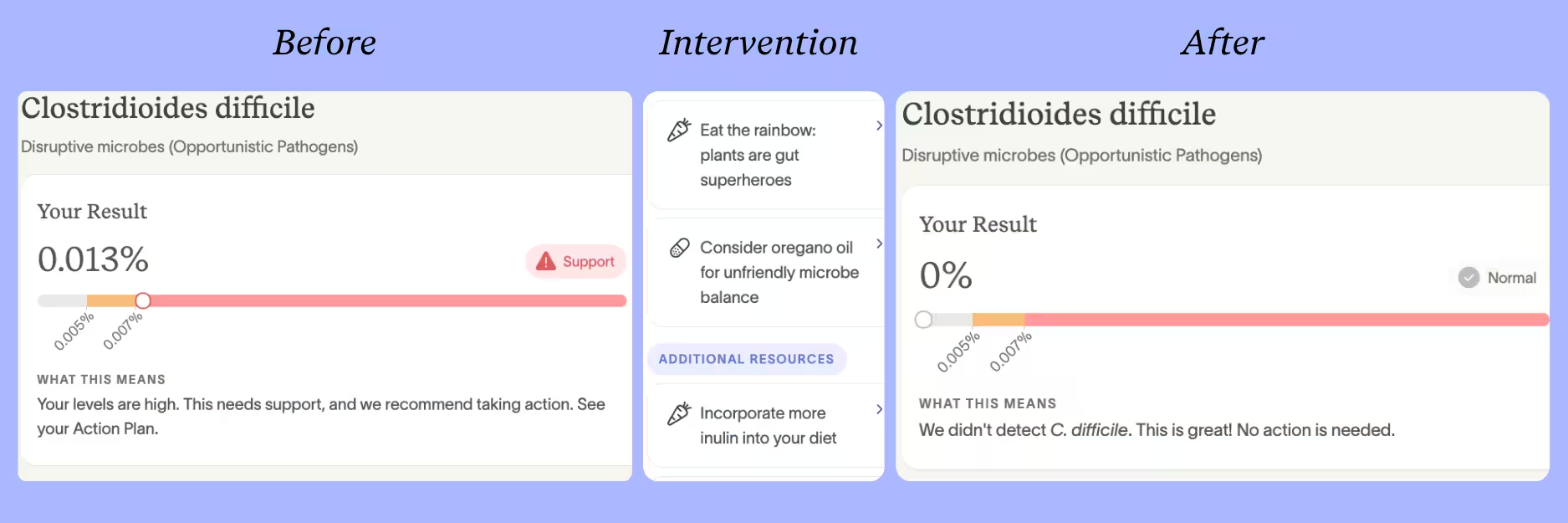
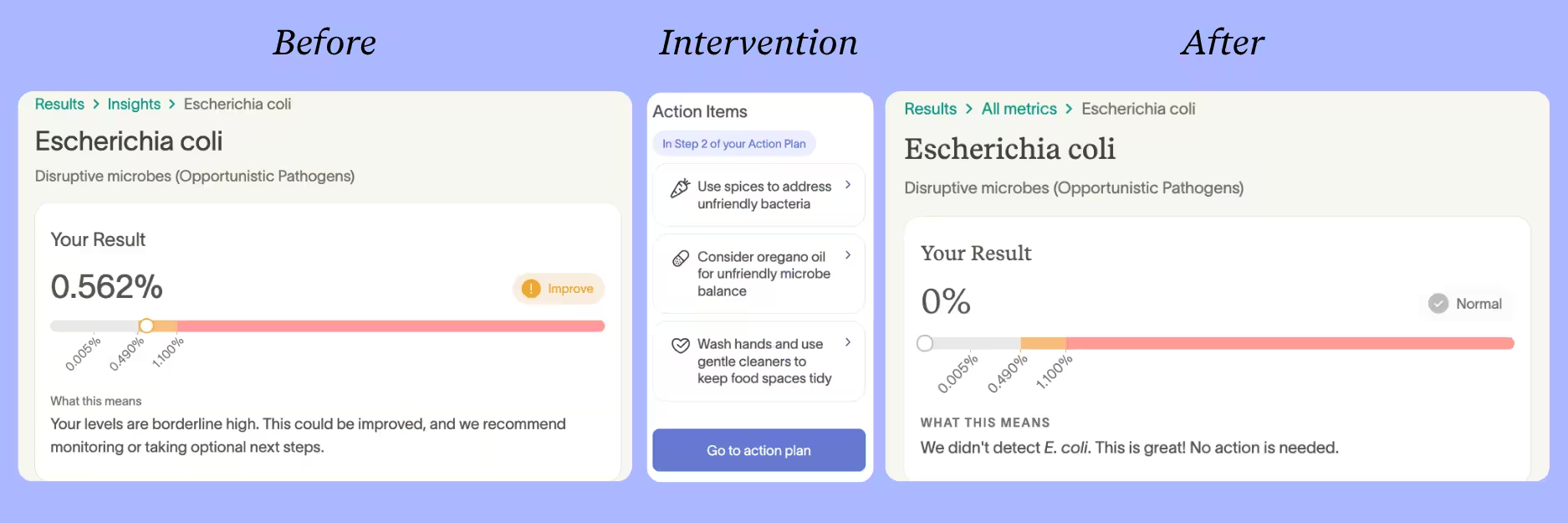
Her plan for both included more plant foods, spices like oregano, and gentle cleaners in food spaces. Bethany added fresh garlic, cinnamon, and oregano to her meals. In September, neither one showed up.
Overabundant species
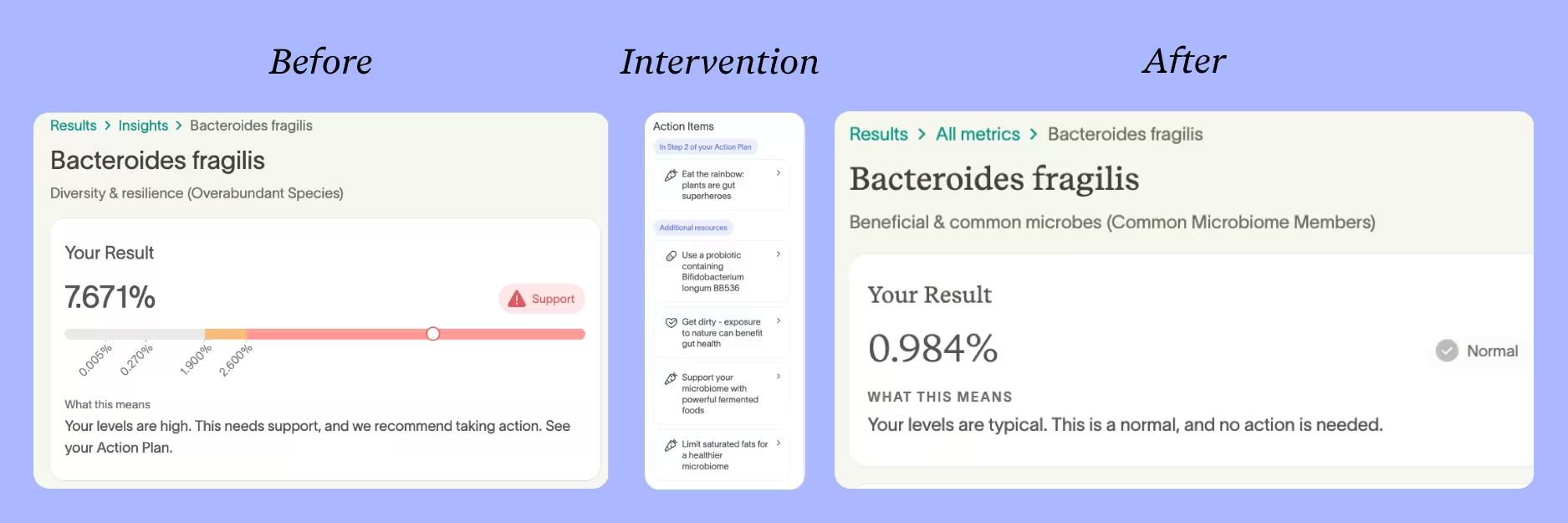
Bethany’s B. fragilis was too high in April, at 7.671%. Her Action Plan included fermented foods, more time in nature, less saturated fat, and more plant variety. It also recommended a targeted probiotic containing Bifidobacterium longum BB536. That last part surprised her.
“I had no idea that a general probiotic or prebiotic wouldn’t work for everyone and it has to be specific to your gut,” Bethany said. “This was never brought up by my GI doctor...They always wanted to put me on medication.”
B. fragilis is a common gut bacterium that can be beneficial at low levels [1]. When levels get too high, though, it can contribute to inflammation by damaging the gut’s mucus layer, and certain strains can cause serious infections [2], [3].
September's results revealed that her B. fragilis was down to 0.984%, which is in the normal range.
Digesting fiber and plant sugars
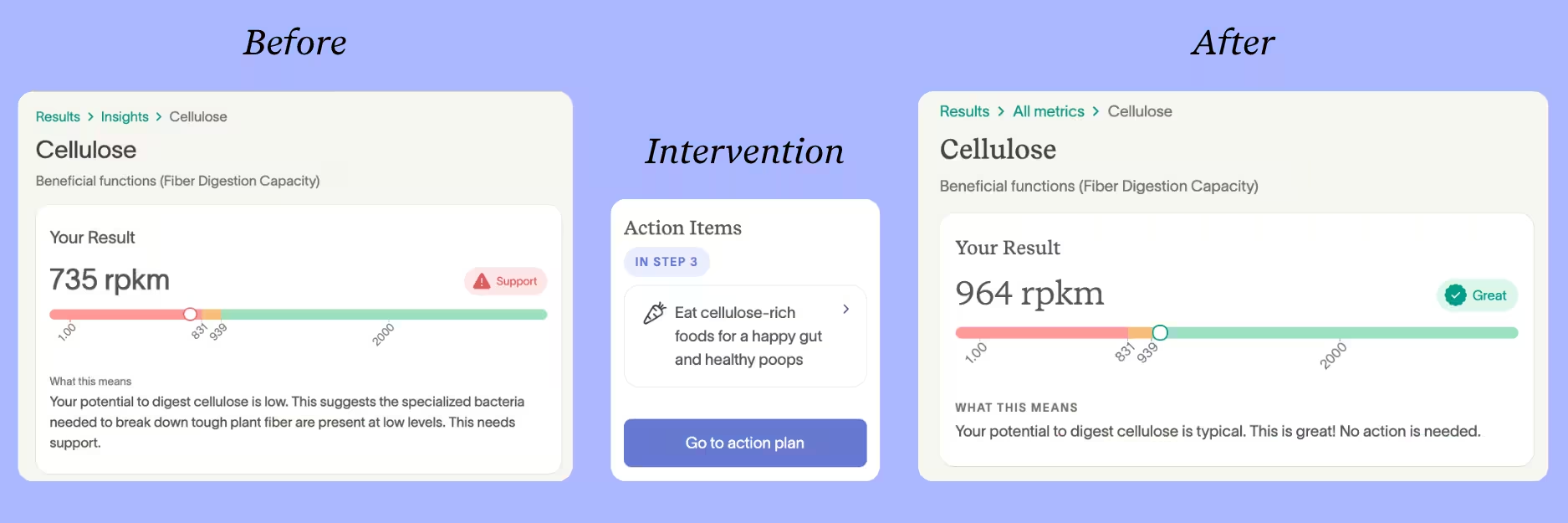
Bethany’s report also shows how well her gut bacteria can break down plant foods. Tiny Health measures this in rpkm (reads per kilobase per million), which shows how abundant the genes needed to break down a specific fiber or sugar are in the gut microbiome. The higher the number, the greater the potential to digest it. In April, Bethany’s cellulose (a tough plant fiber) functional capacity was low, which meant the specialized genes that break it down were present at low levels. To help raise it, her Action Plan recommended more cellulose-rich foods, like apples, pears, green beans, and legumes.
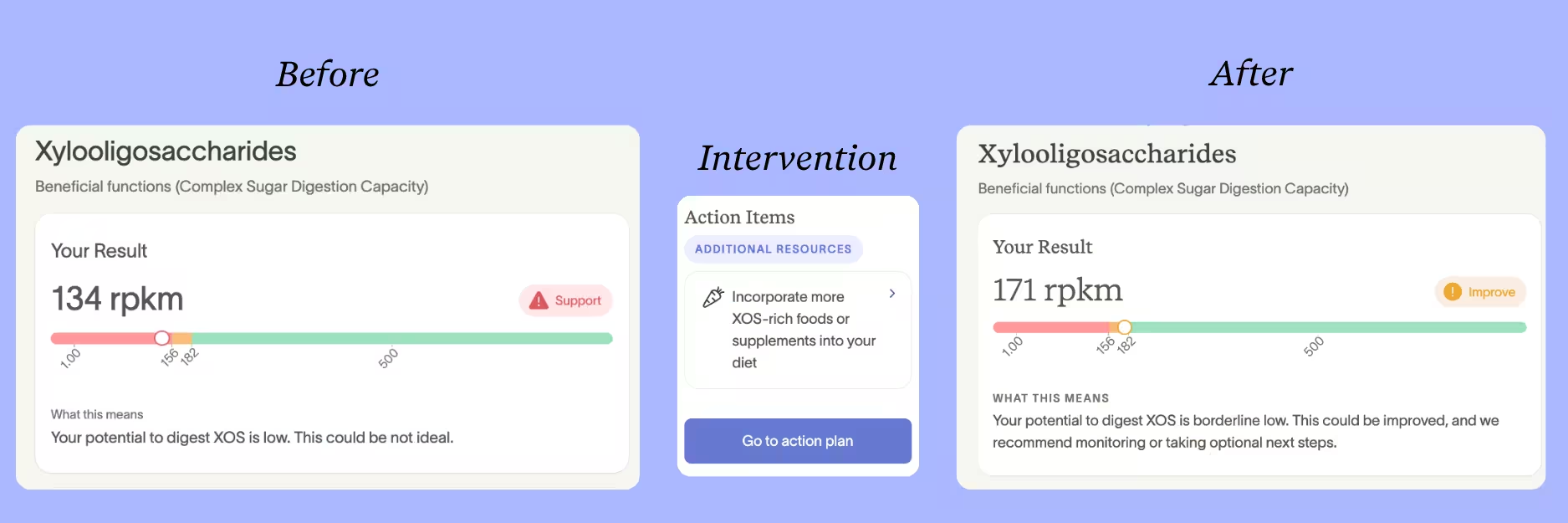
Bethany’s potential to digest xylooligosaccharides (XOS), a type of plant sugar, was low too. To course-correct, her recommendations included more XOS-rich foods such as barley, oat bran, sweet potato, and bamboo shoots. Her efforts are already showing results: her XOS digestion moved up from low to borderline low. It’s not in the typical range yet, but it’s heading in the right direction, and she’s continuing to work these foods into her meals.
An answer more than two decades in the making
“The symptoms I struggled with for 24 years are completely gone,” Bethany said. “I don’t have to worry about a stomachache or missing an important event.”
Today, Bethany pays closer attention to her diet, and her whole family is eating healthier too. Her 4-year-old son now takes shots of olive oil, eats raw garlic, and puts chia seeds on everything.
The experience also changed how Bethany thinks about health. “It opened my eyes to something I never knew existed,” she said. “People need to be aware of how their microbiome works and why it’s important to keep it healthy and get to the root cause of these types of issues.”
Instead of relying on medications to manage her symptoms, Bethany found that understanding what was happening in her gut made all the difference.
Microbiome testing like this wasn’t available when Bethany’s stomach issues started, but she wishes she’d found it sooner. “It literally changed my life,” she said. Her advice to others dealing with similar symptoms? “Get a gut test.”
If Bethany’s story sounds familiar, our Adult Gut Health Test can help you get to know your microbiome and identify areas that may need support. To learn more about Mike’s story and the foundation the couple started, visit the Smilo Foundation.
Disclaimer: Individual results may vary. Tiny Health tests are not intended to diagnose, treat, cure, or mitigate any disease. Always consult a qualified healthcare practitioner about any medical concerns or diagnoses, and before making changes to your diet, supplements, or treatment plan.