Q: Tell us a little about yourself and Root Family Medicine, it’s combination model with concierge and membership options, and what makes your approach different?
A: We have been open since 2015, and initially it was started because I can't picture anywhere I would be able to work; this didn't necessarily exist at the time. We incorporated some integrative aspects, and looking to all of the things related to a person, and I had been doing functional medicine at the time, but I also love primary care because I found that when you're the PCP, you're the person someone is going to, and you're taking care of them over time, and you can't parse out certain pieces of it. I want to know when they have a cold, because you might look at things differently rather than just doing… We've evolved over time and now offer more than your average PCP place, where we try to dig into things more than other places do, and that takes time, and think about underlying factors and whether it is gut health, stress, diet, or anything. I also love herbal medicine and being able to bring that into practice. I love herbs because herbs are so versatile, and so many are safe, and they can be inexpensive. We are currently a hybrid: most of the providers are in a membership model, and we still bill insurance, which is nice for primary care, and we can still communicate with specialists efficiently, and then patients pay an annual fee that allows us to do all of the other things we offer and spend more time. I am doing concierge myself, as I manage the clinic and other providers.
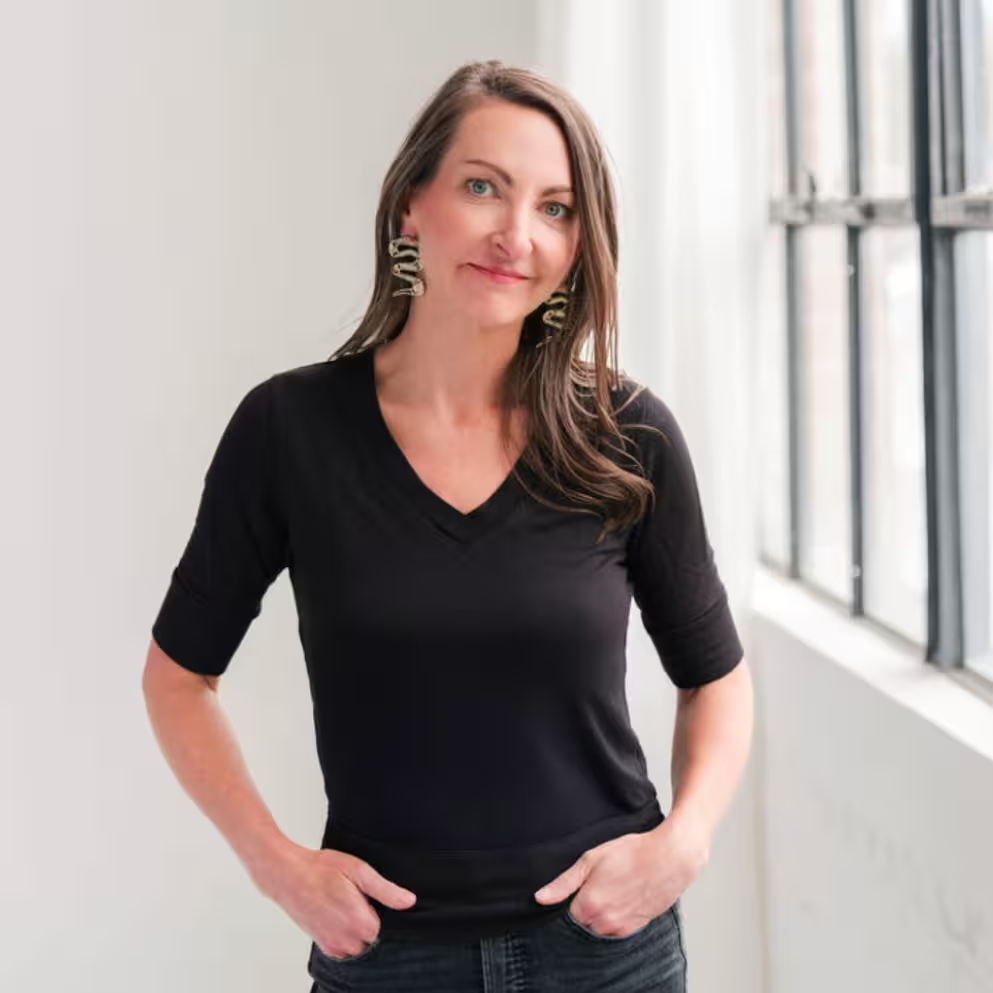
Sarah is a Board-Certified Family Medicine physician who has been practicing primary care for over fifteen years and is the owner and Medical Director of Root. Prior to graduating from the Tufts University Residency program with a concentration in Integrative Medicine, she attended the University of Connecticut School of Medicine, where she addressed her graduating class as a Commencement speaker and received the school’s Family Medicine Award. Sarah is best known for her deep listening, diagnostic tenacity, and open-minded approach. Her patients appreciate her down-to-earth humor and reassuring presence, as well as the breadth of knowledge she offers when partnering with them to help them feel their best. With a strong base in Western medicine, she adeptly weaves in Integrative approaches when indicated - especially herbal medicine, which she has been studying for eight years under Tieraona Low Dog, MD. She has been practicing Functional Medicine for thirteen years, and is currently enrolled in the Psychiatry Redefined Fellowship. As a person with celiac disease, she is passionate about gut health, autoimmunity, and the mind-gut connection. Her favorite aspect of Primary Care is taking care of whole families as they grow.
Q: What made you want to add gut testing to your practice, PCR vs now shotgun? / Before Tiny Health, you used pcr testing - why did you decide to try shotgun testing with Tiny Health?
A: I have probably been doing some version of gut testing since 2011, and all that was available was pre-PCR (culture, way back), and I've tried some of the other testing that is available out there through the years. And as you learn more, you change over time and want the test to be able to change what I am doing for that patient and give enough info to make it relevant and practical. So one struggle I had with the PCR test I had is you get the results back and you're like, "Well, this species is high and this one's low and this one's in the middle," and I could kind of pick out, "I know you need bifido," so if that was low I could do something, perhaps, but a bunch of other ones where I wasn't… you know, in primary care, you know, I'm not an expert in every bacteria, so sometimes I wasn't quite sure what to do. I would look for patterns. I wasn't left with a clear picture of what that meant practically in the person, so. I had a few patients who had told me they had been using Tiny Health outside of the practice, and then finally I learned that you were working there (Danielle), so then we chatted. I had a few patients who used it and were finding it helpful. And then we had a few conversations about the shotgun approach, and how I explain it to patients is that we don't know all the species in the microbiome, so we don't know all of them yet, but we don't really know what we are looking for. How I explain it to people is that if you know what genes are present, you don't have to know all the species, but you can understand what they are doing. In my mind, it makes it more practical, and seeing what's happening in there and what can I do to improve that picture. That was a big part of it. I like testing to mean something practical for a person vs. just "OK, this level is high" or "this level is low, and we're going to give you this thing to change the level." That was one big aspect. The other thing was the interface for the patients and the providers. It gives you all of this information, which can be a lot, but if people are interested, they can go in and click on this thing and learn about what this species is, and there's a lot of education in there. I learned a lot just ordering the tests and navigating it for myself, but I love that it is on the patient's side, so they aren't just getting a sheet of paper with bacteria that they can't understand. I like for people to understand to the best that they can so they can see what's happening, and have these resources available to them is really important for them. I like the educational piece, and you can go back to it and learn it, and then when they update it, it updates it in the portal. The presentation and interface and ability to educate patients through the tests and for the providers
Q: How was the onboarding process to Tiny Health? / Was it difficult to make the switch from PCR to shotgun?
She agrees with Danielle that the built-in education was a big part of how she was able to make the switch from PCR to Tiny Health so successfully. “Because also meeting with the specialists at Tiny Health, you know, if I get a new test back for my patients and then do a lot of review sessions with the specialist has been super helpful. Reviewing it with the microbiome specialist has been helpful. To reach out to Tiny Health when we need help. Or like when there is a new metric, we can touch base with the specialists at Tiny Health.”
Q: What do you want other practitioners who are considering gut health testing to know about Tiny Health?
Once I started doing this test, I really stopped doing all the other tests because I just find it so much more useful and practical and really easier in a way to provide the patient with useful information, so I just don't see why I would use another test. From my perspective, a) this is giving you a clearer picture of what's happening in the gut, and b) in addition, you can utilize the interface to teach your patients, and you can learn and continue to learn [from] the coaches at Tiny Health. I have found it so much more useful. Also, the price point is important because a lot of the testing insurance doesn't cover, and the gut test (not PRO) is cheaper and more useful, and with the PRO kits it's comparable. AND WAY easier for the collection. Nobody wants to do the other type of stool collection. When I did this one, it's so much easier, which is a selling point. Cost and time and effort for patients. It's an easier ask, a better price point, and easier, then you can even repeat it and see how you are. Whereas if something is so much more expensive and harder to collect, then patients aren't as willing to repeat the testing. That's important to me.