From water bottles to food packaging, microplastics have made their way into almost every part of daily life. These tiny plastic particles, smaller than 5 millimeters, can travel through your body and interact with your gut microbiome. Researchers are still learning what that means, but early findings suggest your gut bacteria may be more affected than you'd expect.
Microplastics and Your Microbiome: How Tiny Plastics Affect Your Gut
Summary
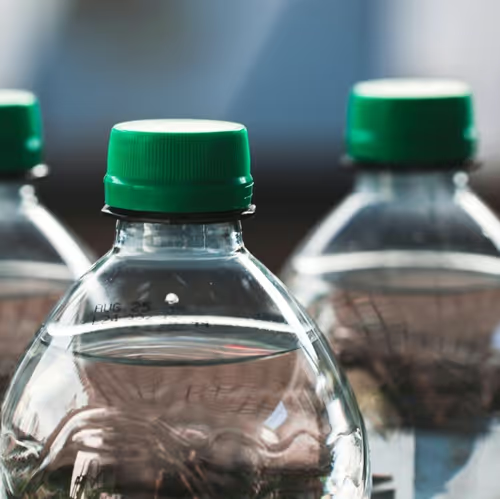
Microplastics are everywhere. They shed from synthetic clothing, leach from food containers, and float through household dust. You're likely exposed to them daily without realizing it, through something as routine as drinking from a plastic water bottle or steeping a cup of tea.
What makes this worth paying attention to is where these particles end up once they're inside your body. They travel through your digestive system, and along the way, they interact with the trillions of bacteria that make up your gut microbiome. Since your microbiome influences everything from digestion to immune health, even small disruptions could have a ripple effect on how you feel.
In this article, we'll cover how microplastics enter your body, what researchers are learning about their effects on your gut bacteria, and give you practical tips for reducing your everyday exposure.
What are microplastics?
Microplastics are plastic fragments smaller than 5 millimeters, roughly the size of a sesame seed or smaller. They form when larger plastic items break down into smaller pieces. Some are intentionally manufactured at a microscopic size, like those used in industrial processes or synthetic fibers in clothing.
Because plastic doesn't easily degrade, these fragments accumulate in your environment over time in the air, water, soil, and food supply. That means your exposure isn't limited to one source. You're encountering microplastics through multiple everyday routes, often without realizing it.
The everyday items shedding microplastics around you
Plastic materials you use every day can shed tiny particles into your environment through normal wear and use. Here are a few that bring microplastics into our homes and beyond.
Clothing and textiles
One major source is synthetic fibers from plastic-based fabrics such as polyester, nylon, and acrylic. As these materials are worn, washed, and dried, they shed microscopic pieces that enter wastewater, settle in household dust, and disperse into the air [1], [2]. Indoor environments can accumulate especially high levels of these fibers as clothing, carpets, and upholstery continuously release them during normal use [3].
Food packaging and containers
Plastics used in food — like take out containers and some disposable utensils — can slowly release tiny particles over time. Heating these materials makes this more likely, meaning microplastics often end up in the food and drinks we consume [4], [5]. Keep this in mind the next time you have dinner delivered or reheat leftovers in a plastic container.
Household products
Household materials and consumer products gradually break down as well. Paints, furniture, electronics, and other plastic-containing items slowly wear with use, adding microscopic fragments to indoor dust [2].
The environment
Beyond the home, microplastics are widespread in the environment. Larger plastic debris in landfills and waterways continue to fragment into smaller and smaller particles over time [6]. Studies have detected microplastics in both tap water and bottled drinking water in multiple regions worldwide [7], [8].
Because plastics are used so widely and break down so slowly, these small particles are now a routine part of the environment around us. That means everyday exposure can happen in simple ways—drinking water, eating food, or breathing air. Once inside the body, microplastics don’t necessarily stay in one place.
How microplastics move throughout your body
You're exposed to microplastics mainly through two routes: breathing them in and swallowing them.
With every breath, you naturally take in tiny particles from the air around you. Most airborne particles that enter through your nose or mouth are trapped in the nose or upper airways and cleared when you sneeze or cough [9]. But the very smallest particles — in the micro- and nanoscale range — can reach deep into the lungs. From there, some may cross into the bloodstream, giving them access to other parts of the body [10].
While in the nose, these particles may affect the nasal microbiome — a microbial community that contributes to respiratory defense and immune signaling. People with higher exposure to microplastics show differences in nasal microbiome composition compared with lower-exposure individuals [11].
Microplastics you swallow with food or water travel through the digestive tract, where most are naturally excreted. However, just as they could cross the barrier of the lung into circulation, they can also cross the intestinal barrier and travel to distant organs [12], [13].
How microplastics affect your gut microbiome
As microplastics travel through your gut, they can reshape your microbiome [11].
Research shows that the balance of microbes can shift: beneficial microbes may decline, while unfriendly microbes thrive [14]. Some bacterial species are particularly sensitive to microplastics, such as the beneficial microbes Lactobacillus, Akkermansia, Faecalibacterium, and Roseburia [15]. Even small changes in their abundance can ripple through the gut ecosystem, affecting digestion, immune signaling, and other key processes [16].
Studies suggest that plastic exposure is linked to changes in microbial genes involved in microbial communication, movement, and other necessary functions [17]. Some bacteria have even evolved enzymes that can interact with or break down plastics [18]. In other words, when microplastics show up, microbes may adjust how they function to adapt to their environment.
What wildlife research tells us
While much of the research on microplastics and humans is still emerging, animal studies offer another lens into how ongoing exposure can affect the gut microbiome.
Many seabird species accidentally swallow plastic debris while foraging at sea, mistaking it for food or ingesting it with prey. Researchers have found that the amount of plastic a seabird swallows is strongly linked to its chances of survival [19].
Microplastics also affect these animals' gut microbiomes. Swallowed fragments can scrape and irritate the digestive tract, carry harmful bacteria, and release chemicals that disrupt microbial balance [20]. One study found that higher amounts of microplastics in seabirds' guts were associated with fewer beneficial bacteria and a greater presence of potentially harmful species [21].
These findings don't translate directly to humans, but they reinforce what researchers are starting to see in early human studies. Microplastic exposure and shifts in the microbiome are closely connected.
7 ways to reduce your microplastic exposure
You can't avoid microplastics completely, but small changes in your daily routine can make a real difference in how much you're exposed to.
1. Switch to non-plastic packaging
Choosing products packaged in aluminum, glass, or paper cuts down on the plastic fragments that come into contact with your food and drinks [22].
2. Filter your drinking water
High-quality water filters, especially those using ultrafiltration or reverse osmosis, can remove most microplastics before they reach your body [23], [24].
3. Try microplastic-free water bottles
On the go? Plastic water bottles can shed microplastics, especially when exposed to heat or repeated use [8]. Switching to a glass or stainless steel bottle is one of the simplest swaps you can make.
4. Dust and vacuum regularly
Household dust is one of the main ways you breathe in microplastics. Regular cleaning helps reduce that exposure for you and your family [25].
5. Consider adding probiotics
Early research in mice suggests that certain probiotics may help the gut clear microplastic fragments more efficiently [26].
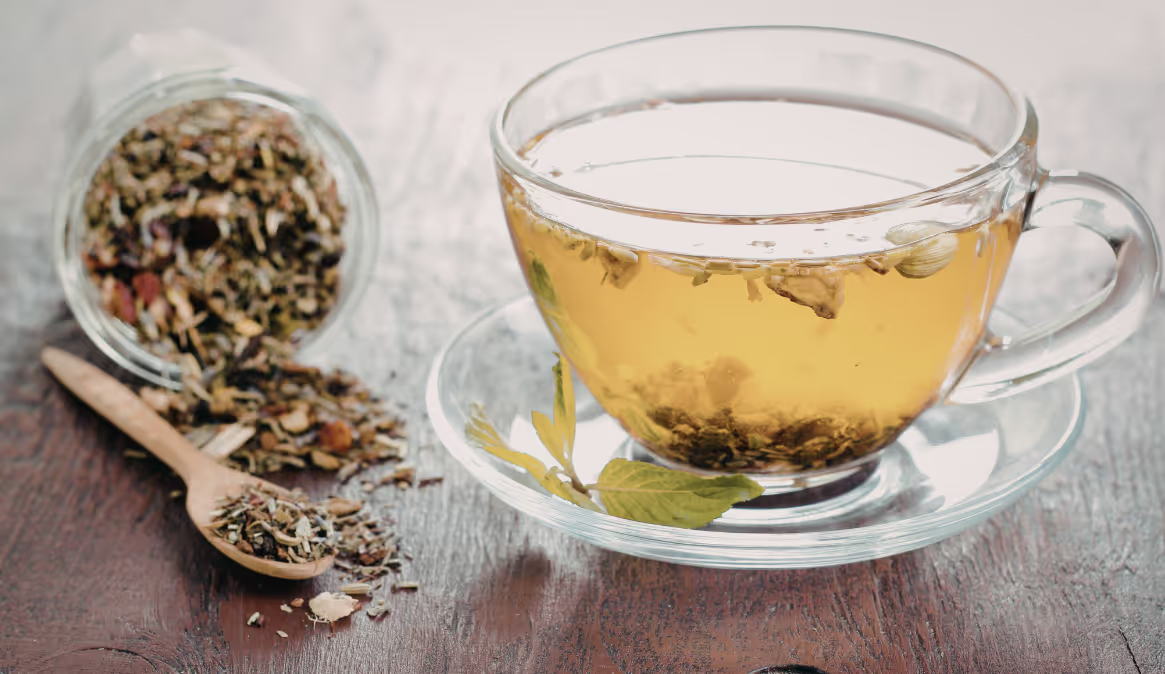
6. Look for microplastic-free tea bags
Some commercial tea bags contain nylon or polypropylene, which can release microplastics when steeped in hot water [4]. Opt for plastic-free tea bags, or switch to loose leaf tea with a glass or metal strainer.
7. Choose microplastic-free salt
Microplastics have been detected in many commercially available sea salts [27]. If reducing exposure matters to you, look for brands that test for or filter out microplastic contamination.
Personalized gut care in a plastic-filled world
Microplastics are hard to avoid completely, but understanding how they interact with your body is the first step toward protecting your gut health. Small, everyday changes like filtering your water, choosing non-plastic food storage, and regular vacuuming can all help reduce your exposure over time.
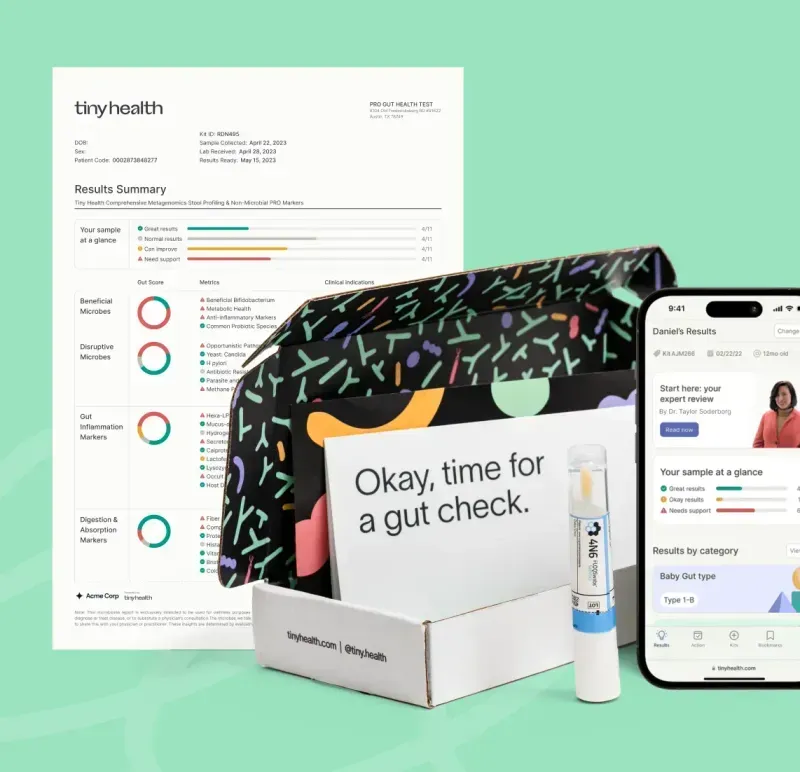
If you want to know how your gut is doing, a Gut Health Test will give you a comprehensive look at the bacteria in your microbiome and what they're doing for your health. It's a trackable way to get personalized insights and start making informed choices for you and your family.
Microplastics FAQ
Does BPA-free mean no microplastics?
Not necessarily. BPA-free means a product was made without bisphenol A, a chemical commonly found in certain plastics. But BPA-free items are still made of plastic, and any plastic can shed microplastic fragments over time, even at room temps, with shedding accelerating when exposed to heat, sunlight, or repeated use [28]. Some manufacturers have replaced BPA with similar compounds like BPS or BPF, which research suggests may carry similar health concerns [29]. Glass or stainless steel containers are a safer bet than any type of plastic, BPA-free or not.
How do I avoid microplastics in tea bags?
Many tea bags are made with nylon, polypropylene, or polyethylene terephthalate (PET), all of which can release microplastics when steeped in hot water [4]. Even some paper tea bags may use plastic-based sealants to hold their shape. To reduce your exposure, switch to loose leaf tea brewed in a glass, ceramic, or stainless steel strainer. If you prefer bags, look for microplastic-free tea bags made entirely from unbleached paper or organic cotton, with no plastic sealants.
What should you look for in microplastic-free salt?
Microplastics have been found in many commercial sea salts, with higher concentrations in salts harvested from more polluted waters [27]. Salts sourced from underground springs or ancient mineral deposits tend to have lower contamination levels since they haven't been exposed to modern ocean pollution. Some brands now offer third-party testing for microplastics, so check the label or the company's website. Mined salts and spring salts are generally a safer choice if this is a concern for you.
Trust your gut.
Get to know your microbes with an easy, 5-minute at-home test from Tiny Health. Unlock deep gut health insights and personalized recommendations for your diet, supplements, and lifestyle.

Dr. Hannah Sturgeon, a Neuroscience Ph.D. from Georgia State University, specializes in microbiome research with expertise in early gut-brain-immune development.

Dr. Pamela Nieto has over 10 years of experience in basic research and gut and vaginal microbiome test development.
References
References
[1] M. A. Browne et al., “Accumulation of microplastic on shorelines worldwide: sources and sinks,” Environ. Sci. Technol., vol. 45, no. 21, pp. 9175–9179, Nov. 2011, doi: 10.1021/es201811s.
[2] R. Dris et al., “A first overview of textile fibers, including microplastics, in indoor and outdoor environments,” Environ. Pollut., vol. 221, pp. 453–458, Feb. 2017, doi: 10.1016/j.envpol.2016.12.013.
[3] A. Vianello, R. L. Jensen, L. Liu, and J. Vollertsen, “Simulating human exposure to indoor airborne microplastics using a Breathing Thermal Manikin,” Sci. Rep., vol. 9, no. 1, p. 8670, Jun. 2019, doi: 10.1038/s41598-019-45054-w.
[4] L. M. Hernandez, E. G. Xu, H. C. E. Larsson, R. Tahara, V. B. Maisuria, and N. Tufenkji, “Plastic teabags release billions of microparticles and nanoparticles into tea,” Environ. Sci. Technol., vol. 53, no. 21, pp. 12300–12310, Nov. 2019, doi: 10.1021/acs.est.9b02540.
[5] X. Liu, D. Li, Z. Li, A. S. Ball, and C. Chen, “Release of microplastics from commonly used plastic containers: Combined meta-analysis and case study,” Journal of Hazardous Materials: Plastics, vol. 2, no. 100028, p. 100028, Feb. 2026, doi: 10.1016/j.hazmp.2025.100028.
[6] A. L. Andrady, “Microplastics in the marine environment,” Mar. Pollut. Bull., vol. 62, no. 8, pp. 1596–1605, Aug. 2011, doi: 10.1016/j.marpolbul.2011.05.030.
[7] M. Kosuth, S. A. Mason, and E. V. Wattenberg, “Anthropogenic contamination of tap water, beer, and sea salt,” PLoS One, vol. 13, no. 4, p. e0194970, Apr. 2018, doi: 10.1371/journal.pone.0194970.
[8] S. A. Mason, V. G. Welch, and J. Neratko, “Synthetic polymer contamination in bottled water,” Front. Chem., vol. 6, p. 407, Sep. 2018, doi: 10.3389/fchem.2018.00407.
[9] S. L. Wright and F. J. Kelly, “Plastic and human health: A micro issue?,” Environ. Sci. Technol., vol. 51, no. 12, pp. 6634–6647, Jun. 2017, doi: 10.1021/acs.est.7b00423.
[10] H. A. Leslie, M. J. M. van Velzen, S. H. Brandsma, A. D. Vethaak, J. J. Garcia-Vallejo, and M. H. Lamoree, “Discovery and quantification of plastic particle pollution in human blood,” Environ. Int., vol. 163, no. 107199, p. 107199, May 2022, doi: 10.1016/j.envint.2022.107199.
[11] X. Zhang et al., “Effect of microplastics on nasal and intestinal microbiota of the high-exposure population,” Front. Public Health, vol. 10, p. 1005535, Oct. 2022, doi: 10.3389/fpubh.2022.1005535.
[12] Z. Celebi Sözener, L. Cevhertas, K. Nadeau, M. Akdis, and C. A. Akdis, “Environmental factors in epithelial barrier dysfunction,” J. Allergy Clin. Immunol., vol. 145, no. 6, pp. 1517–1528, Jun. 2020, doi: 10.1016/j.jaci.2020.04.024.
[13] E. Dzierżyński et al., “Post-mortem evidence of microplastic bioaccumulation in human organs: insights from advanced imaging and spectroscopic analysis,” Arch. Toxicol., vol. 99, no. 10, pp. 4051–4066, Oct. 2025, doi: 10.1007/s00204-025-04092-2.
[14] Z. S. Thin, J. Chew, T. Y. Y. Ong, R. A. Raja Ali, and L. T. Gew, “Impact of microplastics on the human gut microbiome: a systematic review of microbial composition, diversity, and metabolic disruptions,” BMC Gastroenterol., vol. 25, no. 1, p. 583, Aug. 2025, doi: 10.1186/s12876-025-04140-2.
[15] S. C. Sutton and R. D. Hills Jr, “Role of nanoplastics in decreasing the intestinal microbiome ratio: A review of the scope of polystyrene,” Toxics, vol. 13, no. 12, p. 1036, Nov. 2025, doi: 10.3390/toxics13121036.
[16] S. S. Bora et al., “Microplastics and human health: unveiling the gut microbiome disruption and chronic disease risks,” Front. Cell. Infect. Microbiol., vol. 14, p. 1492759, Nov. 2024, doi: 10.3389/fcimb.2024.1492759.
[17] B. Gao et al., “Association between microplastics and the functionalities of human gut microbiome,” Ecotoxicol. Environ. Saf., vol. 290, no. 117497, p. 117497, Jan. 2025, doi: 10.1016/j.ecoenv.2024.117497.
[18] H. Nugrahapraja et al., “Effects of microplastic on human gut microbiome: Detection of plastic-degrading genes in human gut exposed to microplastics—preliminary study,” Environments, vol. 9, no. 11, p. 140, Nov. 2022, doi: 10.3390/environments9110140.
[19] E. L. Murphy et al., “A quantitative risk assessment framework for mortality due to macroplastic ingestion in seabirds, marine mammals, and sea turtles,” Proc. Natl. Acad. Sci. U. S. A., vol. 122, no. 48, p. e2415492122, Dec. 2025, doi: 10.1073/pnas.2415492122.
[20] G. Fackelmann and S. Sommer, “Microplastics and the gut microbiome: How chronically exposed species may suffer from gut dysbiosis,” Mar. Pollut. Bull., vol. 143, pp. 193–203, Jun. 2019, doi: 10.1016/j.marpolbul.2019.04.030.
[21] G. Fackelmann et al., “Current levels of microplastic pollution impact wild seabird gut microbiomes,” Nat. Ecol. Evol., vol. 7, no. 5, pp. 698–706, May 2023, doi: 10.1038/s41559-023-02013-z.
[22] C. Chinglenthoiba, M. N. Lani, S. T. Anuar, K. T. T. Amesho, Priya, and J. H. Santos, “Microplastics in food packaging: Analytical methods, health risks, and sustainable alternatives,” J. Hazard. Mater. Adv., vol. 18, no. 100746, p. 100746, May 2025, doi: 10.1016/j.hazadv.2025.100746.
[23] A. G. Cherian, Z. Liu, M. J. McKie, H. Almuhtaram, and R. C. Andrews, “Microplastic removal from drinking water using point-of-use devices,” Polymers (Basel), vol. 15, no. 6, p. 1331, Mar. 2023, doi: 10.3390/polym15061331.
[24] S. Acarer, “A review of microplastic removal from water and wastewater by membrane technologies,” Water Sci. Technol., vol. 88, no. 1, pp. 199–219, Jul. 2023, doi: 10.2166/wst.2023.186.
[25] N. S. Soltani, M. P. Taylor, and S. P. Wilson, “International quantification of microplastics in indoor dust: prevalence, exposure and risk assessment,” Environ. Pollut., vol. 312, no. 119957, p. 119957, Nov. 2022, doi: 10.1016/j.envpol.2022.119957.
[26] X. Teng, T. Zhang, and C. Rao, “Novel probiotics adsorbing and excreting microplastics in vivo show potential gut health benefits,” Front. Microbiol., vol. 15, no. 1522794, p. 1522794, 2024, doi: 10.3389/fmicb.2024.1522794.
[27] J.-S. Kim, H.-J. Lee, S.-K. Kim, and H.-J. Kim, “Global pattern of microplastics (MPs) in commercial food-grade salts: Sea salt as an indicator of seawater MP pollution,” Environ. Sci. Technol., vol. 52, no. 21, pp. 12819–12828, Nov. 2018, doi: 10.1021/acs.est.8b04180.
[28] K. A. Hussain et al., “Assessing the release of microplastics and nanoplastics from plastic containers and reusable food pouches: Implications for human health,” Environ. Sci. Technol., vol. 57, no. 26, pp. 9782–9792, Jul. 2023, doi: 10.1021/acs.est.3c01942.
[29] H. F. Alharbi et al., “Exposure to bisphenol A substitutes, bisphenol S and bisphenol F, and its association with developing obesity and diabetes mellitus: A narrative review,” Int. J. Environ. Res. Public Health, vol. 19, no. 23, p. 15918, Nov. 2022, doi: 10.3390/ijerph192315918.
Related posts

Get $10 OFF to kickstart your microbiome health journey