Every year, millions of Americans go through surgery without the support they need to recover well. A new approach to perioperative care is changing that, starting with the gut.
Whether you're preparing for a C-section, knee surgery, or a routine colonoscopy, you're probably thinking about scheduling, childcare, recovery time, and a dozen other logistics. Your gut microbiome is probably the last thing on your mind. But research suggests that those trillions of microbes may play a meaningful role in how your body bounces back after surgery.
Surgery's huge impact on your body barely registers in standard care. The weeks before your procedure and the months after are the most important yet least supported window in your entire healthcare journey.
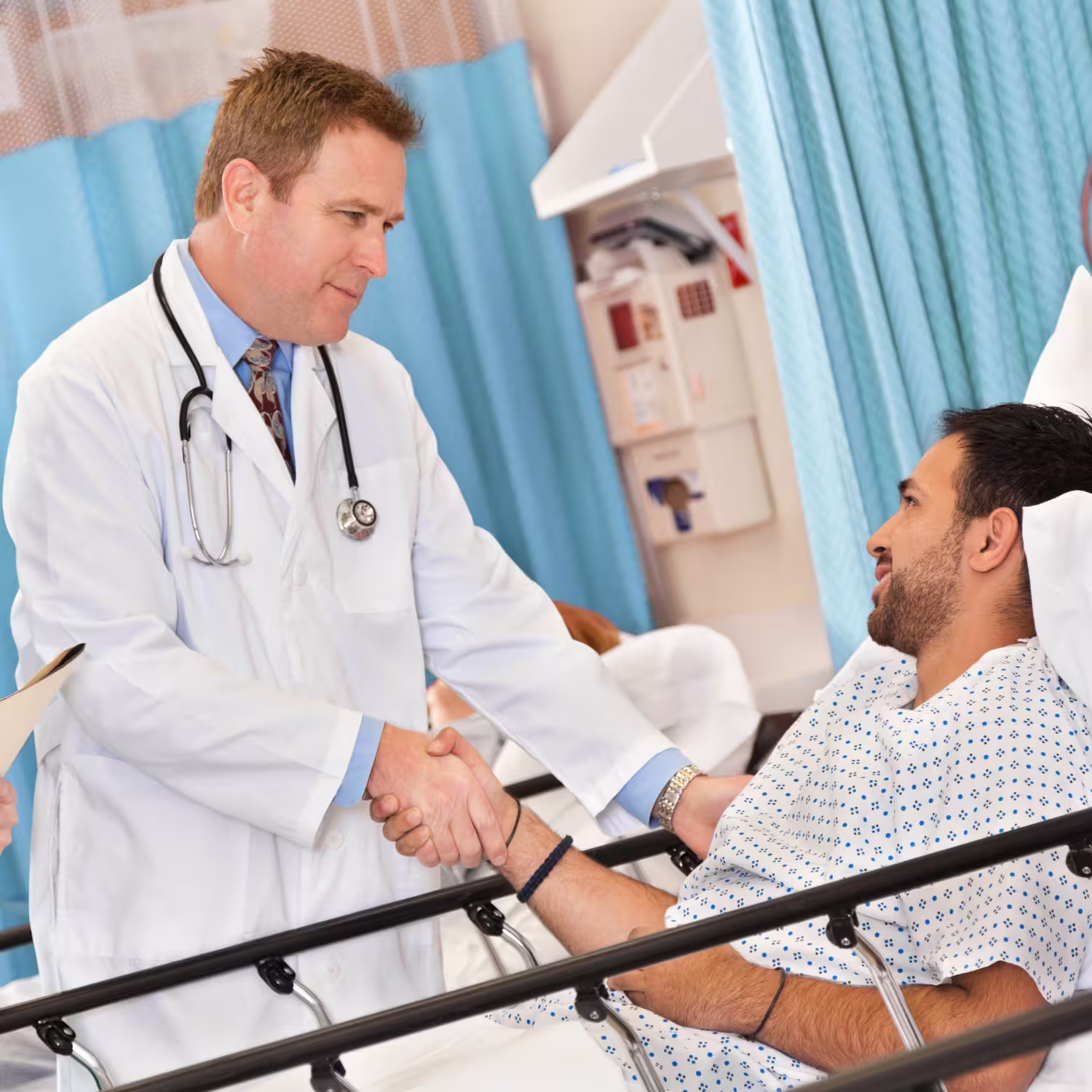
Dr. Chad Greene, D.O., is changing that. He’s a board-certified anesthesiologist and the co-founder of PERIOME, a perioperative health company focused on improving how patients prepare for, go through, and recover from surgery.
In this article, we'll look at how your gut health fits into that picture and what you can do to support your microbiome during this all-important period.
How surgery disrupts the microbiome
A standard pre-op workup clears you for surgery, but it doesn’t assess whether your body is truly ready for what surgery involves — inflammation, immune response, and tissue repair.
PERIOME focuses on this broader window of care, known as the perioperative period, from the moment surgery is scheduled through full recovery. Their approach looks at how different systems in your body, including your gut microbiome, influence how well you handle surgery and heal afterward.
One of the most important factors in how your body handles surgery starts in your gut. Here's what the research shows:
- Roughly 70% of the immune system resides in the gut, and the immune system is a central driver of how your body heals and recovers [1]. This makes the gut microbiome a key player in setting your body up for the best possible outcome and recovery.
- Microbiome resilience, the ability of your microbial community to withstand and bounce back from disruption, is a framework for thinking about surgical recovery.
- The gut microbiome is linked to postoperative outcomes, including infection risk, complications, and recovery time [2]-[4].
- Overgrowth of potential pathogens (unfriendly bacteria), reduced microbial diversity, and loss of beneficial species are linked with worse surgical outcomes [2], [3].
- SCFA-producing microbes are associated with lower inflammation and better recovery [2].
- Fasting, anesthesia, and antibiotics challenge normal gut function, while also affecting mucosal barrier integrity and GI tolerance [5].
How gut health fits into every stage of surgery
What's happening in your gut before, during, and after your procedure may all influence how well you recover. Here's what that looks like at each stage and what you can do about it.
Before surgery: know your starting point
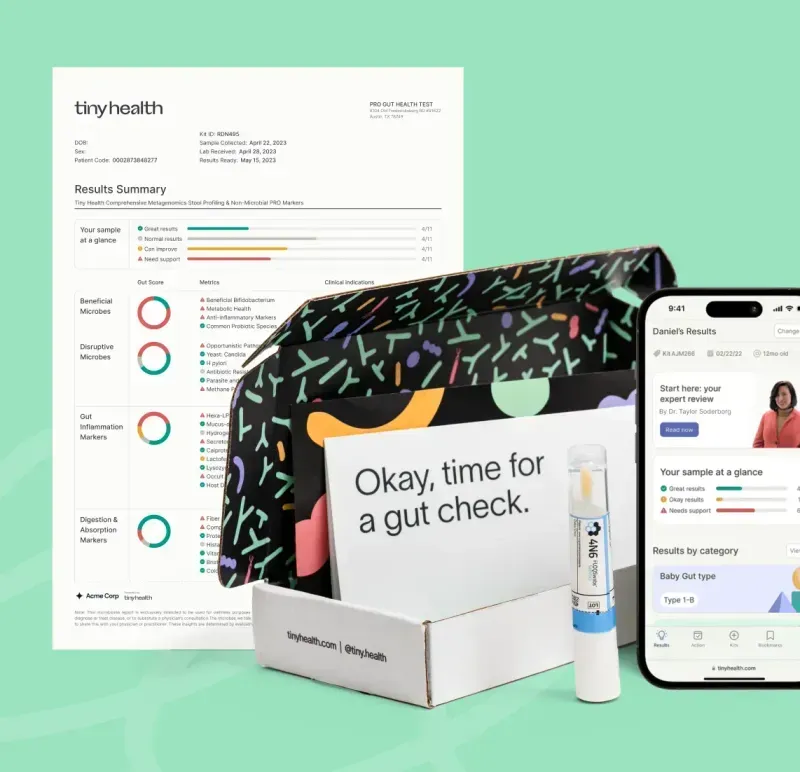
Your gut health before surgery can shape your recovery, so a baseline Gut Health Test 3-4 weeks beforehand is ideal.
Here’s why it matters:
- One study of colorectal cancer patients found that those who developed leaks at the surgical site, where reconnected tissue didn't heal properly, had higher levels of disruptive bacteria, including Lachnospiraceae, Bacteroidaceae, and Fusobacteriaceae. They also reported lower levels of protective microbes, such as Lactobacillaceae [6].
- Another study found that patients with higher levels of Akkermansia muciniphila and Lactococcus lactis before surgery had fewer infections afterward [7].
Testing ahead of time gives you and your practitioner a chance to address imbalances that may impact how well you bounce back. If your test shows areas that need support, targeted probiotics and micronutrients may help keep your microbiome stable through the stress of surgery. You'll also have results to share with your care team and compare against after surgery.
During surgery: what happens to your gut
Surgery itself takes a toll on your microbiome. Antibiotics, bowel prep, and fasting all reduce microbial diversity and shift the balance of your gut bacteria [3], [5]. These are standard protocols, but they can lead to gut imbalances that may impact your overall health.
Hospitals add a layer of risk. If your microbiome is already disrupted and less diverse, it's easier for unfriendly bacteria to take hold. Infections you pick up in the hospital are among the most common causes of post-surgical complications [3]-[5].
This is why supporting your gut throughout the entire postoperative process matters [8].
After surgery: how your gut microbes influence healing
Surgery can weaken your gut barrier. When that happens, bacteria and the substances they produce can reach deeper tissues where they don't belong. That process may trigger inflammation, slowing down tissue repair [4], [5].
Certain gut bacteria also produce enzymes that break down connective tissue, which can weaken the incision [5], [9]. Meanwhile, other microbes signal to recruit immune cells and support repair [5]. The gut bacteria that dominate after surgery can either disrupt or support healing [10].
Between the procedure itself, antibiotics, and recovery, your gut microbiome will look different from how it did going in. Testing your gut about three to four weeks after surgery lets you see what shifted. Beneficial species may recover on their own, but others may not without targeted support. Comparing it against your pre-surgery baseline test adds context and clarity. Your Action Plan will include a step-by-step personalized plan to help rebalance your gut, so you feel like yourself again.
How probiotics, prebiotics, and synbiotics may help at every stage of surgery
Research shows that taking probiotics or synbiotics around the time of surgery can lower the risk of infection. Synbiotics combine probiotics and prebiotics together, and evidence suggests they may work better than probiotics alone [11]-[13].
In abdominal and colorectal surgery, patients who took them had fewer infections and shorter hospital stays [11]. Similar results have been reported in major liver surgery [14]. Probiotic and synbiotic use has also been linked to lower rates of sepsis, a dangerous full-body response to infection, after gastrointestinal surgery [15].
Probiotics and synbiotics may help in important ways. Research suggests they may strengthen the gut barrier, support gut motility, and reduce inflammation [16]-[18].
Every person's gut is different, though. And it depends on the strains, the dose, and the timing. The type of surgery matters, too.
A Gut Health Test before your procedure can show you which beneficial bacteria you're low on, so you and your care team can choose the right support instead of guessing. It’s always a good idea to talk to your doctor before starting any supplements, especially if you have a weakened immune system or are critically ill [16], [17].
Colonoscopies and colorectal cancer screening: why your gut matters here, too
Colonoscopies are something most adults will go through at some point. If you're over 45, your practitioner has probably recommended a colonoscopy for colorectal cancer screening. If you have risk factors, that conversation may have started even earlier. Either way, a colonoscopy affects your gut.
Bowel prep is one of the most dramatic examples of how a procedure can disrupt your microbiome. It clears out bacteria along with everything else. This is why gut health testing matters even before a routine colonoscopy. A baseline gives you something to compare against afterward so you can check in to see which microbes need support.
8 ways to support your gut before and after surgery
Whether your surgery is weeks away or not yet on the calendar, here are key ways to support your body for the best recovery.
- Get a baseline Gut Health Test before your procedure. Ideally, test 3 to 4 weeks before surgery to give yourself enough time to act on any imbalances. Share your results with your care team so everyone is on the same page.
- Focus on gut-friendly foods in the weeks leading up to surgery. Load up on fiber-rich and fermented foods like yogurt, kimchi, sauerkraut, and kefir. A structured nutrition plan can help you make the most of this window.
- Stay hydrated. You'll be fasting before the procedure, so the goal is to go in with a strong foundation. Also, opt for low-sugar electrolyte drinks during recovery.
- Keep moving. Regular activity in the weeks before surgery helps reduce inflammation, support your immune system, and ease the physical stress of the procedure. Even moderate movement makes a difference.
- Cut back on alcohol. Alcohol can disrupt your gut, weaken immunity, and increase surgical complications. Reducing or eliminating it in the weeks leading up to and after surgery is one of the most impactful steps you can take.
- Talk to your care team about medications. You may need to stop taking aspirin and other NSAIDs (nonsteroidal anti-inflammatory drugs like ibuprofen and naproxen) before surgery.
- Ask your practitioner about probiotics and synbiotics. They may help your recovery, especially for abdominal and colorectal procedures.
- Take a follow-up Gut Health Test about three to four weeks after your procedure to see what shifted, what's recovering, and where you might need extra support.
Where personalized surgical care is heading
Surgery is a big deal for your body, and your gut plays an important role in your recovery. The encouraging part is that small, proactive steps can make a real difference. An Adult Gut Health Test before and after your procedure, eating well, staying active, and working with your care team can all help your microbiome stay strong throughout the process. Knowing what's going on in your gut microbiome is a powerful first step.
Perioperative care is one of the most overlooked windows in our healthcare system, and the science around the gut microbiome is starting to change that.
Dr. Greene and his team at PERIOME are leading the charge to better understand and support this critical period. At Tiny Health, we think this is exactly where healthcare should be heading: more personalized, proactive, and rooted in the microbiome.