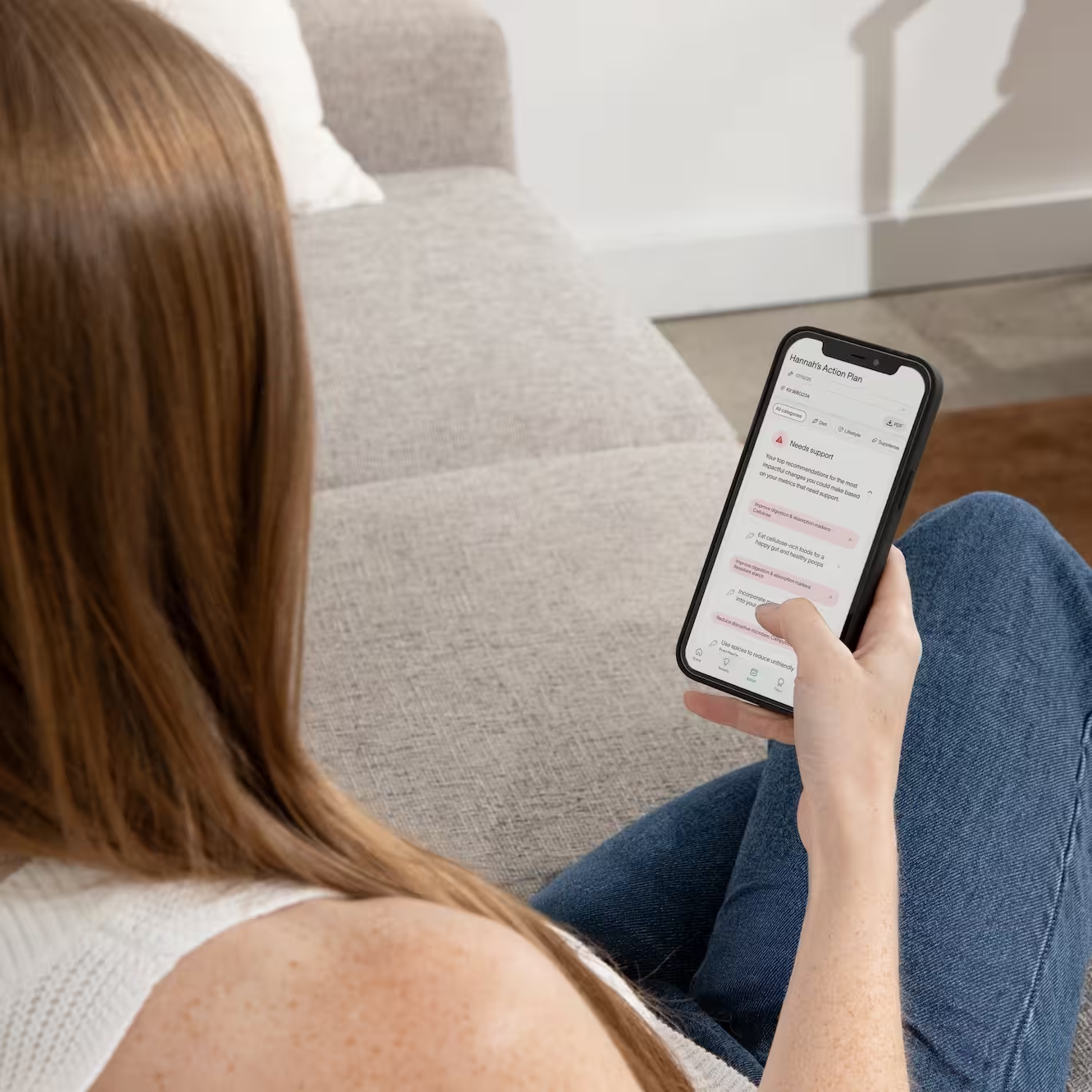
Most gut microbiome tests cost between $99 and $600, though a few practitioner-ordered and expedited options go above that. But a higher price doesn’t always mean you’re getting more. This guide helps you sort that out, including:
What drives the price, from sequencing technology, lab certification, and strain-level analysis to personalized recommendations and specialist review
Why insurance rarely covers wellness-focused tests, and how HSA/FSA eligibility can lower what you pay out of pocket
When a one-time test is enough for a baseline check, and when a lower-cost-per-test membership makes more sense if you’re actively working on your gut health
Why the most useful test is the one that gives you insight you can act on, and when an advanced at-home test like the Tiny Health Gut Health Test ($249, HSA/FSA eligible) is worth it if you have a specific reason to look
If you’ve started shopping for a gut microbiome test, you’ve probably noticed prices vary wildly. One kit costs less than a nice dinner out. Another runs close to $1,000.
And the product pages don’t always make it clear what the extra money actually gets you. The difference usually comes down to how the test reads your stool sample, how much detail ends up in your report, and whether you need a practitioner to order it.
This guide breaks down microbiome test costs in 2026, what you get at each price point, and how to tell whether a higher price buys actionable insights or just a bigger receipt.
Prices verified October 2026.
Average cost of a gut microbiome test
Most gut health tests fall somewhere between $99 and $600, though a few clinical and expedited options run higher. The price range mostly depends on the sequencing technology, the report's depth, and whether a healthcare practitioner has to order the test for you.
Here is how the typical cost breaks down by test type.
Test type
Typical cost
Technology used
What’s included
Additional fees to watch for
Basic at-home kits
99–200
16S rRNA sequencing
Genus-level bacteria breakdown, general diet tips
Supplement or subscription upsells
Advanced at-home tests
199–599
Shotgun metagenomics, metatranscriptomics (RNA), or long-read sequencing
Strain-level report, personalized recommendations, often some form of expert guidance, and free shipping
Supplement or subscription upsells, additional consultation fees, and retesting costs
Practitioner-ordered functional tests
310–660
PCR, microarray, culture, or metagenomic sequencing
Lab analysis and practitioner-facing reports
Practitioner consult fees, specimen coordination, or physician order fees
Clinical comprehensive profiles
429–495 (may bill insurance)
qPCR plus culture plus PCR
Digestion, inflammation, and microbiome markers
Insurance copays, potential balance billing if coverage is denied, and physician order fees
Here's what several well-known tests cost right now (fall 2026) and how they differ.
A quick note on comparing these. Practitioner-ordered tests like Gut Zoomer, GI Effects, and the US BioTek panels often show a wide price range because the final cost depends on the clinic or reseller adding its own fees. Direct-to-consumer tests tend to list a single flat price with free shipping, so the cost per test is straightforward.
What affects the microbiome test cost?
Gut health test costs depend on a number of things, including the sequencing method, the lab, and how much analysis is bundled in.
Sequencing technology: 16S rRNA sequencing is the least expensive and identifies bacteria mostly at the genus level. Shotgun metagenomic sequencing costs more and reads all the microbial DNA in your stool sample, which allows strain-level detail and picks up fungi, viruses, and parasites alongside bacteria. Long-read sequencing and microarray methods sit at their own price points. The deeper the method, the higher the cost (typically).
Lab certification: Tests processed in a CLIA-certified and CAP-accredited lab meet stricter quality standards, which adds to the cost but supports more reliable results.
Strain-level analysis: Resolving individual strains rather than broad groups takes more computing and a larger reference database, which adds to the cost.
Personalized guidance: A raw list of microbes is cheaper to produce than a report that translates your results into specific diet, supplement, and lifestyle recommendations. Reports reviewed by a microbiome specialist cost more than an automated readout.
Who orders the test?Practitioner-ordered tests can carry consult fees, specimen coordination fees, or a per-order physician fee on top of the lab price. Direct-to-consumer tests skip that layer.
Extra markers: Add-ons like stool chemistry markers for inflammation (e.g., calprotectin), digestion, or immune function can increase the overall test price.
Does insurance cover a gut microbiome test?
For most wellness-focused gut health tests, the answer is no. These tests are intended to educate you about your microbiome, not to diagnose a disease or condition. A handful of clinical stool profiles ordered through a practitioner, such as Genova's GI Effects, can sometimes be billed to insurance with a co-pay. Still, coverage depends on your plan and your diagnosis codes, and you may be billed the balance if the claim is denied.
The good news on payment options: many at-home tests are HSA/FSA eligible, which lets you use pre-tax dollars and lowers your out-of-pocket cost. Tiny Health, GutID, and Jona all accept HSA/FSA payments, though some HSA/FSA plans may ask for a letter of medical necessity. If you’re considering a microbiome test, check your HSA or FSA balance first.
How do subscription-based gut tests compare in cost?
Some companies sell a single kit. Others offer a subscription or membership that bundles repeat testing or supplements with ongoing support. The best choice depends on your goals.
When a one-time test makes sense
A one-time purchase fits if you want a baseline snapshot, are curious about your current gut health, or want to check for a specific concern, like a recent course of antibiotics. You pay once, get your report, and act on it. This keeps your upfront cost low.
When a membership or subscription makes sense
A membership or subscription plan is a great option if you want to track your microbiome over time. Tiny+ Membership is $399 per year and includes 2 gut health tests and a coaching session with a microbiome specialist. So you can test, make changes, and resample in 3-6 months to check your progress. Additional kits for members (yourself and anyone in your family) are just $169 each. If you’re managing an ongoing gut concern, membership keeps the cost of retesting down.
Feature
One-time test
Subscription model
Upfront cost
Single flat price
Higher upfront, renews annually, and includes more than one test
Long-term cost
You pay again each time you retest
Often a lower cost per test over time
Progress tracking
One snapshot
Repeat tests track changes over time
Expert support
Sometimes a single results review
Usually ongoing access to a specialist
Best for
A baseline check or a one-off question
Actively rebalancing your gut over months
Is a gut microbiome test worth the cost?
It depends on what you want out of it. And it helps to shift the question from price to value.
Cost tells you what you pay. Value tells you what you get back: a clearer picture of your gut, specific steps to take, and a way to check whether those steps are working. A cheaper test that only lists bacteria at the genus level may leave you with data you can’t act on. A more detailed test that translates your results into an action plan can save you money you might otherwise spend on the wrong probiotics or supplements. That gap between price and what you can act on is what “value for money” means here.
A gut health test tends to be worth considering when:
You have ongoing digestive health concerns like bloating, irregularity, or discomfort and want to understand what is behind them.
You or your baby recently took antibiotics, and you want to see how your gut, or theirs, is recovering.
You’re pregnant, trying to conceive, or planning around a C-section birth and want to support your own and your baby's microbiome early.
You’re managing a gut-associated condition, such as eczema or food sensitivities, and want data to guide your next steps.
You want to be proactive about your gut health and get a baseline now so you can measure progress later.
Insight is most valuable when you have a specific reason to test.
How much does an advanced at-home gut microbiome test like Tiny Health cost?
The Tiny Health Gut Health Test costs $249 as a one-time purchase, with free shipping in the U.S. It’s also HSA/FSA eligible. Baby, Child, and Adult kits are all priced the same so the whole family can test.
Here’s what’s included:
An at-home gut microbiome test kit with a mess-free sample collection swab.
Deep shotgun metagenomic sequencing, which reads your microbiome at strain-level precision and screens for over 120,000 bacteria, fungi, viruses, and parasites.
Your gut health report with evidence-based diet, supplement, and lifestyle recommendations tailored to your age and results.
A Personalized Results Review group session with a microbiome specialist.
Processing in a CLIA-certified and CAP-accredited lab.
Your report arrives in 2-3 weeks after your sample reaches the lab. There are no hidden fees, and shipping is free. If you want to save on retesting and track your gut over time, Tiny+ Membership is the better option.
Compared with practitioner-ordered functional stool tests that can run up to $660 before consultation fees, an advanced at-home test gives you strain-level detail and expert guidance at a lower price. Plus, you can order it yourself.
What you should know
FAQ: Microbiome test costs
Why do gut microbiome tests vary so much in price?
The biggest reason is technology. Basic 16S tests are cheaper and identify bacteria at the genus level. In contrast, shotgun metagenomic tests cost more because they read your microbiome down to the strain level and show what your microbes are capable of doing. Lab certification, report depth, and whether a practitioner has to order the test also affect the price.
Why are some microbiome tests so expensive?
Higher-priced tests usually use more advanced sequencing, run in accredited labs, and include a personalized report reviewed by a specialist. Practitioner-ordered tests can also add consult or coordination fees on top of the lab cost, which pushes the total higher.
Is a more expensive gut test better?
Not always. A higher price often buys deeper sequencing and a more actionable report, but the best test matches your goals. If you want strain-level detail and clear next steps, paying more can be worth it; if you want a simple overview, a mid-range kit may be enough.
How often should I retest?
If you’re actively changing your diet, taking probiotics, or recovering from antibiotics, retesting every 3 to 6 months lets you see whether your gut is moving in the right direction. If you’re just tracking general wellness, once a year is a good start.
Are cheaper gut health tests accurate?
Lower-priced 16S tests can give a reasonable overview of your bacterial diversity, but they usually cannot distinguish closely related species or detect fungi and viruses. For a more complete and precise picture, shotgun metagenomic sequencing in a certified lab is more reliable.
Are there hidden fees with microbiome testing?
Sometimes. Watch for practitioner consult fees, specimen coordination or physician order fees, and supplement or subscription upsells on budget kits. Many direct-to-consumer tests include free shipping and no added fees, so read what’s included or bundled before you buy.
Does price affect turnaround time?
It depends. Most tests return results in 2 to 4 weeks regardless of cost, though a few companies charge extra for expedited processing that shortens the wait time.
Written by: Harold Nuñez, PhD
Dr. Harold Nunez, a Medical Technologist and Ph.D. holder, specializes in microbiome research with over 10 years of experience.