Your bloating, fatigue, mood swings, and skin flare-ups may not be diet and hormones alone. They may be signs your gut microbiome needs some TLC. From the estrobolome's influence on estrogen to the microbial shifts that happen during perimenopause and menopause, learn what may be behind your symptoms and what actions you can take to feel your best.
Signs of Poor Gut Health in Women: What Your Symptoms May Actually Mean

Summary
If you've ever brushed off bloating, low energy, mood changes, or skin issues as something you just have to live with, you're not alone. Many women don't realize that their gut may be playing a role in all of these symptoms.
The gut–brain axis influences your mood and energy, and stress and sleep can reshape your microbial balance (and vice versa). Since up to 80% of your immune cells live in your gut, your microbiome also plays a role in how you bounce back from a virus or fight off infection.
Your gut microbiome also shifts across life stages, from your 30s through perimenopause, menopause, and beyond.
We're taking a closer look at the possible root causes of your symptoms, what may be influencing your gut microbes, and the specific test you can take to find out whether your gut is supporting your overall health.
Why gut health is different for women
If you've ever wondered whether your gut works differently than a man's, the answer is yes. The female gut microbiome is shaped by hormonal cycles, anatomy, and a connection between estrogen and the microbiome.
There are a few key differences that set the female gut apart, including:
- Hormonal changes: Estrogen and progesterone shifts across pregnancy and menopause and each leaves an imprint on your gut microbiome [1], [2]. Shifts in the vaginal microbiome have even been reported during the menstrual cycle [3].
- Physiology differences: Some studies suggest that women have different gut physiology from men, such as slower passage of food through the gastrointestinal tract, which may shape your symptoms [4], [5].
- The estrobolome: Certain gut microbes help process estrogen. If this group of microbes (a.k.a. the estrobolome) are out of balance, estrogen levels in your body may be impacted [6].
You may have been told some of these non-truths (or half-truths) before, so let's separate the facts from the fiction.
Symptoms of poor gut health in women
Gut issues aren't isolated. When your microbiome is imbalanced, the effects can show up across your whole body, especially in women.
Bloating and cramps
Not all bloating is the same. If you experience it regularly, hormonal changes throughout your cycle may be a factor. Fluid retention and increased digestive sensitivity are also main drivers, and in some cases, gas-producing gut bacteria can also play a role [9].
Slow gut motility
Gut motility — the speed at which food moves through the digestive tract — is controlled by both hormones and microbes. Progesterone, a hormone your ovaries produce to help regulate your menstrual cycle and support pregnancy, slows motility by relaxing the muscles in your digestive tract [10]. As a result, women are more prone to constipation and IBS, and when digestion slows, it can allow unwanted substances to build up in the gut [11].
Skin issues
Your gut and skin are connected through the immune system. When your gut is out of balance, it can increase inflammation that may show up as acne, eczema, or other skin conditions [12].
Low mood and anxiety
Your gut communicates with the brain constantly via the vagus nerve, immune signaling, and microbially-produced metabolites. If your mood has felt off and you can't quite explain why, your gut may be part of the picture. Research has found differences in the gut microbiome among women with depression and anxiety [13], [14].
Fatigue and low energy
When your gut isn't functioning well, it may not absorb nutrients efficiently. This can affect your levels of iron, magnesium, and B vitamins — all of which your body relies on for energy [15]. Women are already at higher risk for certain nutrient deficiencies, and gut issues can widen that gap [16], [17].
How gut health changes for women over 40
Your gut microbiome doesn't age in isolation — it shifts alongside your hormones. During perimenopause and menopause, hormonal changes are linked to meaningful changes in the gut microbiome that can ripple into metabolism, mood, bone health, and heart health through hormone and immune pathways [18], [19].
Your 30s
For many women, the 30s are when gut–hormone connections become more noticeable. As lifestyle demands increase, stress can begin to influence your microbiome.
Perimenopause
Perimenopause typically begins in your 40s, though it can start in your late 30s, and is characterized by fluctuating hormone levels. As estrogen rises and falls, it can influence your gut microbiome. Research links this stage to shifts in gut bacteria, including lower levels of beneficial, short-chain fatty acid–producing microbes like Faecalibacterium and Roseburia (which help support the gut lining and reduce inflammation), along with broader changes in microbial diversity [20].
Menopause
The menopause transition brings a sharp drop in estrogen, and research shows this is associated with measurable changes in your gut microbiome, including further shifts in diversity and composition that point to altered interactions between your hormones and your microbes [21].
Post-menopause (50s+)
After menopause, lower estrogen continues to shape your gut environment. Studies suggest the microbiome keeps shifting in composition, and these changes may be connected to the severity of symptoms like hot flashes [20]. Your vaginal microbiome also changes during this time, which may increase your risk of infections like UTIs [22].
What most women aren't told about their gut
Female gut health is influenced by more than biology alone, it is also shaped by a range of external and lifestyle factors that can influence your microbiome over time.
- Stress affects your gut lining. Chronic stress doesn't just wear you down mentally — it can increase gut permeability and reduce beneficial bacteria, even if your diet stays the same [23].
- Your immune system is wired differently — and your gut plays a role. Women naturally have stronger immune responses than men. But this protective mechanism may also mean inflammation can flare more easily [24]. A disrupted gut barrier can make this worse. When your gut lining becomes too permeable, bacterial products can leak into your bloodstream and keep your immune system on high alert [25].
- Your gut bacteria have a sleep schedule. Researchers believe gut microbes follow daily (circadian) cycles of activity based on your meal patterns. Disrupted or poor-quality sleep can throw off those rhythms in ways that affect your gut [26].
- Birth control may play a role. Research is still developing, but studies suggest contraceptives may influence your microbiome composition [27], [28].
- Pregnancy changes your gut in lasting ways. Microbiome shifts during pregnancy and the postpartum period may affect your gut long after you’ve recovered [29].
How women can test their gut health
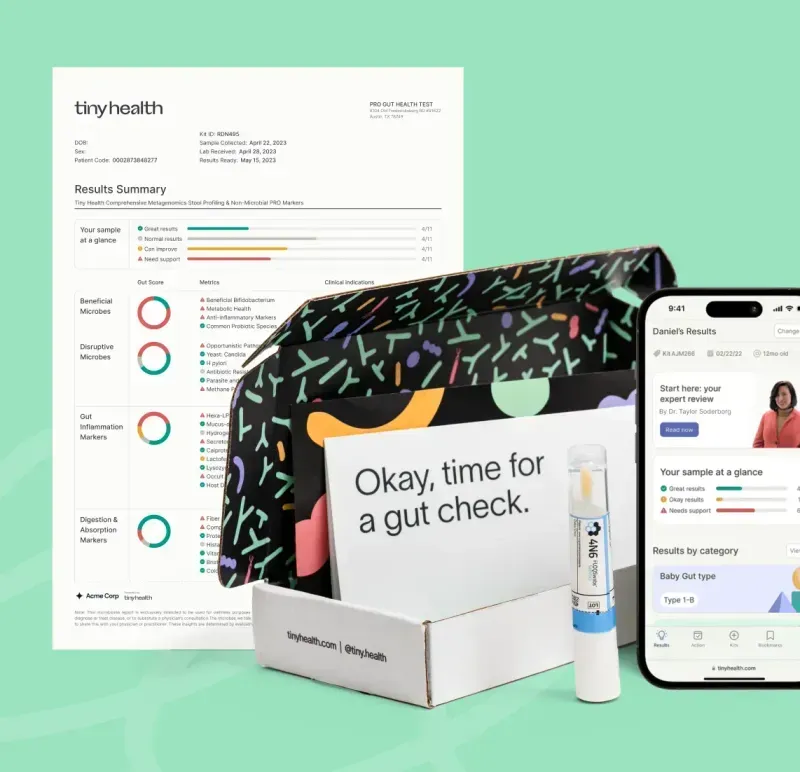
Tiny Health's Adult Gut Health Test gives you a detailed look at what's happening in your gut — with results benchmarked against a proprietary database that includes women across life stages, so insights reflect your biology, not a one-size-fits-all reference. And because vaginal health is a core part of women's overall well-being, Tiny Health also offers a Vaginal Health Test for a more complete picture.
Trust your gut.
Get to know your microbes with an easy, 5-minute at-home test from Tiny Health. Unlock deep gut health insights and personalized recommendations for your diet, supplements, and lifestyle.

Get Your Personalized Gut Health Plan
Answer a few questions and receive tailored recommendations, plus $20 off.

Dr. Hannah Sturgeon, a Neuroscience Ph.D. from Georgia State University, specializes in microbiome research with expertise in early gut-brain-immune development.

Dr. Pamela Nieto has over 10 years of experience in basic research and gut and vaginal microbiome test development.
References
References
[1] T. Huang et al., “Multi-omics analysis reveals the associations between altered gut microbiota, metabolites, and cytokines during pregnancy,” mSystems, vol. 9, no. 3, p. e0125223, Mar. 2024, doi: 10.1128/msystems.01252-23.
[2] M. Yang, S. Wen, J. Zhang, J. Peng, X. Shen, and L. Xu, “Systematic review and meta-analysis: Changes of gut Microbiota before and after menopause,” Dis. Markers, vol. 2022, p. 3767373, Jul. 2022, doi: 10.1155/2022/3767373.
[3] M. C. Krog et al., “The healthy female microbiome across body sites: effect of hormonal contraceptives and the menstrual cycle,” Hum. Reprod., vol. 37, no. 7, pp. 1525–1543, Jun. 2022, doi: 10.1093/humrep/deac094.
[4] M. R. Heath and Y. Luo, “A roadmap for advancing women’s health in disorders of the Gut-Brain Interaction,” United European Gastroenterol. J., vol. 14, no. 1, p. e70167, Feb. 2026, doi: 10.1002/ueg2.70167.
[5] J. W. Lampe, S. B. Fredstrom, J. L. Slavin, and J. D. Potter, “Sex differences in colonic function: a randomised trial,” Gut, vol. 34, no. 4, pp. 531–536, Apr. 1993, doi: 10.1136/gut.34.4.531.
[6] J. M. Baker, L. Al-Nakkash, and M. M. Herbst-Kralovetz, “Estrogen-gut microbiome axis: Physiological and clinical implications,” Maturitas, vol. 103, pp. 45–53, Sep. 2017, doi: 10.1016/j.maturitas.2017.06.025.
[7] A. Caminero, M. Meisel, B. Jabri, and E. F. Verdu, “Mechanisms by which gut microorganisms influence food sensitivities,” Nat. Rev. Gastroenterol. Hepatol., vol. 16, no. 1, pp. 7–18, Jan. 2019, doi: 10.1038/s41575-018-0064-z.
[8] A. Madison and J. K. Kiecolt-Glaser, “Stress, depression, diet, and the gut microbiota: human-bacteria interactions at the core of psychoneuroimmunology and nutrition,” Curr. Opin. Behav. Sci., vol. 28, pp. 105–110, Aug. 2019, doi: 10.1016/j.cobeha.2019.01.011.
[9] E. Mutuyemungu, M. Singh, S. Liu, and D. J. Rose, “Intestinal gas production by the gut microbiota: A review,” Journal of Functional Foods, vol. 100, p. 105367, Jan. 2023, doi: 10.1016/j.jff.2022.105367.
[10] A. Coquoz, D. Regli, and P. Stute, “Impact of progesterone on the gastrointestinal tract: a comprehensive literature review,” Climacteric, vol. 25, no. 4, pp. 337–361, Aug. 2022, doi: 10.1080/13697137.2022.2033203.
[11] Y. S. Kim and N. Kim, “Sex-gender differences in irritable bowel syndrome,” J. Neurogastroenterol. Motil., vol. 24, no. 4, pp. 544–558, Oct. 2018, doi: 10.5056/jnm18082.
[12] Y. Zhao, C. Yu, J. Zhang, Q. Yao, X. Zhu, and X. Zhou, “The gut‑skin axis: Emerging insights in understanding and treating skin diseases through gut microbiome modulation (Review),” Int. J. Mol. Med., vol. 56, no. 6, pp. 1–15, Dec. 2025, doi: 10.3892/ijmm.2025.5651.
[13] Y.-H. Chen et al., “Gut microbiota dysbiosis in depressed women: The association of symptom severity and microbiota function,” J. Affect. Disord., vol. 282, pp. 391–400, Mar. 2021, doi: 10.1016/j.jad.2020.12.143.
[14] Z. Bashir et al., “Investigations of microbiota composition and neuroactive pathways in association with symptoms of stress and depression in a cohort of healthy women,” Front. Cell. Infect. Microbiol., vol. 14, p. 1324794, Jul. 2024, doi: 10.3389/fcimb.2024.1324794.
[15] M. Barone, F. D’Amico, P. Brigidi, and S. Turroni, “Gut microbiome-micronutrient interaction: The key to controlling the bioavailability of minerals and vitamins?,” Biofactors, vol. 48, no. 2, pp. 307–314, Mar. 2022, doi: 10.1002/biof.1835.
[16] J. L. Burns, C. H. Miller, B. Fontaine-Bisson, and K. L. Connor, “Iron deficiency and iron deficiency anaemia in women of reproductive age: Sex- and gender-based risk factors and inequities,” J. Trace Elem. Med. Biol., vol. 90, no. 127684, p. 127684, Aug. 2025, doi: 10.1016/j.jtemb.2025.127684.
[17] E. Mazza et al., “Magnesium: Exploring gender differences in its health impact and dietary intake,” Nutrients, vol. 17, no. 13, p. 2226, Jul. 2025, doi: 10.3390/nu17132226.
[18] H. Wang et al., “Gut microbiota has the potential to improve health of menopausal women by regulating estrogen,” Front. Endocrinol. (Lausanne), vol. 16, p. 1562332, Jun. 2025, doi: 10.3389/fendo.2025.1562332.
[19] B. A. Peters et al., “Menopause is associated with an altered gut microbiome and estrobolome, with implications for adverse cardiometabolic risk in the Hispanic Community Health Study/study of Latinos,” mSystems, vol. 7, no. 3, p. e0027322, Jun. 2022, doi: 10.1128/msystems.00273-22.
[20] M. J. S. Lim, E. Parlindungan, E. ’ein See, C. H. Gan, R. Yap, and G. J. M. Yong, “Diet, the Gut Microbiome, and Estrogen Physiology: A Review in Menopausal Health and Interventions,” Nutrients, vol. 18, no. 7, p. 1052, Mar. 2026, doi: 10.3390/nu18071052.
[21] M. R. Nieto, M. J. Rus, V. Areal-Quecuty, D. M. Lubián-López, and A. Simon-Soro, “Menopausal shift on women’s health and microbial niches,” NPJ Womens Health, vol. 3, no. 1, p. 3, Jan. 2025, doi: 10.1038/s44294-024-00050-y.
[22] M. L. Ferrando, F. Busonero, F. Crobu, and S. Sanna, “Aging in women - The microbiome perspective,” Ageing Res. Rev., vol. 113, no. 102950, p. 102950, Jan. 2026, doi: 10.1016/j.arr.2025.102950.
[23] J. P. Karl et al., “Effects of psychological, environmental and physical stressors on the gut Microbiota,” Front. Microbiol., vol. 9, p. 2013, Sep. 2018, doi: 10.3389/fmicb.2018.02013.
[24] S. Sharma, A. Gibbons, and E. O. Saphire, “Sex differences in tissue-specific immunity and immunology,” Science, vol. 389, no. 6760, pp. 599–603, Aug. 2025, doi: 10.1126/science.adx4381.
[25] L. Rizzetto, F. Fava, K. M. Tuohy, and C. Selmi, “Connecting the immune system, systemic chronic inflammation and the gut microbiome: The role of sex,” J. Autoimmun., vol. 92, pp. 12–34, Aug. 2018, doi: 10.1016/j.jaut.2018.05.008.
[26] D. Withrow, S. J. Bowers, C. M. Depner, A. González, A. C. Reynolds, and K. P. Wright Jr, “Sleep and circadian disruption and the gut microbiome-possible links to dysregulated metabolism,” Curr. Opin. Endocr. Metab. Res., vol. 17, pp. 26–37, Apr. 2021, doi: 10.1016/j.coemr.2020.11.009.
[27] J. Brito et al., “Hormonal birth control is associated with altered gut microbiota β-diversity in physically active females across the menstrual cycle: a pilot trial,” J. Appl. Physiol., vol. 138, no. 3, pp. 739–745, Mar. 2025, doi: 10.1152/japplphysiol.00008.2025.
[28] J. Mihajlovic et al., “Combined hormonal contraceptives are associated with minor changes in composition and diversity in gut microbiota of healthy women,” Environ. Microbiol., vol. 23, no. 6, pp. 3037–3047, Jun. 2021, doi: 10.1111/1462-2920.15517.
[29] W. Weerasuriya et al., “Maternal gut microbiota in the postpartum Period: A Systematic review,” Eur. J. Obstet. Gynecol. Reprod. Biol., vol. 285, pp. 130–147, Jun. 2023, doi: 10.1016/j.ejogrb.2023.03.042.
[30] S. Porcari et al., “International consensus statement on microbiome testing in clinical practice,” Lancet Gastroenterol. Hepatol., vol. 10, no. 2, pp. 154–167, Feb. 2025, doi: 10.1016/S2468-1253(24)00311-X.
Related posts
.avif)
Get $10 OFF to kickstart your microbiome health journey