Tiny Health and GI Effects (from Genova Diagnostics) are both gut microbiome tests, but they work in different ways. Tiny Health reads the DNA of the microbes in your stool, and you can order it from home. GI Effects uses several lab methods, and you usually order it through a healthcare provider. Both tests run in CLIA-certified labs, which meet federal quality standards. Even so, they differ in what they measure, how much they tell you, and who they are built for.
Technology: Tiny Health uses whole-genome shotgun metagenomic sequencing. GI Effects uses targeted qPCR, culture, and microscopy, with an optional whole-genome metagenomic add-on (Microbiomix).
Clinical stool markers: Tiny Health's PRO Gut Health Test, its practitioner-ordered option, combines the same shotgun sequencing with clinical stool markers for inflammation, digestion, and immunity, such as calprotectin, elastase, sIgA, and fecal fats. GI Effects measures them too, but full microbiome sequencing requires Microbiomix. If you want both in one test, the PRO Gut Health Test covers it.
Microbial coverage: Tiny Health looks at more than 120,000 bacteria, viruses, fungi, and other microbes. GI Effects checks for a set list of microbes and markers.
Best for: Tiny Health is a good fit for children, families, and adults who want a wide view of their gut. GI Effects is a good fit for adults who work with a functional medicine provider to look into digestive symptoms, especially if they want culture-based antimicrobial sensitivity testing or microscopy for parasites.
Price range: Tiny Health starts at $249 for one test or $399 a year for a Tiny+ membership that includes two tests. GI Effects usually costs between $370 and $874, depending on the panel and where you order it.
Turnaround: Tiny Health results are usually available within 2-3 weeks. GI Effects results usually take 7 to 17 business days.
Support: Tiny Health offers email support, free Personalized Results Review for single test customers, and a complimentary 1-on-1 session with a microbiome specialist through Tiny+ Membership. TinyAI, an AI assistant built into the Results Portal, also gives instant, personalized answers about your own report. GI Effects offers provider support through its Medical Affairs Team.
If you're comparing Tiny Health and GI Effects from Genova Diagnostics, you're in the right place. Maybe your doctor suggested GI Effects, and you want to know what you'd get before you commit. Or perhaps you've been looking into at-home gut tests on your own, and want to see how Tiny Health stacks up.
This article puts both tests side by side on the things that matter most: how each test works, which microbes it detects, what your report looks like, how much it costs, and what kind of support you get.
A note on this comparison
All details are based on publicly available information from Tiny Health and GI Effects/Genova, current at the time of publication. Features, pricing, and test options can change over time. Before you buy, we suggest checking the latest details on each company's website.
How we compared GI Effects/Genova and Tiny Health
We built this comparison to be open and evidence-based, so that you can make an informed choice.
Methodology
Data sources: We pulled from a range of public sources. These include Tiny Health's technology page, GI Effects/Genova's product page, and their lab and licensing documents, which cover CLIA lab status and CAP accreditation. We also used Genova's blog posts, peer-reviewed studies on sequencing methods, verified user reviews from Trustpilot, Yelp, and editorial sites, and public lab certification records. Both companies process samples in CLIA-certified labs.
Evaluation criteria: We compared the test technology and sequencing method, how many microbes each test covers and at what level of detail, what the report analyzes, how useful the advice is, how clear the pricing is, how long results take, customer and clinical support, and how strong the science is behind each test.
Last updated: November 2026.
Tiny Health at a glance
A mom founded Tiny Health in 2020 while searching for answers to her baby's eczema and food allergies. It started as the first baby gut test on the market. Today, it's a microbiome testing platform built for lifelong health, from the first 1,000 days of life to healthy aging. It serves people of all ages, as well as the practitioners who care for them.
Our gut and vaginal health tests use whole-genome shotgun metagenomics. This sequencing method reads all the microbial DNA in a sample, and an international group of scientists recommends it for clinical microbiome testing [1]. It gives you strain-level, age-specific results, drawn from one of the largest long-term microbiome datasets in the world. Those results turn into a personalized, step-by-step action plan. If you buy a single test, you get a free group Personalized Results Review, and a microbiome specialist can walk you through your report. Tiny+ members get a 1-on-1 session with a microbiome specialist for deeper guidance and ongoing support.
Detail
Tiny Health
Founded
2020
Test type
Whole-genome shotgun metagenomic sequencing
Sample type
Stool or Vaginal (at-home collection)
Best for
All ages and life stages, from babies to seniors, pregnant women, and health-conscious adults
Starting price
$249 (single test); $399/year (Tiny+ membership with 2 tests)
GI Effects/Genova at a glance
Genova Diagnostics is one of the oldest functional medicine labs in the United States. It was founded in 1986 as Great Smokies Diagnostic Laboratory and is based in Asheville, North Carolina. Its GI Effects Comprehensive Profile is a stool test made mainly for healthcare practitioners in integrative and functional medicine. The test uses several methods at once: qPCR, culture with MALDI-TOF mass spectrometry, and microscopy. Together, these look at gut pathogens, inflammatory markers, digestive function, and microbial balance.
Targeted analysis of 24 bacterial genera/species across 7 major phyla, plus selected pathogens, yeast, and protozoal parasites (additional parasites analysis available for an extra fee)
Species-level identification
Yes, plus strain-level detail*, allowing finer distinctions between closely related microbes
Yes, for targeted organisms
Who it’s for
Parents, families, and health-conscious adults
Adults with GI symptoms working with a practitioner
Sample collection
At-home stool collection kit (~5 minutes)
At-home stool collection kit (1-day or 3-day)
Functional analysis
5,000+ microbial functions and metabolic pathways (e.g., SCFA production, fiber digestion, vitamin synthesis, and bile acid metabolism), the PRO Gut Health test adds digestive and inflammation markers, including elastase, fat stain, calprotectin, lactoferrin, sIgA, and measured SCFAs
Diversity Score, Microbiome Age, Gut Resilience Score
Functional Imbalance Scores
Personalized recommendations
Action Plan with targeted diet, supplement, and lifestyle guidance
Functional Imbalance Scores with treatment direction; practitioner interprets
Pricing
$249 (single test); $169/kit with membership, contact your practitioner for PRO Gut Health Test pricing
370–874 (varies by profile and channel)
One-time vs. subscription
One-time or Tiny+ Membership
One-time (per practitioner order)
Turnaround time
2 to 3 weeks
7–17 business days
Clinical support
Personalized Results Review for a single test, and a 1:1 microbiome specialist session with Tiny+ membership
Medical Affairs Team consultations for practitioners
Lab certifications
CLIA- and CAP-certified lab.
CLIA-licensed; CAP proficiency testing; state licenses (CA, MD, NY, PA, RI)
* Why does strain-level detail matter? Different strains of the same bacterial species can behave differently. Some may produce beneficial compounds, while others may not. Strain-level analysis provides a more detailed picture of your microbiome.
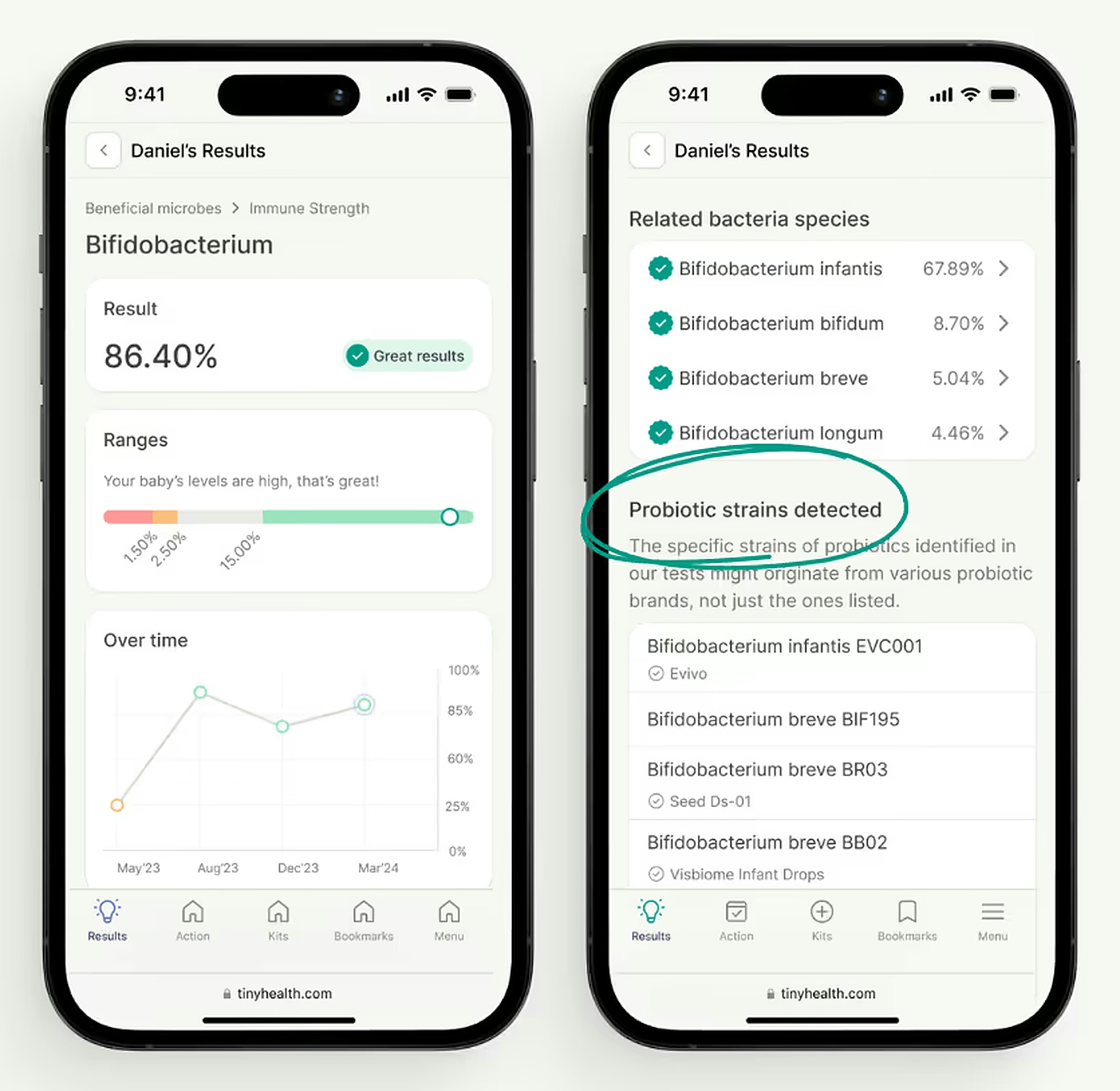
If you take a probiotic, you can see whether its strains show up in your sample. Any probiotic strains detected appear within each metric in the Beneficial microbes category.
Detailed comparison: Tiny Health vs GI Effects/Genova
Each section below unpacks a specific dimension of the comparison so you can see exactly where these two tests overlap and where they differ.
Technology and testing methodology
The testing method behind a microbiome test shapes everything about what you'll learn from it. Two tests can analyze the same stool sample and return very different information depending on the technology used.
Tiny Health uses whole-genome shotgun metagenomics. This method reads all the genetic material in a sample, without picking targets ahead of time. That gives you an unbiased view of the whole microbial community, down to the level of individual strains. An international group of researchers, writing in peer-reviewed studies, has recommended shotgun metagenomics as one of the standards for clinical microbiome testing [1]. There is a tradeoff: shotgun sequencing measures DNA, which reveals what microbes are capable of doing, but not what they actually produce.
GI Effects combines several testing methods to look for pathogens and other gut health markers. qPCR can detect specific microbes even when only small amounts are present. Culture testing grows bacteria and fungi from the sample. Those organisms are then identified using MALDI-TOF technology, and potentially harmful organisms can be tested to see which antibiotics, antifungals, or natural agents may work against them. Microscopy helps find parasites that DNA-based methods may miss [2], [3]. Genova also offers an optional add-on called Microbiomix, which uses whole-genome sequencing to analyze a wider range of microbes.
Feature
Tiny Health
GI Effects/Genova
Method
Whole-genome shotgun metagenomics
Targeted qPCR + culture (MALDI-TOF) + microscopy
What it detects
Full microbial community DNA: bacteria, fungi, viruses, archaea, parasites
Targeted pathogens, viable organisms, parasites (visual), inflammation and digestive biomarkers
Resolution level
Species- and strain-level across 120,000+ microbes
Species-level for targeted organisms
Limitations
Measures DNA (potential), not live organism viability or real-time metabolic activity
Cannot profile the full microbial community without Microbiomix add-on; limited to pre-selected targets, increased cost
Microbiome coverage & functions analyzed
What each test shows you matters just as much as the technology. Here's how they compare on specific analytics and markers.
What’s analyzed
Tiny Health
GI Effects/Genova
Bacterial species
Yes (comprehensive, 120,000+ organisms)
Yes (set panels via qPCR and culture)
Species-level identification
Yes, plus strain-level tracking
Yes, for targeted organisms
Fungi
Yes (DNA-based detection)
Yes (culture-based, including Candida)
Viruses / phages
Yes
No
Archaea
Yes
Limited
Functional pathways
Yes, 5,000+ functions mapped to thousands of pathways
No (available with Microbiomix add-on)
Metabolite measurements
Predicted from genomic data in the Gut Health Test; the PRO Gut Health Test measures SCFAs, fat stain, calprotectin, and sIgA directly
Yes (direct measurement of SCFAs, fecal fats, calprotectin, EPX, sIgA)
Pathogen flags
Yes (DNA-based screening for disruptive organisms)
Yes (Targeted qPCR + culture + microscopy)
Dysbiosis indicators
Yes (diversity score, community composition analysis)
Yes (Functional Imbalance Scores)
Antibiotic resistance genes
Not reported
Antimicrobial sensitivity testing via culture
Beneficial bacteria
Yes (with strain-level detail)
Yes (commensal bacteria levels)
Gut microbiome diversity
Yes (comprehensive diversity score against healthy reference)
Limited (targeted panels)
Inflammation markers (direct)
Yes, with the PRO Gut Health Test ordered by qualified practitioners only (calprotectin, lactoferrin, lysozyme, sIgA).
Here's the key difference. Tiny Health maps microbial functions and pathways from DNA. It finds the genes behind processes like short-chain fatty acid production, vitamin synthesis, and beneficial bacteria activity. GI Effects measures markers like calprotectin (a sign of gut inflammation) and pancreatic elastase (a sign of digestive enzyme function) straight from the stool sample. Tiny Health’s PRO Gut Health Test also measures many of these markers, including calprotectin and elastase.
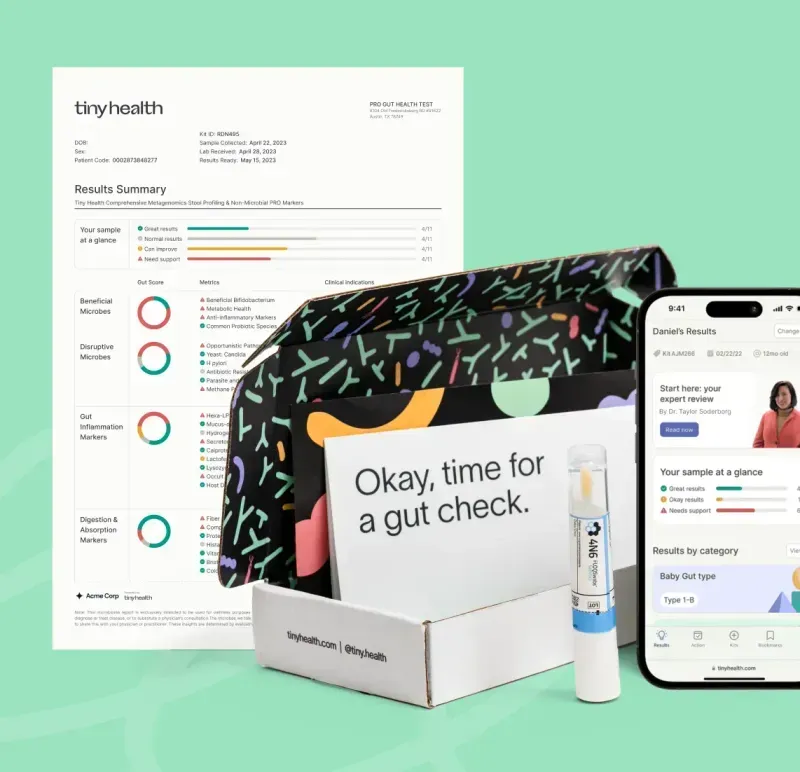
Here's what the PRO Gut Health Test measures. Each marker uses its own lab method, from gas chromatography for short-chain fatty acids to a guaiac test for hidden blood in stool.
Both approaches are useful, but they answer slightly different questions. Tiny Health tells you what your microbial community is able to do. GI Effects tells you what's happening in your gut right now.
Who should consider this test?
Your age and life stage can make one test a better fit than the other.
If you are…
Tiny Health fit
GI Effects/Genova fit
A parent testing an infant or baby
Strong fit: a dedicated Baby Gut Health Test, backed by research on the first 1,000 days of microbiome development
Not made for infant testing
A parent testing a toddler or child
Strong fit: a dedicated Child Gut Health Test
Can be ordered by a practitioner for children
Pregnant or postpartum
Strong fit: a vaginal health test is also available, with a focus on family wellness
Can be ordered through a provider for GI concerns during pregnancy
An adult with general gut health curiosity
Strong fit: strain-level, functional data you can track over time
Possible through Genova Connect, though primarily practitioner-focused
An adult with active GI symptoms
Strong fit with the PRO Gut Health Test, ordered through your practitioner: clinical stool markers plus a broad microbiome view
Good fit: inflammation and digestive markers give practitioners clinical data
Useful for tracking microbiome recovery and diversity over time
Useful for checking pathogen recolonization via culture
Interested in family testing
Strong fit: the Tiny+ Family Membership covers several family members
Each family member needs a separate practitioner order
A biohacker or longevity enthusiast
Strong fit: Microbiome Age score, strain-level tracking, repeat testing
Relevant with Microbiomix add-on for genomic data
Looking for practitioner-backed interpretation
Strong fit via our PRO Gut Health Test, or Gut Health Test ordered by qualified practitioners through Poweredbytiny.com
Strong fit: built for practitioner ordering and interpretation
Looking for a one-time gut health snapshot
Yes ($249 single test option)
Yes (single order through practitioner or Genova Connect)
Looking for ongoing microbiome tracking
Strong fit: membership model with discounted retests and strain tracking over time
No integrated tracking, requires new practitioner orders each time
Sample collection & user experience
Tiny Health: You order your kit directly from us. Tiny Health may be the better choice if you want a fuller view of your gut, more detailed microbe data, or testing for babies, children, and the whole family.
Note: Tiny Health uses a swab called the FLOQSwab, paired with an Active Drying Tube. The tube quickly pulls moisture out of the sample and stops bacterial activity, so your microbial community stays intact and measurable.
GI Effects: GI Effects may be a good choice if your practitioner already uses Genova and you want culture-based pathogen and antimicrobial sensitivity testing. Your practitioner orders the at-home kit, which ships from Genova and arrives in 3 to 5 days. You collect the stool sample at home with the kit provided. Genova offers a 1-day collection (standard) or a 3-day collection (suggested when a parasite is possible). You mail the sample back, and results are usually ready in 7 to 17 business days. Your practitioner gets the report through the myGDX portal and walks you through it.
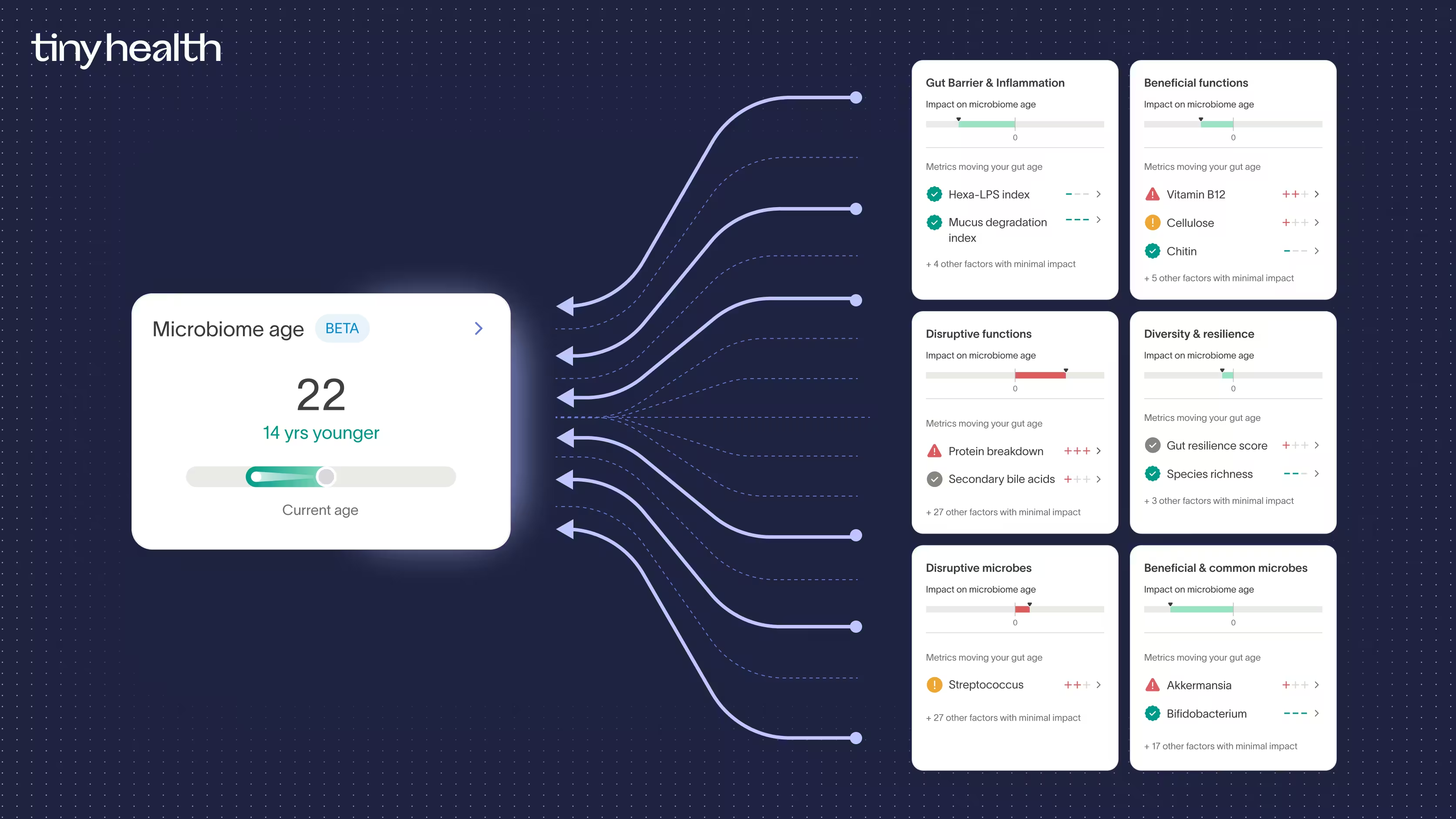
The reporting experience is another big difference. Tiny Health's dashboard is made for everyday users, so you can understand your results without a medical background. It includes a Microbiome Age score that compares your microbiome to others in your age group.
Your Microbiome Age detail page breaks down which metrics are moving your gut age up or down across six categories. Each one shows its relative impact on your Microbiome Age, with individual metrics listed below.
In comparison, GI Effects reports are made for practitioners and include clinical scores and treatment guidance.
Personalized recommendations: how actionable are the insights?
The value of a microbiome test isn’t just in the results. It’s also in what you can do with them.
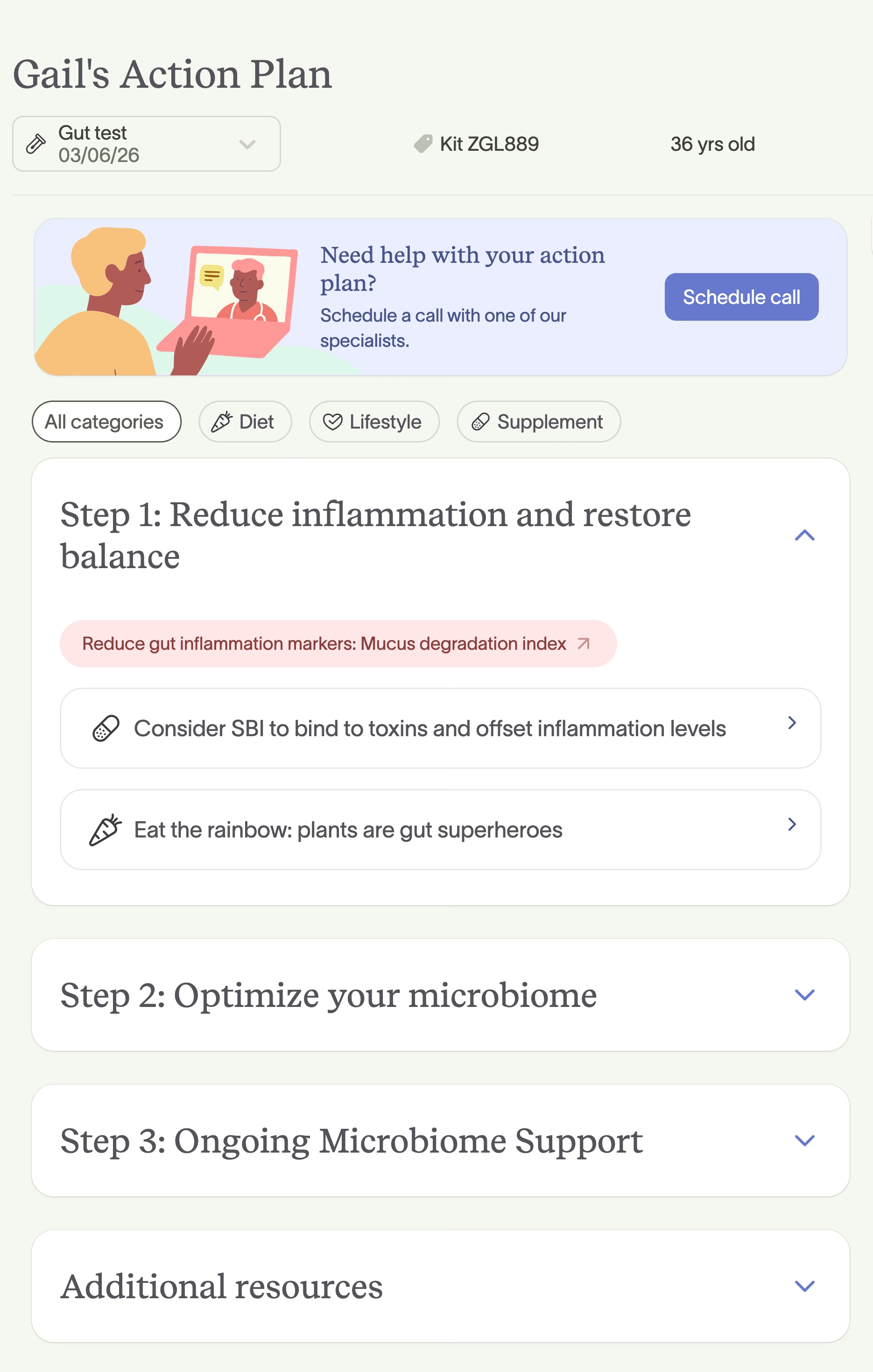
Tiny Health gives you a personalized Action Plan based on your results. It includes tips on diet, supplements, and lifestyle habits. These suggestions come from published research and are matched to your microbiome profile. Tiny Health does not earn commissions from the supplements it recommends, so the advice stays focused on your results rather than brand deals.
Gail's Action Plan lays out three prioritized steps, plus additional resources, with Step 1 expanded to show recommended actions.
GI Effects sorts its findings into clinical categories and points out areas that may need attention. The report is made for practitioners and often serves as a starting point for a care plan. Genova also supports practitioners through its Medical Affairs Team, with consultations, group sessions, and learning resources. Depending on the findings, the advice may cover digestive support, inflammation, or targeted treatment options.
Pricing, turnaround time, and customer support
Tiny Health lists its prices right on its website and offers both one-time tests and a membership. The Tiny+ Membership ($399/year) includes two gut test kits, two gut health reports, one free 1-on-1 coaching call with a microbiome specialist, unlimited text and email support, and a PDF report to share with your practitioner. Members also get lower prices on extra coaching calls ($39 each) and family test kits ($169 each). A single Adult Gut Health Test costs $249 and is HSA/FSA eligible. It comes with an at-home kit, a gut health report, a group Personalized Results Review with a microbiome specialist, and an Action Plan covering diet, supplements, and lifestyle recommendations. Results are usually ready within 2 to 3 weeks.
GI Effects pricing depends on where and how you order. GI Effects usually costs between $370 and $874, depending on the version. Some practitioners' offices may charge additional fees for consultations or report reviews. Genova also offers insurance billing, though coverage varies by plan.
Cost dimension
Tiny Health
GI Effects/Genova
Base price
$249 (single test). For the PRO Gut Health Test, contact your practitioner
~$370–$874
One-time purchase or subscription
One-time or Tiny+ annual membership ($399/yr)
One-time per order
Retest discount
$169/kit with Tiny+ membership
Not published
HSA / FSA eligibility
Yes
May be eligible depending on plan and practitioner order
What’s included
Report, Action Plan, diversity scores, PDF, and a Personalized Results Review with a microbiome specialist. Tiny+ members get a free 1:1 coaching call with a microbiome specialist.
Stool analysis report with Functional Imbalance Scores
Sample collection kit included
Yes
Yes
Shipping included
Yes (prepaid USPS return)
Yes (kit mailed to you; prepaid return)
Turnaround time
About 2 to 3 weeks
7–17 business days
Results dashboard included
Yes (consumer-facing online dashboard)
Yes (myGDX portal for practitioners; patient portal available)
Personalized action plan included
Yes, with every test
Treatment direction for practitioners (not a consumer action plan)
Practitioner support
PRO Gut Health Test available through qualified practitioners via PoweredbyTiny.com
Medical Affairs Team consultations (for providers)
Customer support channels
Email, in-app, member support, and TinyAI in the Results Portal
Phone (800-522-4762)
Pricing last checked
November 2026
November 2026
What real users say: verified reviews
If you’re comparing gut health tests, it can help to see what other customers and practitioners have said about their experiences. Here’s a summary of feedback from public review sites and independent reviews.
Tiny Health reviews
Customers often praise Tiny Health for the depth of its microbiome insights and the personalized advice in each report. Parents frequently call the test helpful for understanding their child's gut health, especially around eczema, digestive symptoms, or antibiotic recovery. Many reviewers also like collecting samples at home, and they note that the reports are detailed without being too technical.
Some earlier reviewers mentioned the wait for results, which is now usually 2 to 3 weeks. Another common comment is the amount of information in the report. Many customers value the detail, but some say it feels overwhelming at first. Others mention that recommended supplements may need to be bought from a few different websites rather than one store. Because Tiny Health doesn't sell its own supplements, the advice is based on your results, not on a house brand.
Tiny Health's reviews emphasize the depth and specificity of insights, especially for women navigating menopause and perimenopause, parents dealing with their children's eczema and food sensitivities, and anyone interested in antibiotic recovery. On Thingtesting, one parent wrote: "I'd rate this company 10/10! The insights Tiny Health provided into my son's gut microbiome health were invaluable." Another Tiny Health customer shared on our reviews page: "No other testing company was able to detect this beneficial strain, which completely turned around my grandson's gut from extremely inflammatory to anti-inflammatory."
One Amazon Vine reviewer gave it 4 out of 5 stars, praising the clinical-grade accuracy and clean process, but noted the longer turnaround time.
Tiny+ members frequently mention how their session with a microbiome specialist made a big difference. “Very helpful. She provided detailed information on the results and discussed next steps and action plans. She also explained what the terminology meant, how these things can show up in daily life, etc. Great experience.”
As mentioned above, whole-genome shotgun metagenomics sequencing is more in-depth than targeted tests, so results may occasionally take longer than two to three weeks. While one Amazon customer had good things to say about the depth of information, she mentioned difficulty collecting a sample.
GI Effects/Genova reviews
Genova Diagnostics has a 1.7-star rating (out of 5) on Yelp (154 reviews) and mixed ratings on Trustpilot. Many practitioners value the depth of information in GI Effects, especially for digestive health concerns. Most negative reviews focus on billing and customer service. Some users report unexpected charges, trouble understanding costs before ordering, long support waits, or problems with sample processing.
Keep in mind that many of these reviews focus on the overall experience with Genova Diagnostics, not the GI Effects test itself.
Which test should you choose? A decision framework
Choose Tiny Health if…
You want to order a test yourself without going through a practitioner.
You’re testing a baby, child, or another family member.
You want a more complete view of your gut microbiome.
You want detailed information about the microbes in your gut.
You prefer an easy-to-understand dashboard and a personalized Action Plan.
You’re interested in optional coaching and support through a Tiny+ Membership.
You have a chronic condition and want to share high-resolution data with your practitioner.
You work with a practitioner and want clinical stool markers (calprotectin, sIgA, elastase) together with shotgun sequencing from the PRO Gut Health Test.
You want strain-level identification and functional insights backed by clinical research.
You love data and want to track your gut health over time.
Choose GI Effects/Genova if…
You want EPX (eosinophil protein X) measured in your stool test.
You want antimicrobial sensitivity testing to help guide treatment decisions.
You suspect a parasite and want testing that includes microscopy.
Consider both if…
You want clinical biomarker data from GI Effects alongside a comprehensive microbial community map from Tiny Health.
You're using Tiny Health to monitor your gut microbiome over time and need GI Effects for culture-based pathogen detection and antimicrobial susceptibility testing.
Why Tiny Health stands out
For families, parents of young children, pregnant or postpartum individuals, and adults interested in learning more about their gut microbiome, Tiny Health offers an option that can be ordered without a practitioner.
Tiny Health uses whole-genome shotgun metagenomic sequencing to analyze more than 120,000 bacteria, viruses, fungi, and other microbes. This approach provides a detailed view of your gut microbiome and can identify microbes at the species and strain level. For people who test more than once, repeat testing can help track how the microbiome changes over time.
Tiny Health also provides a personalized Action Plan with recommendations related to diet, supplements, and lifestyle habits. Tiny+ Membership includes a free 1:1 review call with a microbiome specialist, along with ongoing support and discounted follow-up services.
Because Tiny Health does not earn affiliate commissions from its supplement recommendations, suggested products are selected based on your results rather than brand partnerships.
If you're considering microbiome testing, Tiny Health fills a gap that most clinical labs don't address. Explore the Adult Gut Health Test or the Tiny+ Membership to find the option that fits your goals. Prefer working with your practitioner so they can order and interpret the test for you? Ask them about Tiny Health's PRO Gut Health Test, available to qualified practitioners through Poweredbytiny.com.
Trust your gut.
Get to know your microbes with an easy, 5-minute at-home test from Tiny Health. Unlock deep gut health insights and personalized recommendations for your diet, supplements, and lifestyle.