Kefir seems to be everywhere lately. Your grocery store’s dairy aisle may now have an entire section devoted to it. With claims ranging from better digestion to stronger immunity to improved sleep, it’s easy to see why kefir has earned its reputation as a gut superfood.
But what actually is this tangy, fizzy drink, and does the hype hold up?
At its core, kefir is a fermented drink made by combining kefir “grains” with milk or sugar water. Fermentation gives kefir its unique tang and rich microbial diversity.
You don’t need to overhaul your entire diet to start reaping the benefits. Add kefir to your morning smoothie, drizzle it over oatmeal, or enjoy a small glass on its own to add gut-friendly bacteria to your diet.
To decide whether kefir deserves a spot in your fridge, we’ll break down how it stacks up against yogurt, what the research says about its gut-health benefits, and how to spot a high-quality option worth drinking.
What is kefir?
Kefir is a fermented drink that contains a wide variety of bacteria and yeast. It can be dairy-based or water-based. You can find it at grocery stores and farmers' markets, or make it at home.
Kefir has a long history, with roots in Central Eurasia and the Caucasus Mountains. According to one traditional story, nomadic shepherds noticed that milk carried in their leather pouches sometimes turned into a foamy, fermented drink. The name is often said to come from the Turkish word keyif, meaning “good feeling” [1].
What is kefir made of?
Dairy kefir is made by fermenting cow, sheep, or goat milk kefir grains. Water kefir is made using a different type of grain to ferment sugar water, coconut water, or fruit juice [1].
Milk kefir grains are clusters of bacteria and yeast held together by proteins and a complex sugar called kefiran. They look like small, white or yellowish cauliflower florets. Water kefir grains are clear and jelly-like, held together by a complex sugar called dextran [1]. Despite the name, kefir grains aren’t grains like rice, wheat, or oats.
Kefir vs yogurt
Many people think of dairy kefir as liquid yogurt, but the two are made differently. Traditional yogurt is made with two main bacterial species, although some producers add additional probiotic strains.
Traditional kefir, on the other hand, contains a wider range of bacteria and yeasts, giving it a greater microbial diversity than conventional yogurt. Commercial kefir is often made with defined starter cultures instead of grains, which can result in lower microbial diversity compared to kefir fermented using traditional grains.
Is one better than the other?
Kefir contains a wide variety of bacteria and yeasts, but more diversity doesn't necessarily mean greater health benefits. Some research suggests that drinking kefir may encourage the growth of gut bacteria associated with producing beneficial compounds, such as short-chain fatty acids (SCFAs) [2]. Research hasn’t shown that kefir is better than yogurt. Bottom line: both are great options for supporting your gut. Including both in your diet exposes your gut to a wider variety of microbes.
Feature
Kefir
Yogurt
Starter culture
Diverse bacteria and yeasts in kefir grains
Two main bacterial species; additional cultures may be added
Fermentation type
Lactic acid and alcoholic
Primarily lactic acid
Fermentation time
Approximately 12-48 hours [3]
Approximately 4-8 hours [4]
Texture and taste
Thin and drinkable, tangy and fizzy taste due to CO2 and yeast byproducts
Thick, custard like with mild tangy flavor
Microbial diversity
Generally higher microbial diversity, especially when fermented with traditional grains. Varies by product [5], [6]
Generally lower microbial diversity, although additional cultures may be added [5]
Is kefir a probiotic?
Many people call fermented foods probiotics, but not all fermented foods meet the scientific definition. Kefir contains live microbes, some of which may qualify as probiotics if their health benefits have been demonstrated.
To qualify as a probiotic, a microbe must:
Be properly identified and characterized
Have demonstrated health benefits
Be alive and present in an effective amount when consumed [7]
When buying kefir, check the label to see which bacteria and yeast it contains.
Kefir benefits for gut health
Kefir is getting attention as a gut health superfood because it delivers live bacteria and yeast. Research suggests that eating a variety of fermented foods, including kefir, may increase gut microbiome diversity [8]. Kefir may also encourage the growth of gut bacteria that produce SCFAs. These beneficial compounds help maintain a healthy gut environment, partly by lowering the pH in your colon, which can limit the growth of potentially harmful bacteria. However, more human studies are needed to confirm these effects of kefir [1], [8]-[10].
Kefir may be easier to digest than milk if you’re sensitive to lactose. Research suggests it can help with lactose digestion and reduce gas compared with regular milk [11]. Kefir may also help ease digestive symptoms, although the evidence is still limited [12]. Plus, kefir provides nutrients like B vitamins and calcium, while its vitamin K content can vary depending on the product [13].
Potential Benefit
How It May Help
Strength of Evidence
Supports beneficial gut bacteria
Some studies suggest kefir may increase beneficial bacteria, including Akkermansia muciniphila and Faecalibacterium prausnitzii. However, results vary, and lasting changes to the gut have not been established [1], [3].
Limited
May help limit harmful bacteria
Kefir contains microbes that produce antimicrobial compounds and may compete with potentially harmful bacteria. Most evidence comes from laboratory and animal studies [8], [9], [10].
Limited
Supports digestive health
Small human studies suggest kefir may help with digestive discomfort and bowel regularity. However, findings are mixed, and improvements are not always greater than control group results [1], [12].
Limited
Improve lactose digestion
Kefir contains less lactose than milk and provides microbial enzymes that help break it down. A small human study found that kefir improved lactose digestion and reduced gas compared with milk [11].
Moderate
May support a healthy inflammatory response
Kefir microbes and their compounds may influence immune activity and inflammation. Although laboratory and animal studies show promising effects, human studies have reported mixed results [1], [3], [8].
Limited
Provides essential nutrients
Milk kefir provides protein, calcium, and B vitamins. It may also contain vitamin K2, although nutrient levels vary depending on the milk, microbial cultures, and fermentation process [3], [10], [13]
Good
Beyond the gut: other researched benefits
The gut is now seen as a central hub linked to the rest of the body, reflected in concepts like the gut-brain and gut-skin axes. You can see it come to life in Tiny Health’s proprietary interactive feature Gut-Body Connections.
Kefir, a probiotic-rich fermented food, is a growing focus of this research.
Kefir has also been studied for its potential effects on blood sugar, heart health, immunity, mood, and sleep. However, much of the evidence comes from animal and laboratory studies. In humans, the strongest evidence is for improved lactose digestion [11]. Research on blood sugar has shown mixed results, with some studies reporting improvements and others finding no significant benefits [14], [15]. Evidence for benefits related to cholesterol, mood, and sleep remains limited.
Kefir’s potential benefits may come from its live microbes and compounds produced during fermentation. Small human studies suggest kefir may encourage the growth of gut bacteria involved in producing short-chain fatty acids (SCFAs), which help maintain the gut barrier and regulate immune responses [2], [3]. However, whether drinking kefir increases SCFA production or reduces inflammation in people remains unclear [3]. Kefir is just one part of a gut-friendly diet. Fiber-rich foods also help feed beneficial gut bacteria and support SCFA production.
Health condition
What Research Suggests
Strength of evidence
Cardiometabolic health
Blood pressure regulation
Some animal studies suggest kefir may support blood vessel function and reduce inflammation and oxidative stress. A few human studies have also reported improvements in blood pressure, but more research is needed to confirm these effects [10].
Limited. Mostly animal studies, with some human evidence.
Anti-atherosclerotic effects
Animal studies suggest that peptides derived from kefir may help reduce plaque buildup in arteries by lowering inflammation, oxidative stress, and fat accumulation. These effects have not been confirmed in humans [10].
Very limited. Animal studies using kefir-derived compounds.
Lipids and cholesterol
Human studies have shown mixed results. Some reported improvements in cholesterol levels, while others found no significant effects on total cholesterol, LDL cholesterol, or triglycerides [10].
Limited and mixed. Human studies with inconsistent results.
Insulin sensitivity and blood sugar
Some human studies suggest kefir may influence blood sugar and insulin sensitivity, but results are inconsistent. Animal studies suggest possible effects on glucose metabolism and gut bacteria involved in SCFA production. Evidence for improvements in HbA1c remains limited [1], [10], [15].
Limited and mixed. Some human evidence, but most proposed mechanisms come from animal studies.
Laboratory and animal studies suggest kefir may help regulate immune responses and reduce certain inflammatory signals. However, these effects have not been consistently demonstrated in humans [10].
Animal studies suggest kefir may influence serotonin and GABA signaling, which are involved in mood and stress responses. Some studies have also reported improved stress-related behaviors and changes in immune and antioxidant pathways. Whether these effects translate into better mood or stress resilience in humans remains unclear [16], [17], [18].
Very limited. Primarily animal studies; human benefits remain unproven.
Some small human studies have reported improvements in mood or depressive symptoms after kefir consumption. However, results have been inconsistent, and benefits over control groups have not been clearly established [12], [19], [21].
Limited and mixed. Small human studies and animal research; benefits remain unconfirmed.
Sleep
Small studies have reported improvements in some sleep measures among children with ADHD and postmenopausal women. However, findings are not consistent across all measures, and more research is needed [20], [21].
Limited and mixed. A few human studies with inconsistent findings.
Brain health and cognition
Animal studies suggest kefir may reduce brain inflammation and support memory. One small human study involving people with Alzheimer’s disease reported improved cognitive scores after kefir supplementation, but it lacked a control group [22], [23].
Very limited. Mostly animal studies, with preliminary human findings.
Some small human trials suggest kefir may reduce levels of Streptococcus mutans, a bacterium associated with tooth decay, and improve certain measures of gum health [1].
Limited. Some human clinical evidence, but larger studies are needed.
Is kefir dairy? Lactose and intolerance
Most store-bought kefir is made from dairy, but water-based and plant milk versions are also available. During fermentation, microbes break down some of the lactose in milk, producing lactic acid that gives kefir its tangy flavor. This makes dairy kefir easier to digest for some people with lactose intolerance, though the amount of lactose left can vary.
Some brands offer lactose-free kefir, made by adding a lactase enzyme to break down any lactose left after fermentation. Lactose-free kefir usually tastes sweeter and creamier because it has more glucose and galactose. In one small study, people with lactose intolerance digested kefir better and experienced less gas than when drinking regular milk [11].
You can also find more dairy-free kefirs in stores or from local producers. Water-based kefir uses milk kefir grains. These grains feed on sweetened water, coconut water, or juice instead of dairy. Some options for plant milk kefirs include culturing coconut, oat, or almond milk. Even though these are dairy-free, kefir grains sometimes need lactose from dairy. This feeding helps keep the grains alive between ferments.
Dairy kefir generally provides more protein and calcium than water kefir. The two types also contain different communities of bacteria and yeasts, which can vary depending on how they’re made [24]. If you tolerate dairy, trying both types can introduce a wider variety of fermented foods into your diet. However, whether drinking both increases the diversity of your gut microbiome remains unclear.
Feature
Dairy kefir
Water kefir
What they feed on
Lactose from cow, goat or sheep milk
Sugars like coconut water, fruit sugar, cane sugar
Flavor
Creamy, tart
Bubbly, sweet and tart
Dairy content
Contains small amounts of lactose, some are lactose-free. Contains milk proteins, so people with a cow’s milk protein allergy should avoid it.
No dairy, vegan
Microbial diversity
Wider diversity [10]
Lower in diversity
Nutrition
Higher in calcium, protein, vitamins
Higher in sugar than plain dairy kefir
Kefir side effects: who should be cautious
When you start adding kefir to your diet, you might notice some changes in digestion. These can include bloating, gas, constipation, or looser stools. To reduce discomfort, begin with a small amount of kefir and increase it slowly. Individuals with a severe dairy allergy should avoid dairy-based kefir.
Fermented foods like kefir aren’t a fit for everyone. If you have histamine intolerance, you may react to the histamines they naturally contain. People with digestive issues like SIBO or gastritis may also find them hard to tolerate. And if you’re immunocompromised, it’s best to avoid unpasteurized (raw) fermented foods, including raw-milk kefir.
Kefir may contain trace amounts of alcohol, with higher levels in homemade kefir [25], [26]. People who avoid alcohol or are sensitive to alcohol may need to limit intake of homemade kefir.
Your situation
Suggested amount
Notes
New to kefir
¼ cup or less, increasing gradually
Start slow, monitor digestive symptoms for gas and bloating.
If symptoms persist or you have a dairy allergy, consider water kefir as an alternative option. Avoid water kefir in babies or younger children as it often contains more sugar.
Tolerating it well
Can increase amount as tolerated
Enjoy as tolerated, being mindful of balancing calcium intake with other nutrition needs.
Babies
Can start from 6 months, in very small quantities
Add small amounts to meals. Avoid using kefir in place of formula or breastmilk.
How to choose a good kefir
With so many kefir options at the store, it can be hard to know what to pick.
A few tips:
Go plain when you can. Plain kefir tastes tart by itself. However, it’s delicious in smoothies. You can also mix it with fruit and add a touch of cinnamon or honey.
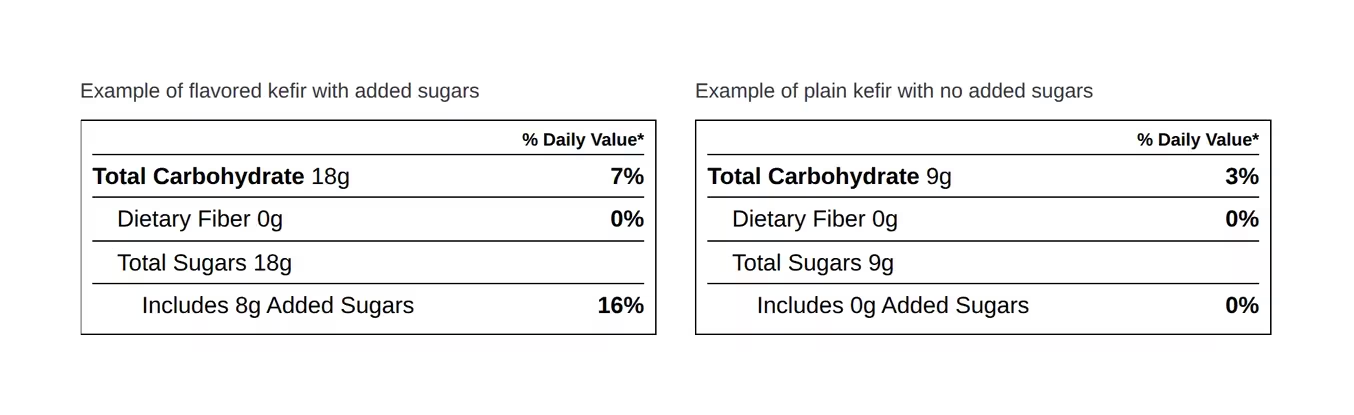
Watch for hidden sugar in flavored kefir. Peach or strawberry kefir often has no real fruit, but contains added sugars (around 8 grams/cup) and natural flavoring. Mixing plain and flavored kefir together is an easy way to cut the sugar in half. Some brands do use real fruit with less sugar, so check the label.
Flavored kefir typically has added sugars, which you’ll find listed under Total Sugars on the label. Plain kefir has about 9-12 grams of sugar per cup. This sugar comes from the lactose in milk and is normal.
Mix up your brands. Kefir labels list the bacterial strains in the kefir, and this varies by brand. Switching brands, buying from local producers, or making your own gives your gut more variety.
Consider the milk source. You’ll find kefir made with organic milk, A2 milk, grass-fed milk, raw milk, or with enzymes for lactose-free options. Pick what fits your preferences.
How a Tiny Health gut test can track changes as you add kefir
Eating more fermented foods like kefir can help support a healthy, diverse microbiome. Kefir also contains lactic acid bacteria, and some strains of Lactobacillus and Bifidobacterium can produce GABA, a calming brain chemical. Eating more kefir might boost your microbiome's ability to produce GABA and increase helpful bacteria in your gut.
Tiny Health’s Gut Health Test includes Microbial GABA Production Capacity, which shows how well your gut bacteria are equipped to make GABA. Several other markers on our gut tests can also improve with more fermented foods in your diet. One is microbiome diversity: how many different species live in your gut, and how balanced they are across bacterial groups. Kefir may also help reduce overabundant bacteria and support a more balanced ecosystem.
What you should know
FAQ: Kefir and Gut Health
Is kefir a probiotic or a prebiotic?
Kefir is a fermented drink containing live bacteria and yeasts, but not all qualify as probiotics. Probiotics are live microorganisms that provide proven health benefits when consumed in adequate amounts [7]. Some kefir products contain specific probiotic strains, so check the label for details.
Kefir isn’t considered a prebiotic either, although some compounds produced during fermentation may have prebiotic potential.
Does kefir have protein?
Milk kefir contains approximately 8-9 grams of protein per an 8-ounce serving. Water kefir does not contain any protein.
Can kids or people who are pregnant drink kefir?
Kefir that has been pasteurized is generally recognized as safe to consume in pregnancy and in children over the age of 6 months. Raw or homemade kefir should be avoided in pregnant women and immunocompromised children due to the potential risks of harmful bacteria. Fermentation of kefir does not make raw kefir safe to eat. While lactic acid produced during fermentation can inhibit some bacteria, it may not eliminate all harmful bacteria.
Can I make kefir at home, and is it as good as store-bought?
Yes! Making kefir at home is easy, affordable, and often offers more health benefits than store-bought kefir. Homemade kefir has wider microbial diversity with up to 30-50 different strains of bacteria and yeast. Commercial kefir usually has lower diversity, averaging 4-18 strains. Homemade kefir does not have any added preservatives, sweeteners, or natural flavors, and you can decide the quality of the milk or liquid used.
Is kefir associated with better cholesterol levels?
Some human and animal studies have noted modest improvements [10], [12], but overall, the evidence doesn't show meaningful reductions in LDL, total cholesterol, or triglycerides. More human research is needed to clarify kefir's effects on cholesterol.
Does kefir help with weight loss?
No studies in humans have shown that consuming kefir has a significant impact on weight loss. Some studies suggest kefir may help with blood sugar regulation and other aspects of metabolic health, but human findings are limited and mixed [1], [10]. More research is needed to understand whether kefir has any direct effect on body weight.
Trust your gut.
Get to know your microbes with an easy, 5-minute at-home test from Tiny Health. Unlock deep gut health insights and personalized recommendations for your diet, supplements, and lifestyle.