The low-histamine diet is a temporary eating approach that limits foods high in histamine to help calm symptoms linked to histamine intolerance. Learn what to eat, what to limit, and how this way of eating can support a more balanced gut.
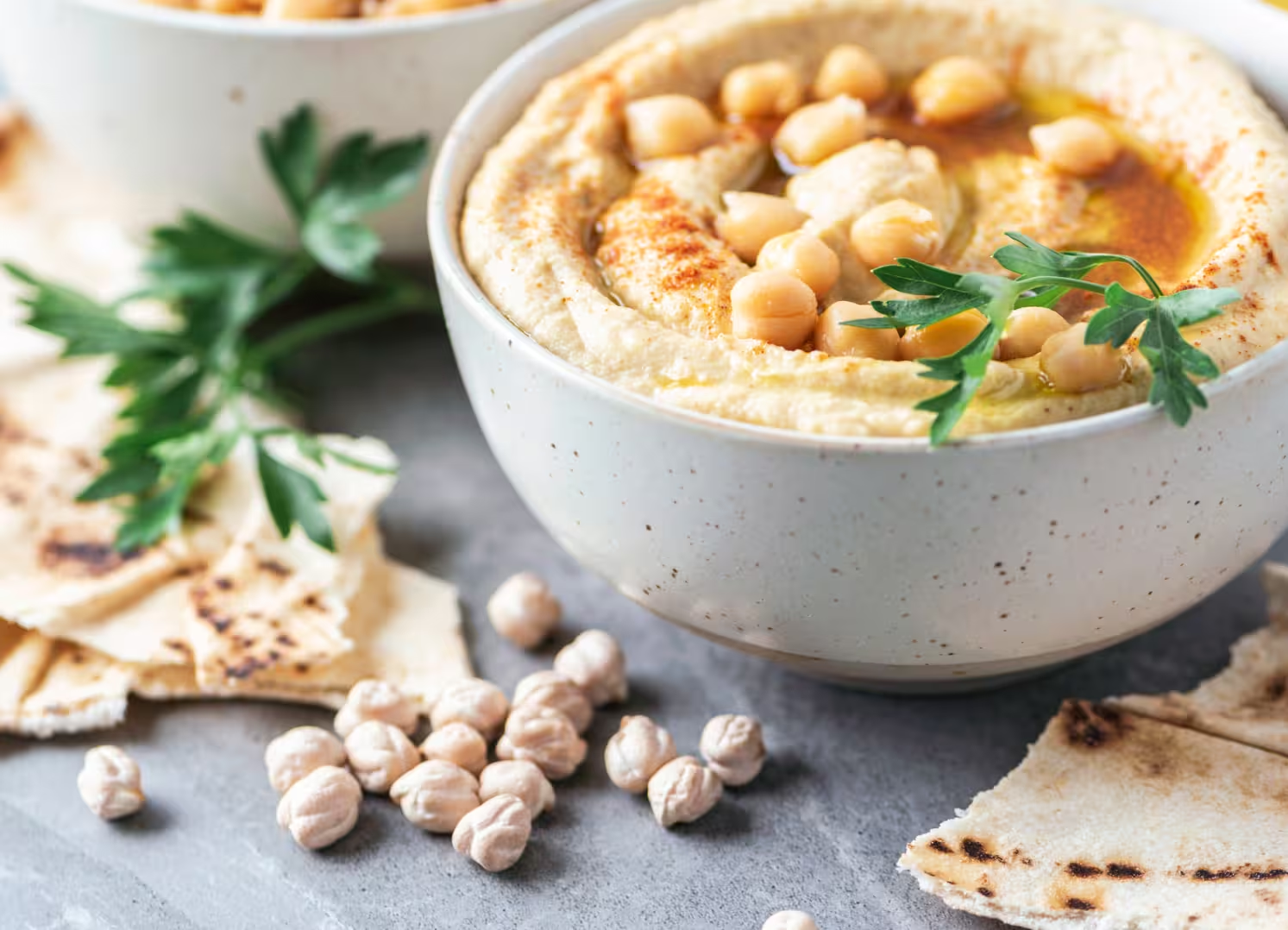
The low-histamine diet is a temporary eating approach that limits foods high in histamine to help calm symptoms linked to histamine intolerance. Learn what to eat, what to limit, and how this way of eating can support a more balanced gut.
If you've ever had unexplained hives, headaches, flushing, or digestive upset after meals, and antihistamines seem to help more than you'd expect, histamine could be part of the picture.
The low-histamine diet isn't a fad or a weight-loss plan. It's a structured, short-term way of eating designed to reduce your body's histamine load while you and your practitioner figure out what's really going on.
In this article, we'll break down what the low-histamine diet involves, why it may help, and practical ways to get started without feeling overwhelmed.
Histamine is a natural compound your body makes, and it's also found in varying amounts in food. It plays a role in your immune response, digestion, and even sleep-wake cycles. Normally, an enzyme called diamine oxidase (DAO) breaks down histamine you eat before it builds up in your system. But when DAO activity is low or overwhelmed, histamine can accumulate and trigger symptoms that mimic an allergic reaction, even though no true allergy is present [1].
One of the more confusing parts of histamine intolerance is that it doesn't behave consistently. You might eat a tomato one week with no issue, then react to it the next. This isn't randomness; it's how histamine actually works in your body.
Think of your body's histamine load as a cup. Throughout the day, different things add to that cup: the histamine in your food, histamine your own gut bacteria may produce, histamine released by stress, poor sleep, or hormonal shifts, and more. Your body is constantly working to empty that cup, mainly through DAO in your gut. Symptoms tend to show up once the cup overflows, not the moment any single histamine source enters your system.
This is why your personal threshold isn't fixed. If your cup is already partly full from a stressful week, a poor night's sleep, or where you are in your menstrual cycle, it takes a lot less dietary histamine to push it over the edge.
If your cup is relatively empty, that same tomato might not cause any noticeable reaction at all. Understanding this can make the low-histamine diet feel less like a strict pass/fail test of specific foods, and more like managing your overall histamine load so there's more room in the cup before it spills over.
The low-histamine diet works by temporarily reducing the amount of histamine (and histamine-releasing foods) you take in, giving your body's degradation systems some breathing room.
At a glance, the low-histamine diet emphasizes:
It limits or avoids:
Since so many everyday foods fall on the "avoid" side of this diet, it can help to think in terms of swaps rather than a long list of no's.
| Instead of... | Try... |
|---|---|
| Aged, hard cheese (Parmesan, Cheddar) | Fresh soft cheese or fresh yogurt |
| Cured or air-dried meats (salami, prosciutto, sausages) | Fresh or immediately frozen meat (poultry, beef, pork) |
| Canned or fatty fish (tuna, salmon, sardines, anchovies) | Fresh or immediately frozen white fish (cod, pollock, trout, halibut) |
| Wine or beer | Water, coffee, tea, or homemade juice from allowed fruits and vegetables |
| Tomato, spinach, or sauerkraut | Lettuce, cucumber, zucchini, carrot, broccoli, or cauliflower |
| Citrus, strawberries, or banana | Apple, pear, blueberries, or watermelon |

This isn't just a precaution; there's a specific bacterial mechanism behind it. Many foods, especially protein-rich ones like meat, poultry, and fish, naturally carry small numbers of bacteria that produce an enzyme called histidine decarboxylase. This enzyme converts histidine, an amino acid present in these foods, directly into histamine as the bacteria grow [10]. The longer food sits, and the warmer it is while it sits, the more time these bacteria have to multiply and keep producing histamine.
Research on stored fish is where this has been studied most closely, since fish is especially prone to this kind of histamine buildup and it's been linked to real food-safety incidents. One study tracking sardines stored at different temperatures found that histamine levels remained low when the fish were kept near freezing, but rose substantially at refrigerator and room temperatures, closely tracking bacterial growth. The bacteria most responsible for driving this up, Morganella morganii and Proteus mirabilis, are some of the same species linked to histamine intolerance in the human gut [10]. Once histamine forms this way, it's also heat-stable, meaning reheating leftovers thoroughly won't undo the buildup that already occurred during storage.
This is exactly why freezing leftovers quickly, rather than refrigerating them for several days, is one of the more effective ways to limit additional histamine formation: colder temperatures slow histamine-producing bacteria down far more effectively than moderate refrigeration does.
Unlike diets that eliminate a single ingredient (like gluten or dairy), the low-histamine diet targets a specific compound that appears across many food categories. This makes it trickier to navigate, since fresh, "healthy" foods like tomatoes, avocados, and spinach can still be high in histamine. It's also meant to be temporary. Most clinical approaches involve a strict elimination phase followed by a gradual, structured reintroduction to identify your personal tolerance threshold, rather than a permanent way of eating [3].
This diet typically unfolds in three stages:
Because the diet is quite restrictive during that first phase, it's a good idea to work with a functional practitioner or registered dietitian to help you navigate it safely.
A full elimination phase isn't the only way to start, though, and for many people it isn't the most realistic one either. Because histamine tolerance is highly individual, and because a strict elimination diet can be time-consuming and difficult to sustain, some practitioners recommend starting by removing the biggest, most concentrated sources of histamine first, things like aged cheeses, cured meats, alcohol, and leftovers, rather than eliminating every food on the list at once.
This "biggest offenders first" approach can meaningfully lower your overall histamine load without the same degree of restriction. Plus, you can always tighten it further if your symptoms don't improve enough. What triggers one person may not bother another at all, so this is very much a starting point to personalize with your provider, not a fixed protocol.
High levels of histamine-producing species in the gut could make some people more sensitive to histamine in foods. If you're frequently experiencing symptoms that resemble histamine intolerance, such as bloating, headache, diarrhea, or heartburn, or you have eczema and seem to react to histamine-rich foods, it may be worth trying a low-histamine diet to help identify your trigger foods. Early research also suggests this approach may help reduce the abundance of histamine-producing species in the gut [4]. For some people with eczema, this diet may also help reduce symptoms [6], [7].
Interest in this way of eating has grown as more people connect chronic, hard-to-explain symptoms to histamine buildup. Here's what the research and clinical experience point to:
Diet isn't the only thing that influences your histamine load. For women who menstruate, hormones can shift how much histamine is circulating in the body from week to week, which is part of why the same foods can feel fine at one point in your cycle and trigger symptoms at another.
Histamine is stored largely in mast cells, immune cells found throughout the skin, gut lining, and reproductive tissue, and estrogen has been shown to activate them. Research shows that estradiol binds to estrogen receptors on mast cells, triggering the release of histamine, an effect that appears to build as estrogen levels rise [11], [12]. There's also some evidence pointing in the other direction: histamine may, in turn, stimulate the ovaries to produce more estrogen, creating a feedback loop rather than a one-way effect [12].
This lines up with a pattern many women notice firsthand: histamine-related symptoms, including headaches, hives, flushing, and bloating, tend to cluster around ovulation and the days leading up to a period, when estrogen is highest. Progesterone, by contrast, appears to have a calming effect on mast cells, which may help explain why symptoms often ease as progesterone levels rise during the luteal phase [11].
For cycling women whose symptoms seem to track with their cycle rather than (or in addition to) specific meals, this hormonal layer is worth mentioning to a healthcare provider. It doesn't necessarily change what a low-histamine diet looks like, but it may explain why trigger-food tolerance seems to shift throughout the month, and why timing symptom tracking to your cycle, not just your meals, can reveal patterns a food diary alone might miss.
Your gut isn't just where digestion happens. It's also home to bacteria that can either help clear histamine or add to your body's histamine load.
A subset of gut bacteria, including certain strains of Morganella, Klebsiella, and Proteus, can produce histamine as a byproduct of fermenting dietary protein [13]. In people with histamine intolerance, these histamine-producing bacteria tend to show up in greater relative abundance [4], [9]. Lowering dietary histamine may reduce the overall load your gut has to manage while your body works through what's driving symptoms.
In a small pilot study, women with histamine intolerance who followed a structured low-histamine diet (along with DAO supplementation) saw a reduction in certain histamine-producing bacteria, including Proteus and Proteus mirabilis, along with an increase in Roseburia, a genus generally associated with a healthy gut [4]. While this was a small study, it points to a two-way relationship between diet, histamine, and the gut microbiome.
Chronic elevated histamine has been linked to inflammation in the gut lining. Giving your gut a break from high-histamine, high-additive foods (many of which overlap with ultra-processed foods) may support a calmer digestive environment while your body recalibrates [1].
You don't need to memorize an exhaustive food list on day one. A few practical starting points can make the transition easier:
The low-histamine diet can feel restrictive at first, but it's meant to be a short-term tool for identifying triggers, not a lifelong way of eating. If you're dealing with symptoms that might be histamine-related, working with your practitioner or dietitian can help you navigate the elimination and reintroduction phases safely.
If you're curious about what's happening in your gut microbiome, including whether histamine-producing bacteria may be part of your picture, an Adult Gut Health Test can offer a clearer, more personalized starting point than guesswork alone.

Shelise Irby is a UC Davis-trained Registered Dietitian, functional nutrition practitioner, and Clinical Success Manager at Tiny Health.

Dr. Pamela Nieto has over 10 years of experience in basic research and gut and vaginal microbiome test development.
.avif)