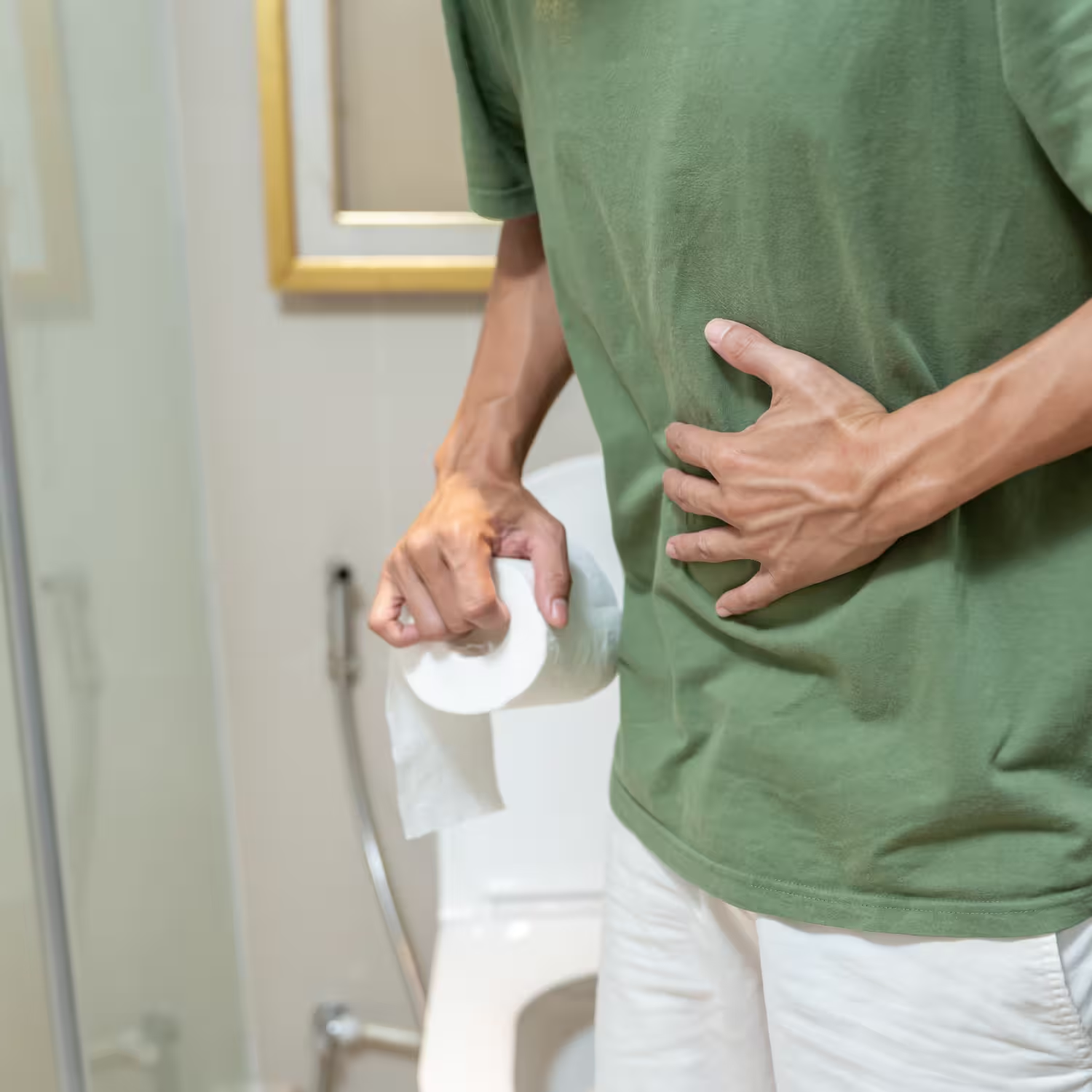
Ever typed "Can gut bacteria cause diarrhea?" or "Is diarrhea a sign of bad gut health?" into Google at 2 am? You're not alone. Most of us think of diarrhea as something that just happens, like a stomach bug, a bad meal, or a round of antibiotics.
In reality, diarrhea and your gut microbiome actually affect each other in both directions. An episode of diarrhea can throw off your gut bacteria. And an already out-of-balance microbiome can make diarrhea more likely to strike, or keep coming back.
In this article, we’ll cover how the two-way link works, why a bout can linger or return, and what your stool reveals about your gut health so you can address the root cause.
When loose stools become a microbiome problem
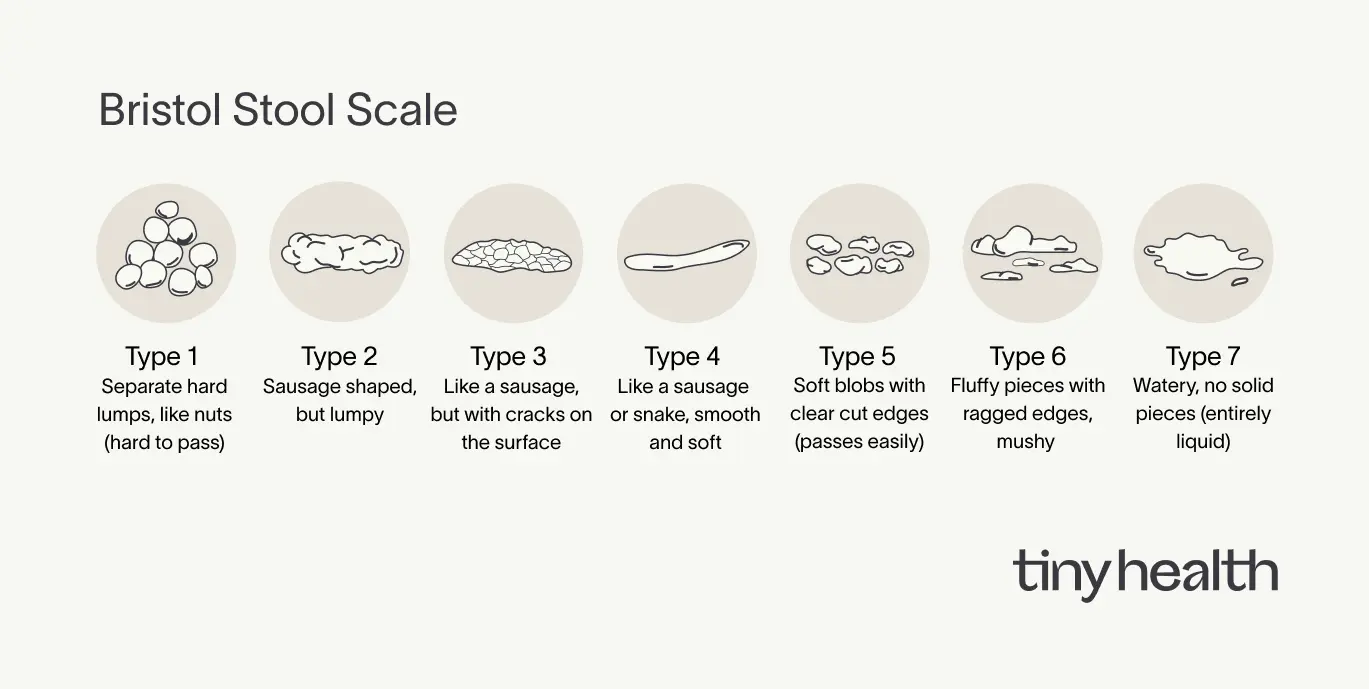
A one-off day of loose stools after some questionable takeout? That's usually just your gut clearing something out. But when it becomes frequent, unpredictable, or sticks around for weeks, it's often a sign your gut bacteria haven't bounced back. Doctors often use the Bristol Stool Scale, a simple chart with seven stool types, to tell a normal bowel movement (types 3–4) apart from diarrhea (types 6–7) [1].
Acute and chronic diarrhea aren't just a matter of how long they last. They point to different things happening in your gut. Here's how to tell them apart.
Feature
Acute diarrhea
Chronic / recurring diarrhea
How long it lasts
Less than 2 weeks
More than 4 weeks, or keeps returning
Common causes
A virus, bacteria, food poisoning, or antibiotics
Gut bacteria imbalance, IBS, IBD, bile acid issues, or a gut that never fully recovered from an infection
Effect on your gut bacteria
A short dip that usually bounces back
Ongoing bacteria loss and overgrowth of unhelpful bacteria
What it feels like
Comes on suddenly, cramping, often goes away on its own
Focus on hydration — it usually clears up in a few days
Worth digging into the root cause with diet changes, your health history, and gut testing
How diarrhea disrupts your gut microbiome
A bout of diarrhea does change your gut bacteria. But for most healthy people, that change is temporary. Studies that track the gut microbiome during a bout of infectious diarrhea show a sharp drop in bacterial diversity during the worst of it, followed by a slow return to normal as symptoms ease. Recovery can take a few weeks depending on how bad it was and your diet [2].
Here's what typically happens during and after a bout:
You lose helpful bacteria. Beneficial species like Bacteroides and Faecalibacterium drop off fast. Research shows one type of Bacteroides that breaks down mucus is key to helping your gut bounce back [2].
Your gut makes fewer short-chain fatty acids (SCFAs). These are helpful compounds made by fiber-loving bacteria. With fewer of those bacteria around, SCFA levels drop. Since SCFAs normally help your colon absorb water, having less of them can keep stools loose longer [4].
Your gut's protective lining gets thinner. This mucus layer acts like a shield. When it thins out, it's easier for bacteria to reach your immune cells, which can fuel more inflammation and a leakier gut [5].
Opportunistic bacteria can take over. Antibiotics or an infection can clear out competition, giving troublemakers like C. difficile room to grow. In fact, research consistently links a big drop in gut bacteria diversity to recurring C. difficile diarrhea [3].
Can bad gut health cause diarrhea? The two-way street
Here's the flip side: it's not just that diarrhea messes with your gut bacteria. An out-of-balance microbiome can be the reason diarrhea keeps coming back in the first place. This is the part that gets missed in most quick-fix advice. If your gut bacteria never fully reset, loose stools have a way of returning.
Diarrhea usually isn't random. It's your gut reacting to something specific. Here's a closer look at some common patterns behind it, what's actually happening in your gut, and what might be triggering it.
Gut pattern
How it leads to diarrhea
What can cause it
Bacteria imbalance after antibiotics
Wipes out helpful bacteria, letting C. difficile or other troublemakers grow [3]
A recent round of antibiotics
Low levels of SCFA-making bacteria
Less butyrate means a weaker gut lining and less water absorbed in the colon [4]
Low-fiber diet, a past gut infection
Bile acid issues
Extra bile acid reaching the colon pulls in fluid, leading to watery stools
Gallbladder removal, issues in the small intestine
An active infection
Microbes directly damage your gut lining and trigger inflammation or fluid loss [2]
Salmonella, Campylobacter, norovirus
Post-infection IBS
Low-grade inflammation and gut movement changes can linger after an infection clears
"Leaky gut" isn't an official diagnosis, but the idea behind it, a gut lining that's more permeable than it should be, is real. And it can be measured in certain conditions, especially celiac disease and inflammatory bowel disease [5]. Here's how it works: tiny doorways between your gut cells (called tight junctions) are supposed to stay mostly closed. When they loosen up too much, bits of bacteria can slip through and trigger inflammation, which can make diarrhea worse [5].
Does leaky gut trigger diarrhea?
It may. Here are factors that may drive it:
Loosened gut-cell doorways — the proteins holding your gut cells tightly together stop doing their job as well [5]
A rise in zonulin — this is a protein your body makes that can loosen those doorways, especially in response to certain bacteria or gluten in people who are sensitive to it. (Note: commercial zonulin tests are still debated among researchers, so take at-home results with a grain of salt) [5]
Immune system flare-up — once the barrier is compromised, your immune system reacts, which can loosen those doorways even more, creating a cycle [5]
Which gut bacteria are linked to diarrhea?
Clostridioides difficile overgrowth — the top cause of diarrhea after antibiotics, since it thrives once its competition is cleared out [3]
Low levels of Bifidobacterium and Lactobacillus — these beneficial bacteria normally help keep your gut slightly acidic and crowd out troublemakers
Loss of Akkermansia muciniphila — this bacterium lives in your gut's mucus layer and helps keep it thick and healthy. When its balance is thrown off, that protective layer can get thinner [6]
A rise of Enterobacteriaceae— this group of bacteria tends to spike in the days after a stomach bug, crowding out the good bacteria that need oxygen-free environments to thrive [2]
How to restore gut health after diarrhea
Getting your gut back on track happens in stages. Rushing it (especially adding fiber or dairy back too fast) can actually make things drag on longer.
Stage
Timing
Focus on
Avoid
Rehydrate
First 24–48 hours
Oral rehydration drinks, broth, water with electrolytes
A quick note on probiotics: not all of them are created equal. Research on antibiotic-related diarrhea shows the clearest benefit from two specific strains, Saccharomyces boulardii and Lactobacillus rhamnosus GG [7]. Other strains have much weaker evidence behind them, so a random probiotic isn't the same as picking a well-researched one.
How Tiny Health may help identify the root cause
Guessing your way through elimination diets and random probiotics only gets you so far. If you've been stuck in a loop of recurring loose stools, the wait-it-out approach doesn't help. Personalized insights into what's actually happening in your gut do.
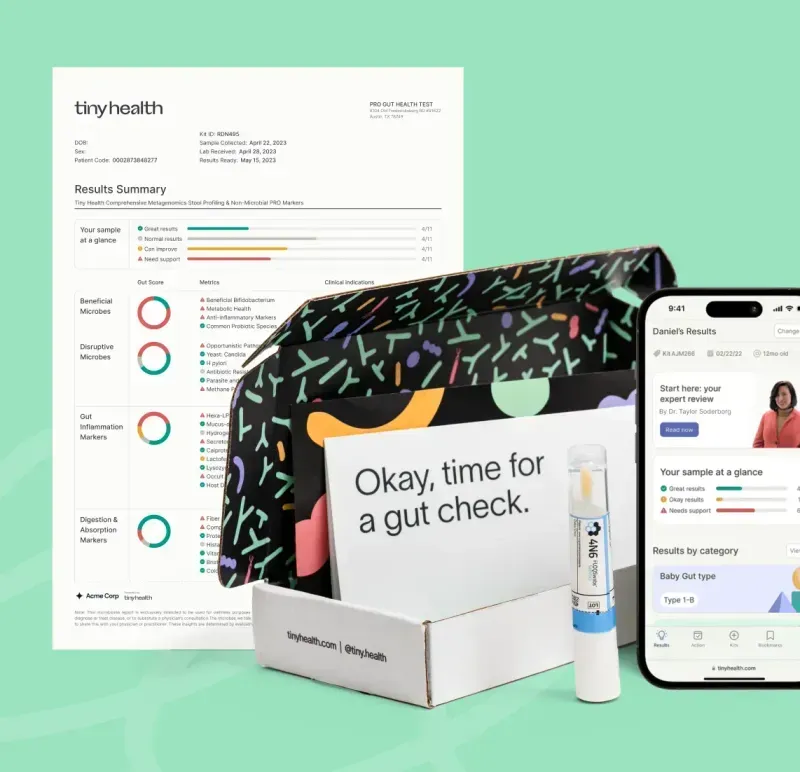
An at-home test like our Adult Gut Health Test can show you which friendly bacteria are low, which disruptive ones are overgrowing, and whether you have enough of the bacteria that help make SCFAs and protect your gut lining. Plus, you’ll get a step-by-step Action Plan with food, supplement, and lifestyle recommendations, no guessing required.
What you should know
FAQ: Gut health and diarrhea
Is diarrhea a sign of bad gut health?
Not always. One quick bout is often just your body flushing out something it didn't like. But diarrhea that keeps coming back, especially with bloating or fatigue, is often a sign your gut bacteria are out of balance and worth a closer look.
Is occasional diarrhea good for gut health?
Occasional diarrhea isn't good for your gut health, but it isn't necessarily harmful either. It's usually just your body's normal way of clearing out something quickly, and your microbiome typically bounces back on its own. The real concern is when it happens often, since your gut bacteria may not get enough time to fully recover between episodes.
How long does it take to restore gut bacteria after diarrhea?
For most healthy adults, gut bacteria start bouncing back within 1 to 2 weeks. But full recovery can take longer, depending on how severe it was, your diet, and whether antibiotics were involved [2].
Can probiotics help after antibiotic-induced diarrhea?
Yes, but the strain matters. Saccharomyces boulardii and Lactobacillus rhamnosus GG have the strongest evidence for shortening and easing antibiotic-related diarrhea. Random multi-strain blends without these specific strains just don't have the same track record.
What does Tiny Health recommend for chronic or recurring diarrhea?
First, rule out anything serious with your practitioner. Then, consider an Adult Gut Health Test to find out which good bacteria are missing and which ones might be overgrowing. That way, any changes you make actually target the real imbalance instead of guessing.
When to seek medical attention
Red flag symptoms
Not every case of loose stools is something you can fix at home with diet alone. See your practitioner if you notice:
Blood in your stool, or stool that's black and tarry
Severe belly pain along with diarrhea
Diarrhea that's lasted more than 2 weeks
Signs of dehydration (dizziness, dark urine, confusion) or losing weight without trying
A high fever, or diarrhea that started right after a new medication or a trip abroad
Trust your gut.
Get to know your microbes with an easy, 5-minute at-home test from Tiny Health. Unlock deep gut health insights and personalized recommendations for your diet, supplements, and lifestyle.
Dr. Hannah Sturgeon, a Neuroscience Ph.D. from Georgia State University, specializes in microbiome research with expertise in early gut-brain-immune development.




.avif)