Summary

Your gut can start responding to new habits within days. Deeper shifts, like a wider mix of gut microbes, can take a couple of months or more. Knowing what to expect helps you stay consistent.

  • Lasting change takes time, and timelines vary from person to person  
  • Sticking with new habits helps your gut hold on to its gains, since they can fade when old routines return  
  • Your gut microbiome is linked to more than digestion, including your immune system and metabolism
Boost your family's gut health: Download our free 'Eat the Rainbow' tracker. Get my copy

A common question in our Tiny Health community is how long it takes to improve gut health. It depends on the kind of change you mean. Your gut bacteria can shift within a day or two when you change what you eat [1].

Noticeable changes, like how your stool looks, tend to show up within a few weeks [2], [3]. Bigger changes, such as greater microbial diversity, usually take a couple of months or longer [2]. Think of it as building fitness. One workout or healthy meal won’t do much, but steady habits add up. Your gut works the same way.

This article maps out what may change and when, early signs your gut is responding, how stress and sleep shape your timeline, and what to do when progress stalls.

What improving gut health actually means

Improving your gut health rarely comes down to one number. It usually shows up in two ways. The first is how you feel, like smoother digestion, less bloating, and fewer flare-ups. The second is what’s happening in your gut. That includes greater microbial diversity (a wider mix of microbe types) and more bacteria that support digestion and immunity. You’ll notice the first on your own. The second takes data from an at-home stool test.

A timeline example: what may change and when

‍

Timeframe What may start to shift What to keep in mind
Week 1 Gut bacteria can start responding to diet changes. Early metabolic shifts, or changes in how your microbes process food, may follow [1]. Early shifts are temporary and not yet stable [1].
2–4 weeks Your stools may start to soften, especially if you tend toward constipation [2], [3]. Some people notice extra bloating while their digestion adjusts [2]. Consistency matters here. In one study, gut bacteria went back to their starting pattern within two days after people stopped a short-term diet [1].
1–3 months In one study, eating more fermented foods raised microbial diversity in about 10 weeks. It also lowered several signs of inflammation in the blood [2]. Scientists know less about how fast the gut lining responds. Deep changes take time, and progress may level off for a while.
3–6 months Over time, your microbiome may start to mirror your new eating pattern more closely. That’s because your long-term diet is linked to its overall makeup [4], [5]. Continue healthy habits like eating a variety of foods. Retesting now can reveal changes since your first test.

Week 1 (Initial shift): Your gut bacteria start responding to your new habits.

Week 2–4 (Settling in): Stools may soften, though some people still notice extra bloating.

Month 1–3 (Building strength): Your microbial mix may grow, and some signs of inflammation may ease.

Month 3–6+ (Long-term balance): Your gut may settle into a new pattern that reflects your healthy habits.

Things that affect how long it takes

Your gut microbiome is a well-established ecosystem that tends to bounce back to its usual state, so lasting change takes time [5]. Two people won’t get the same results from a workout. No two guts respond to change in the same way or on the same timeline. How quickly your gut health improves depends on several factors:

‍

Factor Why it matters
Starting gut microbiome The microbes you have now may affect how your gut responds to dietary changes [6].
Age and baseline metabolic health Your gut microbiome changes as you age, and its makeup is linked to metabolic health, like blood sugar and blood fats [7], [8].
Underlying gut conditions People with IBS (irritable bowel syndrome) or IBD (inflammatory bowel disease) often have different levels of certain gut bacteria than people without them [9], [10].
Medication history Antibiotics can change the mix of bacteria in your gut and lower its diversity, sometimes cutting beneficial bacteria [11]. Acid-reducing drugs called PPIs (proton pump inhibitors) are linked to lower diversity [12].
Stress levels Short-term stress may make your gut lining leakier, especially when cortisol, a stress hormone, rises [13]. Animal studies also link stress to shifts in gut bacteria [14].
Sleep and circadian rhythm Losing sleep for even a couple of nights has been linked to small shifts in gut bacteria [15]. In mice, disrupting the body’s day-night rhythm changed the microbiome when paired with a high-fat, high-sugar diet [16].
Consistency Gut changes from new diet or exercise habits can fade once you stop those habits [1], [17].

Signs your gut health may be improving

Gut changes usually show up in small, everyday ways. You may have a little extra bloating at first as your gut adjusts. Give new habits a few weeks before you judge whether they work [2].

What you may notice

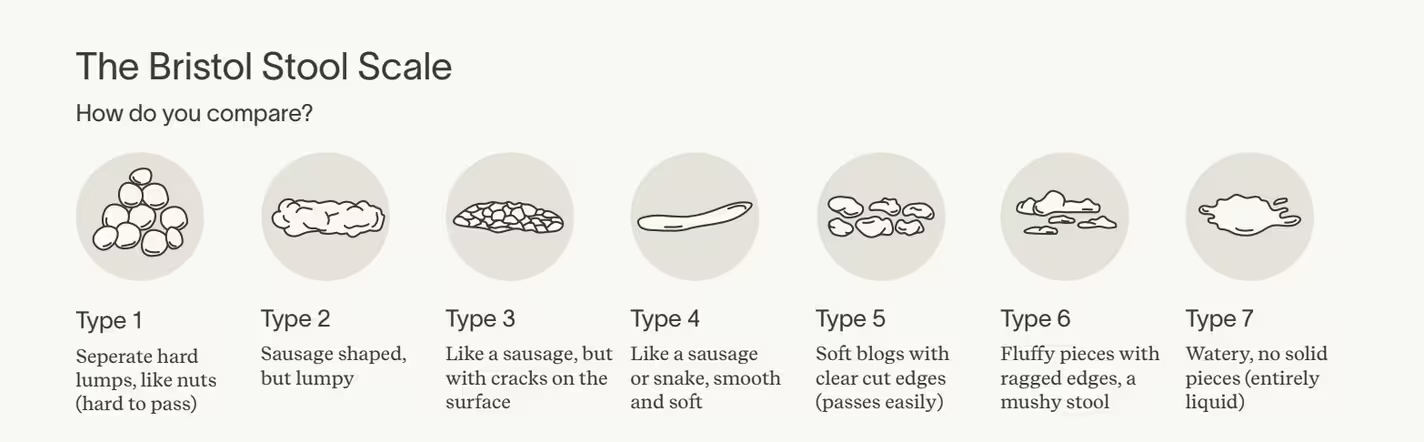
  • Softer, easier stools: The Bristol Stool Scale is a 7-point chart that describes stool shape. It ranges from hard lumps (type 1) to watery stools (type 7), with type 4 being smooth and soft [3]. In studies, stools softened within about 4 weeks for people who ate more fiber [2]. The same was true for adults with constipation who took fiber or probiotic formulas [3].  
Tracking your stool type for a month before and after a diet change may help you see whether new habits are working.
  • Bloating that settles: In one study, some people had extra bloating when they added fermented foods. It faded as they stuck with it [2].  
  • Fewer symptoms after meals if you have IBS: People with IBS had less bloating, belly pain, and gas during a 3-week low-FODMAP diet [18]. FODMAPs are a group of carbs that gut bacteria ferment. In one study, 3 weeks on it lowered the overall amount of gut bacteria, including some helpful groups [19]. We recommend working with a dietitian for guidance on this diet. 

What can a stool test show?

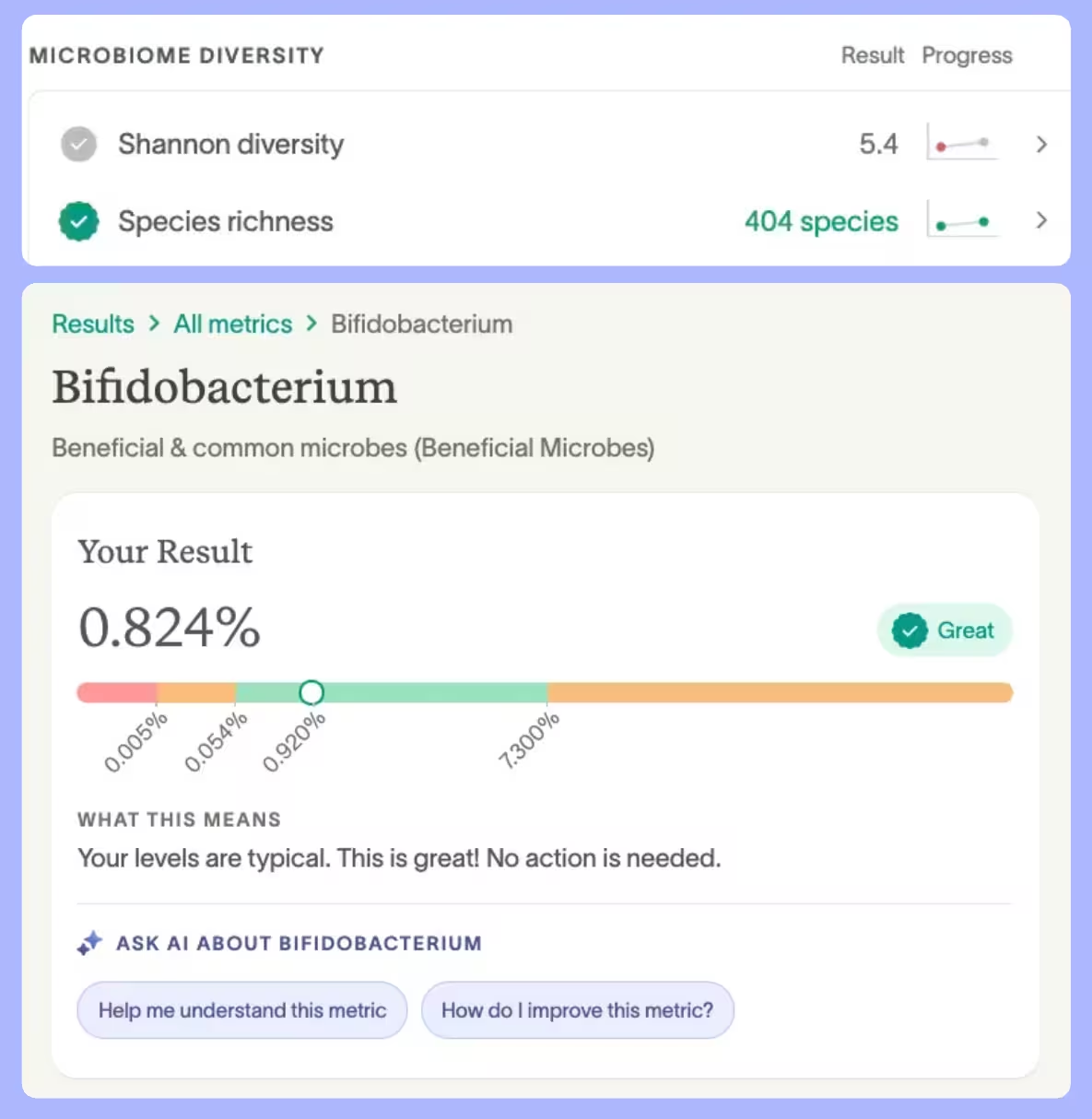
  • Greater microbial diversity: Diversity means how many different kinds of microbes live in your gut. In one study, eating more fermented foods raised it in about 10 weeks [2].  
  • More fiber-loving bacteria: Extra fiber tends to increase Bifidobacterium, a group of microbes that break down plant fibers [20], [21].
Progress lines track your diversity across tests, and key microbes like Bifidobacterium are shown against reference ranges, with TinyAI on hand to explain what your results mean.

Whole-body links still being studied

Your gut connects to systems far beyond digestion. You can see this come to life in Tiny Health’s proprietary interactive feature, Gut-Body Connections.  Scientists are still studying these links, so think of them as bonus signs, not goals to measure.

  • Sleep: In a small study of healthy men, those with greater microbial diversity slept longer and woke up less during the night. It’s not yet clear which comes first  [22].  
  • Mood: Research on the gut-brain connection has linked certain bacteria, such as Coprococcus, to better quality of life. People with depression tend to have less of these bacteria [23].

Gut health timelines by goal

Some changes, like easing bloating, can happen within a week or two. Others, like building microbial diversity, take a few months of steady habits.

‍

Goal Typical timeframe Supportive actions
Ease bloating Within about a week on a low-FODMAP diet, in one study of people with IBS [18] A low-FODMAP diet with a dietitian’s help if you have IBS [18], plus adding fiber slowly and eating at regular times
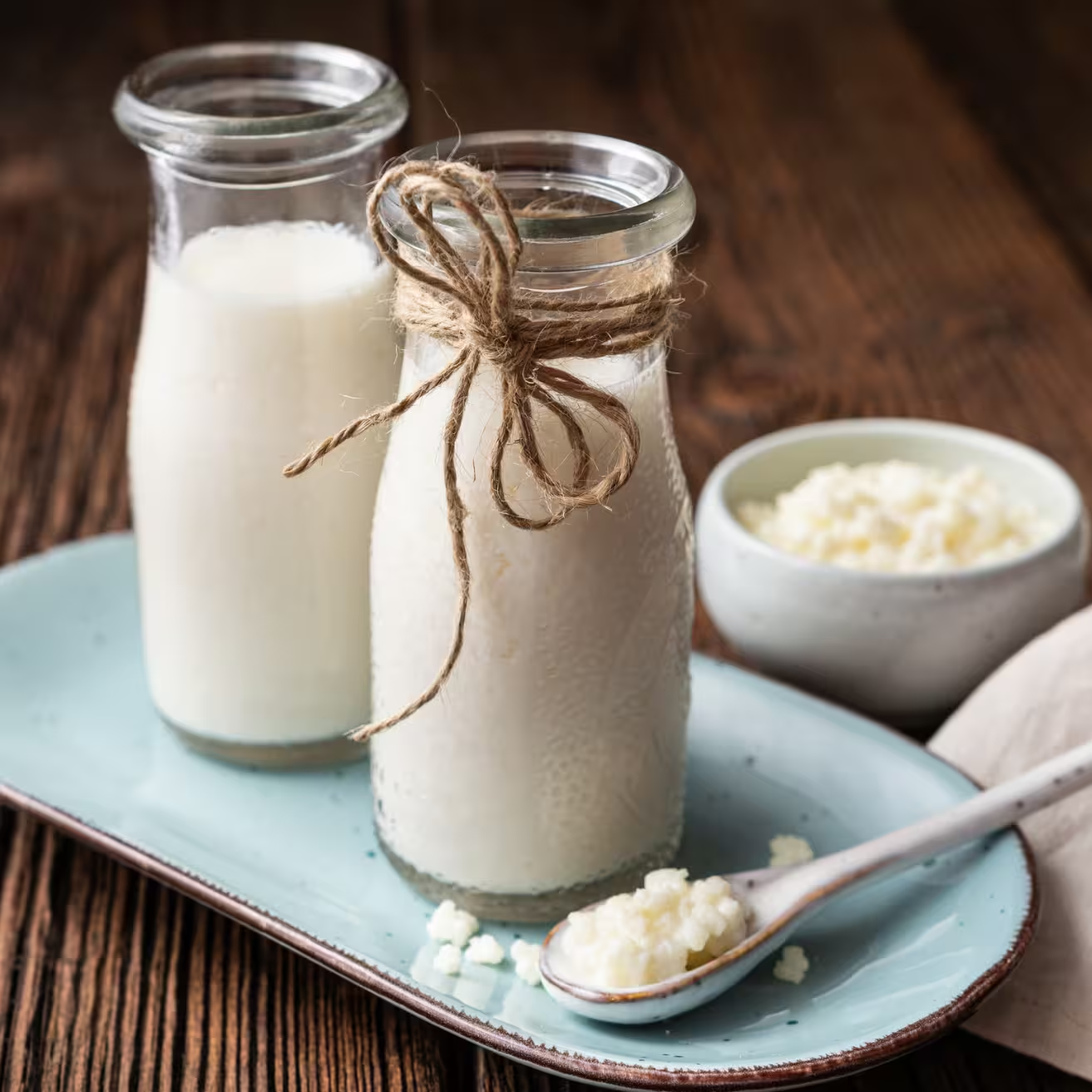
Build microbial diversity Several weeks to a few months [2] Opt for foods rich in probiotics like yogurt, kefir, and kimchi and stick to whole foods
Restore balance after antibiotics About a month to a year, depending on the antibiotic [11] Eat a wide variety of fiber-rich plants, and get sufficient sleep

Why progress sometimes stalls

Gut health progress rarely moves in a straight line. A plateau, or even a step back, is normal as your body adjusts to new routines. If things have stalled, a small change in what you’re doing may be all it takes to get moving again. Common reasons progress slows include:

  • Inconsistent habits: Stopping and starting can let gains fade, so aim for steady over perfect [1], [17]  
  • Too little variety in your diet: Eating a wider range of plant foods is linked to a more favorable gut microbiome [7]  
  • Unaddressed conditions: Ongoing symptoms may need your practitioner’s input  
  • Stress and poor sleep: Stress can make the gut lining leakier, and poor sleep is linked to shifts in gut bacteria [13], [15]  
  • Moving too fast or over-supplementing: Big dietary changes can bring extra bloating at first, especially with fermented foods [2]  
  • Recent medications: Antibiotics, acid reducers, and pain relievers like ibuprofen are all linked to changes in gut bacteria. Some antibiotic effects can last for months [11], [12], [24]

How to (realistically) support gut health faster

Your microbiome won’t change overnight. But the right steps can help you make progress and avoid setbacks. 

6 habits that support your progress

Here are simple ways to boost your gut health:

  1. Eat a variety of fiber-rich plants  
  1. Include fermented foods  
  1. Keep a consistent sleep schedule  
  1. Stay hydrated  
  1. Move every day  
  1. Manage stress

What to limit or rethink

These habits can slow your progress:  

  • Starting and stopping new routines  
  • Chasing quick-fix products  
  • Taking pain relievers more often than needed  
  • Eating late at night

How you can track your gut progress over time

Gut changes happen slowly, so symptoms alone don’t always tell the whole story. An Adult Gut Health Test gives you a starting point before you make changes. It shows your microbial diversity, helpful species, Microbiome Age, Microbiome Summary Score, and much more. Retesting every 3 to 6 months can show how your diet and lifestyle changes affect your microbiome. That may include shifts you can feel.

‍

What you should know

FAQ: How long it takes to improve gut health

Can my gut feel worse before it feels better after I change my diet?

Yes, some people have more bloating when they first add fermented foods [2]. As your gut microbes ferment new plant fibers, they release gas [18]. This usually eases with time as your gut adjusts [2].

Do I need to keep these habits forever, or can I ease off once things improve?

Your microbiome is always changing, so it needs steady routines to stay balanced. If you go back to old habits, your gut bacteria can return to where they started within days [1]. An occasional splurge is part of life. Your gut tends to reflect what you eat over days and weeks, not a single meal [4], [25].

Can I improve my gut without supplements or special products?

Whole foods and regular movement help shape your gut microbiome [17], [26]. Even two nights of poor sleep can shift it [15]. For most people, a varied, plant-rich diet is a strong place to start. Eating a wider range of plant foods is linked to a more favorable gut microbiome [7].

How often should I retest to know whether my gut is actually improving?

Retesting every 3 to 6 months gives your new habits time to show up in your microbiome. Your gut bacteria shift day to day based on what you’ve eaten [1], [25].

Tiny Health tests and reports are provided for wellness and educational purposes only and are not intended to diagnose, treat, or cure any disease. Always consult a qualified healthcare practitioner regarding any medical concerns, diagnoses, or before making changes to your diet, supplements, or treatment plan.

When to seek medical attention

If you notice any of the following, talk to your practitioner:

  • Blood in the stool or black, tarry stools  
  • Sudden weight loss you can’t explain  
  • Belly pain that is severe or won’t go away  
  • Severe diarrhea or constipation that lasts  
  • Trouble swallowing or vomiting that won’t stop  
  • Fever or tiredness you can’t explain, along with gut symptoms  
  • Symptoms that keep getting worse despite months of steady changes
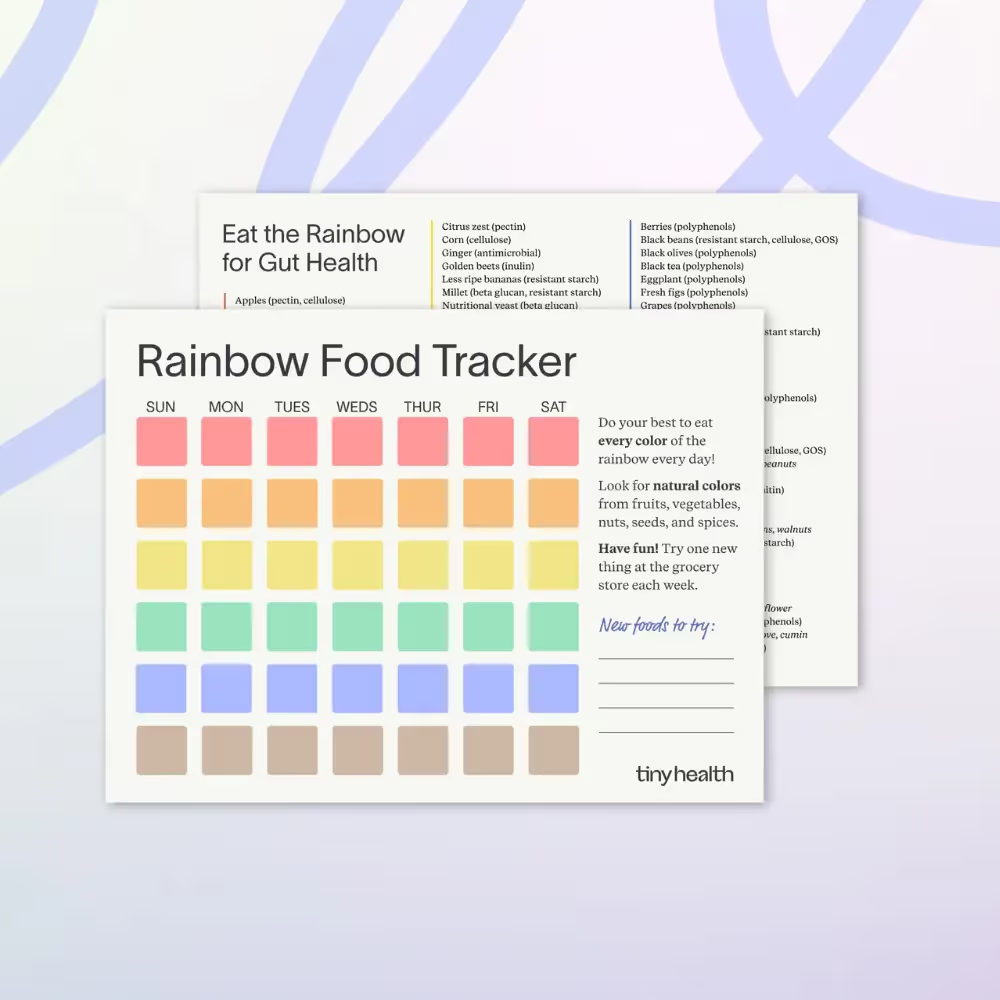
Tiny Health Rainbow Food Tracker chart for families and gut healthy foods list

Download our FREE Rainbow Food Tracker

Includes a weekly tracking chart and color-coded list of gut-healthy foods to help your family eat the rainbow every day.

References

[1] L. A. David et al., “Diet Rapidly and Reproducibly Alters the Human Gut Microbiome,” Nature, vol. 505, no. 7484, pp. 559–563, Jan. 2014, doi: 10.1038/nature12820.

[2] H. C. Wastyk et al., “Gut-Microbiota-Targeted Diets Modulate Human Immune Status,” Cell, vol. 184, no. 16, pp. 4137–4153.e14, Aug. 2021, doi: 10.1016/j.cell.2021.06.019.

[3] H. Lai et al., “Effects of Dietary Fibers or Probiotics on Functional Constipation Symptoms and Roles of Gut Microbiota: A Double-Blinded Randomized Placebo Trial,” Gut Microbes, vol. 15, no. 1, Art. no. 2197837, Apr. 2023, doi: 10.1080/19490976.2023.2197837.

[4] G. D. Wu et al., “Linking Long-Term Dietary Patterns With Gut Microbial Enterotypes,” Science, vol. 334, no. 6052, pp. 105–108, Oct. 2011, doi: 10.1126/science.1208344.

[5] C. A. Lozupone, J. I. Stombaugh, J. I. Gordon, J. K. Jansson, and R. Knight, “Diversity, Stability and Resilience of the Human Gut Microbiota,” Nature, vol. 489, no. 7415, pp. 220–230, Sep. 2012, doi: 10.1038/nature11550.

[6] K. Korpela et al., “Gut Microbiota Signatures Predict Host and Microbiota Responses to Dietary Interventions in Obese Individuals,” PLoS ONE, vol. 9, no. 3, Art. no. e90702, Mar. 2014, doi: 10.1371/journal.pone.0090702.

[7] F. Asnicar et al., “Microbiome Connections With Host Metabolism and Habitual Diet From 1,098 Deeply Phenotyped Individuals,” Nature Medicine, vol. 27, no. 2, pp. 321–332, Feb. 2021, doi: 10.1038/s41591-020-01183-8.

[8] T. Wilmanski et al., “Gut Microbiome Pattern Reflects Healthy Ageing and Predicts Survival in Humans,” Nature Metabolism, vol. 3, no. 2, pp. 274–286, Feb. 2021, doi: 10.1038/s42255-021-00348-0.

[9] R. Pittayanon et al., “Gut Microbiota in Patients With Irritable Bowel Syndrome—A Systematic Review,” Gastroenterology, vol. 157, no. 1, pp. 97–108, Jul. 2019, doi: 10.1053/j.gastro.2019.03.049.

[10] R. Pittayanon et al., “Differences in Gut Microbiota in Patients With vs Without Inflammatory Bowel Diseases: A Systematic Review,” Gastroenterology, vol. 158, no. 4, pp. 930–946.e1, Mar. 2020, doi: 10.1053/j.gastro.2019.11.294.

[11] E. Zaura et al., “Same Exposure but Two Radically Different Responses to Antibiotics: Resilience of the Salivary Microbiome Versus Long-Term Microbial Shifts in Feces,” mBio, vol. 6, no. 6, Art. no. e01693-15, Nov. 2015, doi: 10.1128/mBio.01693-15.

[12] F. Imhann et al., “Proton Pump Inhibitors Affect the Gut Microbiome,” Gut, vol. 65, no. 5, pp. 740–748, May 2016, doi: 10.1136/gutjnl-2015-310376.

[13] T. Vanuytsel et al., “Psychological Stress and Corticotropin-Releasing Hormone Increase Intestinal Permeability in Humans by a Mast Cell-Dependent Mechanism,” Gut, vol. 63, no. 8, pp. 1293–1299, Aug. 2014, doi: 10.1136/gutjnl-2013-305690.

[14] J. A. Foster, L. Rinaman, and J. F. Cryan, “Stress & the Gut-Brain Axis: Regulation by the Microbiome,” Neurobiology of Stress, vol. 7, pp. 124–136, Dec. 2017, doi: 10.1016/j.ynstr.2017.03.001.

[15] C. Benedict et al., “Gut Microbiota and Glucometabolic Alterations in Response to Recurrent Partial Sleep Deprivation in Normal-Weight Young Individuals,” Molecular Metabolism, vol. 5, no. 12, pp. 1175–1186, Dec. 2016, doi: 10.1016/j.molmet.2016.10.003.

[16] R. M. Voigt et al., “Circadian Disorganization Alters Intestinal Microbiota,” PLoS ONE, vol. 9, no. 5, Art. no. e97500, May 2014, doi: 10.1371/journal.pone.0097500.

[17] J. M. Allen et al., “Exercise Alters Gut Microbiota Composition and Function in Lean and Obese Humans,” Medicine & Science in Sports & Exercise, vol. 50, no. 4, pp. 747–757, Apr. 2018, doi: 10.1249/MSS.0000000000001495.

[18] E. P. Halmos, V. A. Power, S. J. Shepherd, P. R. Gibson, and J. G. Muir, “A Diet Low in FODMAPs Reduces Symptoms of Irritable Bowel Syndrome,” Gastroenterology, vol. 146, no. 1, pp. 67–75.e5, Jan. 2014, doi: 10.1053/j.gastro.2013.09.046.

[19] E. P. Halmos, C. T. Christophersen, A. R. Bird, S. J. Shepherd, P. R. Gibson, and J. G. Muir, “Diets That Differ in Their FODMAP Content Alter the Colonic Luminal Microenvironment,” Gut, vol. 64, no. 1, pp. 93–100, Jan. 2015, doi: 10.1136/gutjnl-2014-307264.

[20] A. Oliver et al., “High-Fiber, Whole-Food Dietary Intervention Alters the Human Gut Microbiome but Not Fecal Short-Chain Fatty Acids,” mSystems, vol. 6, no. 2, Art. no. e00115-21, Mar. 2021, doi: 10.1128/msystems.00115-21.

[21] D. So et al., “Dietary Fiber Intervention on Gut Microbiota Composition in Healthy Adults: A Systematic Review and Meta-Analysis,” The American Journal of Clinical Nutrition, vol. 107, no. 6, pp. 965–983, Jun. 2018, doi: 10.1093/ajcn/nqy041.

[22] R. P. Smith et al., “Gut Microbiome Diversity Is Associated With Sleep Physiology in Humans,” PLoS ONE, vol. 14, no. 10, Art. no. e0222394, Oct. 2019, doi: 10.1371/journal.pone.0222394.

[23] M. Valles-Colomer et al., “The Neuroactive Potential of the Human Gut Microbiota in Quality of Life and Depression,” Nature Microbiology, vol. 4, no. 4, pp. 623–632, Apr. 2019, doi: 10.1038/s41564-018-0337-x.

[24] M. A. M. Rogers and D. M. Aronoff, “The Influence of Non-Steroidal Anti-Inflammatory Drugs on the Gut Microbiome,” Clinical Microbiology and Infection, vol. 22, no. 2, pp. 178.e1–178.e9, Feb. 2016, doi: 10.1016/j.cmi.2015.10.003.

[25] A. J. Johnson et al., “Daily Sampling Reveals Personalized Diet-Microbiome Associations in Humans,” Cell Host & Microbe, vol. 25, no. 6, pp. 789–802.e5, Jun. 2019, doi: 10.1016/j.chom.2019.05.005.

[26] R. K. Singh et al., “Influence of Diet on the Gut Microbiome and Implications for Human Health,” Journal of Translational Medicine, vol. 15, Art. no. 73, Apr. 2017, doi: 10.1186/s12967-017-1175-y.